
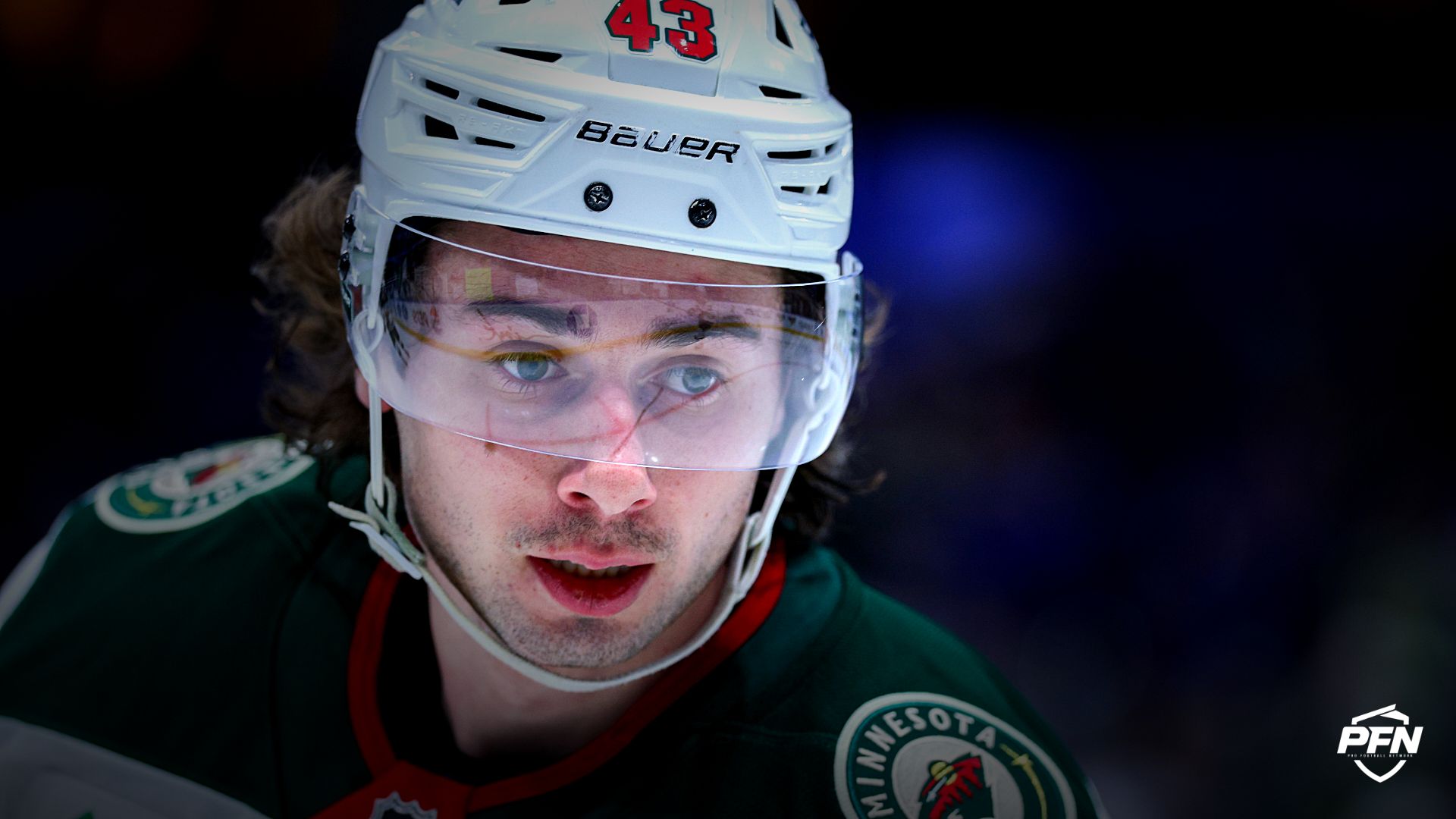
The Minnesota Wild still have a path to keep Quinn Hughes beyond the final year of his contract, but uncertainty persists around the length of a potential extension. The defenseman has reportedly expressed a desire to stay, while the Wild want a much longer commitment than his camp currently appears willing to consider.
This gap has kept the New Jersey Devils speculation alive, though one Minnesota insider believes the situation does not point directly to a reunion with his brothers.
Quinn Hughes to Devils Rumors Face Reality Check
Hughes’ contract situation has become more complicated because the biggest disagreement appears to involve the term rather than his willingness to remain in Minnesota. Wild general manager Bill Guerin wants a commitment of at least five years, while Hughes’ camp is reportedly seeking a three-year extension.
The shorter deal would carry major implications. Hughes would reach unrestricted free agency in 2030, the same summer his brother Jack Hughes’ current Devils contract expires.
Guerin recently acknowledged that negotiations remain active but offered no indication that an agreement is imminent. “I’m not gonna get too far into it, but I have been talking to his camp along. These things take time… they are big decisions for players and teams, so it’s a process to work through it.”
This timing has generated speculation that the brothers could eventually join the same team, with New Jersey naturally viewed as an obvious destination.
However, a Minnesota insider has pushed back on the idea that aligning their contracts automatically means Quinn is planning a return to New Jersey. The broader possibility is that the brothers could simply want the freedom to choose their next destination together.
The logic was highlighted after a Devils fan suggested that Quinn’s proposed three-year extension could be designed to match Jack’s contract timeline. The response from an insider, Michael Russo, made the situation clearer: “Exactly. That’s the point of lining up so they can go anywhere together. Jersey, Minny, or anywhere else.”
This distinction matters because Quinn has already communicated a desire to remain with the Wild. Minnesota also paid a significant price to acquire him from Vancouver, sending Marco Rossi, Liam Öhgren, Zeev Buium, and a 2026 first-round pick in the blockbuster deal.
The Wild, therefore, have strong reasons to find a contract structure that works for both sides. Yet the financial challenge could become significant. Hughes’ next contract is projected to command at least $17 million annually, while Kirill Kaprizov has already inked a $17 million AAV contract.
A massive deal for Hughes would also affect Minnesota’s ability to build around its stars. The Wild currently have limited cap flexibility, meaning a large extension could force the front office to depend more heavily on entry-level contracts and affordable depth.
