
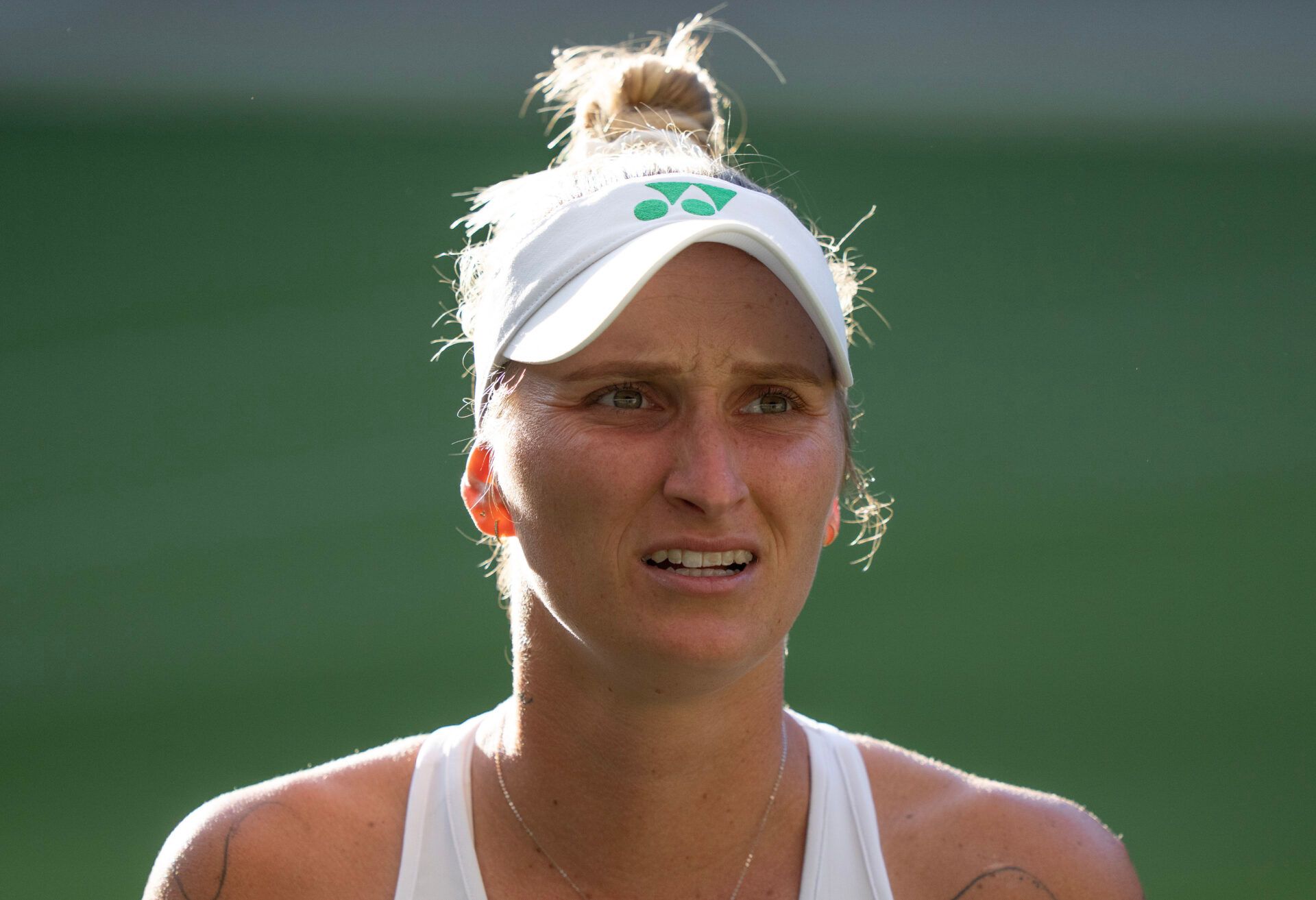
Markéta Vondroušová’s doping test-related suspension has rocked the tennis world. The former Wimbledon champion was handed a massive four-year ban by the International Tennis Integrity Agency (ITIA) on Monday, June 22, for refusing an anti-doping test.
The Czech player received an outpouring of support from fellow players and fans alike. Others within the tennis community, however, felt the penalty was justified. Andy Roddick, a former World No. 1 and the 2003 US Open champion, was on the fence about the ruling.

Andy Roddick Makes the Case for Both Markéta Vondroušová and the ITIA
In December 2025, Vondroušová refused an out-of-competition drug test when a female anti-doping official arrived beyond her scheduled testing window. The 26-year-old denied the official access to her residence and subsequently recounted the episode on social media, characterizing it as a “serious intrusion” into her privacy.
In February 2026, the ITIA issued a formal notice of disciplinary charge, claiming the Vondroušová failed to submit to sample collection “without compelling justification.” According to details released on Monday, the player told the hearing panel that stress, mental health struggles, and concerns about her safety had contributed to her decision to refuse the test.
Roddick weighed in on Vondroušová’s explanation during his recent Served with Andy Roddick podcast episode while recalling past incidents involving Petra Kvitová and Monica Seles.
“‘Understandably so,’ I said at the time. If you don’t know who’s answering the door, yeah, I can kind of get where she’s coming from.”
He, however, argued that accepting her explanation could set a precedent by effectively legitimizing anxiety as a justification for refusing a test. “The problem is that if anxiety about who’s at your door becomes an acceptable answer, how does anyone ever get tested if they’re not doing things the right way?”
According to the ITIA Senior Director of Anti-Doping Nicole Sapstead, Markéta Vondroušová signed the official refusal form outside her apartment, clearly stating that she was refusing the test, and then proceeded to walk her dog.
Roddick noted, “She can still appeal it. It’s not the official ruling, but what they’re saying is that she’s going to get suspended for four years. That’s borderline career ending.”
Considering the high-profile cases of Jannik Sinner and Iga Świątek, both of whom received relatively short bans after testing positive due to contamination, Roddick described Vondroušová’s suspension as “steep.”
He, however, reiterated, “This is not an easy case. I get both sides of this.”
“Say my daughter was 26 years old and she didn’t know who was at her door, I would tell her not to answer,” he explained.
“And this is quite the loophole for anyone who is doing something that they shouldn’t be doing as far as performance-enhancing drugs. If this loophole is created, how do you ever test someone? If I had to, I could argue either side of it.”
“You get a four-year suspension; that’s about as much as I’ve seen in tennis. Crazy. Don’t like it,” Roddick continued.
The ITIA’s initial ruling states that an independent tribunal found “no competing justification” for Vondroušová refusing the test. Her suspension will end on 21 June 2030. And, while suspended, the Czech star will not be allowed to play in, coach at, or attend any events organized by any national association, besides being prohibited at ITF, WTA, ATP, and Grand Slam tournaments.
Vondroušová can challenge the ban by filing an appeal with the Court of Arbitration for Sport (CAS).
