
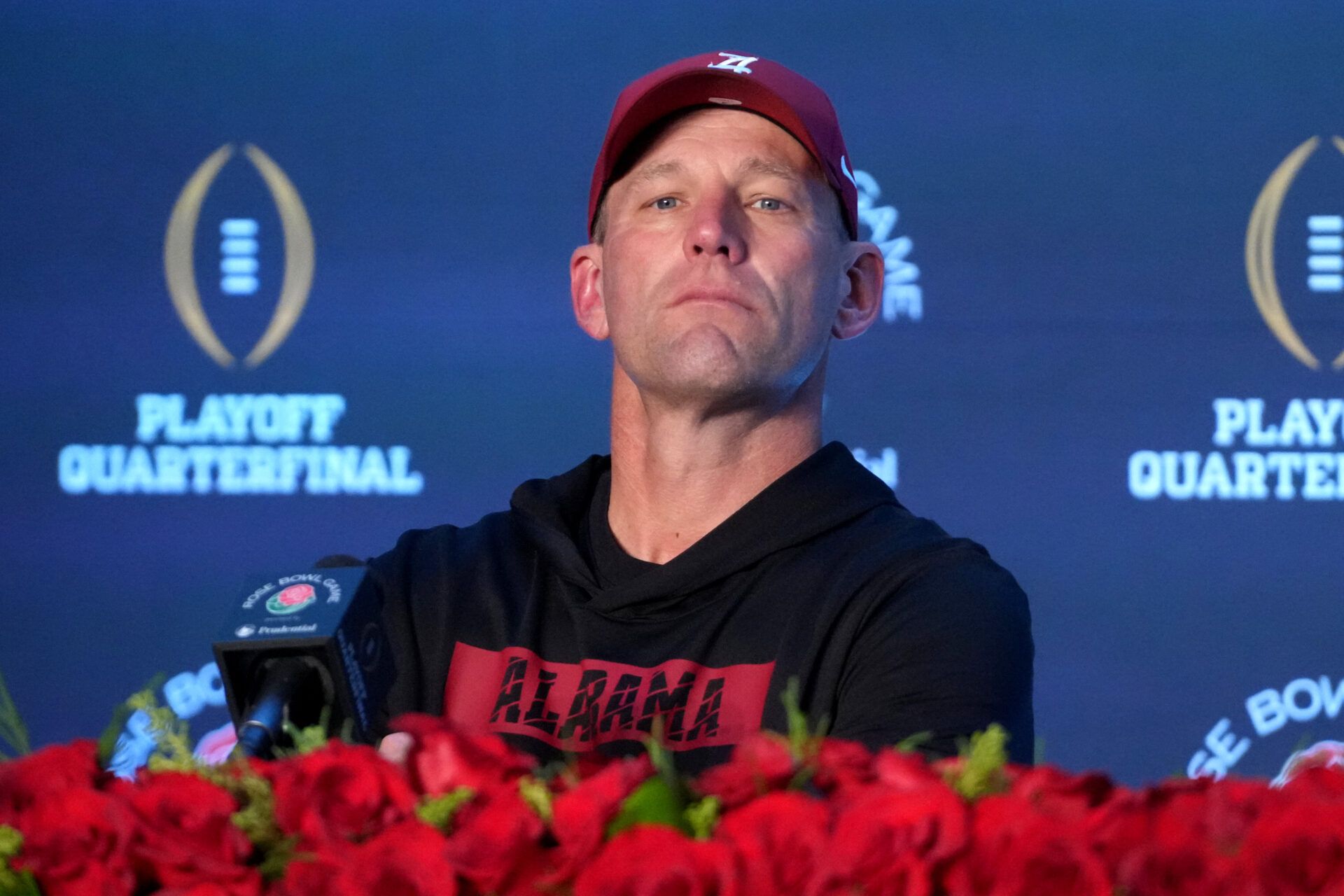
Losing games at Alabama is never acceptable, but how you lose matters just as much as the final score. And for the first time in a long time, that’s where the concern truly lies in Tuscaloosa.
In a recent YouTube video breaking down Alabama’s loss to Indiana, a college football analyst raised an alarming critique: this Alabama team doesn’t just lose, it quits. According to the analyst, Alabama, under second-year head coach Kalen DeBoer, has shown a troubling tendency to get physically dominated in big games, something that was almost unheard of during Nick Saban’s legendary run.
So what gives?
An Identity Crisis in Tuscaloosa
For over a decade, Alabama’s identity was crystal clear. The Crimson Tide bullied opponents in the trenches, ran the football with authority, and imposed its will on both sides of the ball. It didn’t matter who lined up across from them; Alabama was more physical, more prepared, and more relentless.
That identity now appears fractured.
The easiest place to diagnose physical toughness is in the trenches: how well you run the ball, how well you protect the quarterback, and how well you stop the run defensively. And this season, Alabama failed to meet its own standard.
Offensive Line Struggles and a Nonexistent Run Game
While Alabama’s offense wasn’t outright bad, it was painfully one-dimensional. The Crimson Tide averaged just 116.2 rushing yards per game, ranking 117th nationally, a shocking number for a program built on power football. When you can’t run the ball, everything else becomes harder.
Protection issues didn’t help either. Alabama allowed a sack rate of 5.4%, ranking 49th in the country. That’s not disastrous on paper, but combined with a weak run game, it’s a recipe for offensive inconsistency.
A functional ground game forces defenses to respect play-action, keeps pass rushers honest, and allows an offense to dictate the terms. Alabama did none of that consistently in 2025. Defenses knew what was coming, pinned their ears back, and overwhelmed an offense that couldn’t counterpunch.
Defensively, Alabama wasn’t a disaster against the run, allowing 125.6 yards per game, good for 36th nationally. By most programs’ standards, that’s respectable.
By Alabama’s standards, it’s not even close.
Under Nick Saban, Alabama wasn’t just good against the run; it was dominant. Opponents dreaded lining up between the tackles. This season, Alabama too often got pushed around, especially in high-stakes matchups, reinforcing the perception that this team lacked the edge and physicality that once defined the program. Aka this team being “soft”.
Is This a Kalen DeBoer Problem?
That’s the uncomfortable question.
Looking back at DeBoer’s final season at Washington in 2023, a familiar pattern emerges. The Huskies averaged 118.4 rushing yards per game, ranking 106th nationally. DeBoer’s offense has never been run-heavy, and in the Pac-12, he was able to mask that flaw with elite quarterback play and favorable matchups.
The SEC is different. You can’t finesse your way through this league. You have to run the ball, stop the run, and win in the trenches. Right now, DeBoer is learning that lesson the hard way.
This offseason will be critical. DeBoer must take a hard look in the mirror and decide whether his philosophy can adapt to SEC football. Scheme matters, but identity matters more at Alabama.
If the Crimson Tide continues to look physically overmatched and mentally fragile in big moments, the pressure will only intensify. Alabama fans aren’t patient, and history suggests Tuscaloosa won’t wait long for answers.
Because in Alabama, losing is one thing. Losing your identity is something else entirely.
