
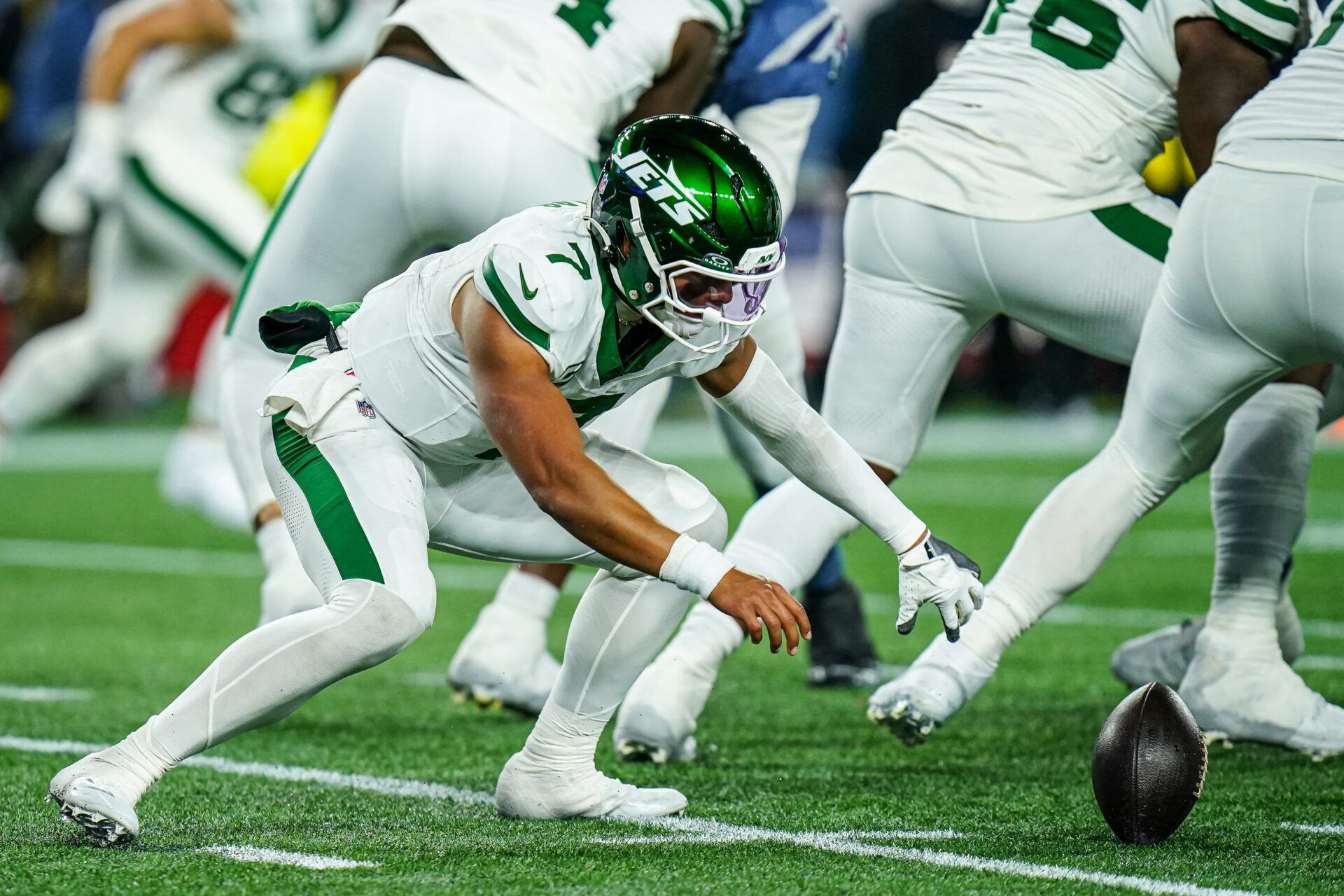
The New York Jets have officially made another quarterback change, moving from Justin Fields to veteran Tyrod Taylor in what appears to be a permanent shift, barring injury or an unexpected late-season look at undrafted rookie Brady Cook. It marks the second time Fields has been benched this season, and unlike earlier moves, this one feels final.
Why Not Brady Cook?
While fans have loudly pushed for Cook to jump straight into the QB1 role, the Jets insist that such a move would be reckless. Cook remains in a developmental mode, still learning the offensive system, adjusting to NFL speed, and refining his decision-making skills.
Speaking to the media on Wednesday, head coach Aaron Glenn shut down the idea of a sudden Cook promotion.
“He’s still developing,” Glenn said. “We want to make sure we do what’s right for him. Tyrod is our starter.”
In other words, throwing an undrafted rookie into a broken offense would do more harm than good. Cook may see action in Weeks 17 or 18, but right now, the Jets have made their choice.
Why the Jets Moved Off Justin Fields
Despite the outside noise, the Jets’ decision wasn’t just about benching Fields; it was about evaluating the rest of the roster.
The organization believes they simply can’t properly assess their young offensive weapons with Fields under center. That includes:
- TE Mason Taylor
- WR John Metchie III (recently acquired)
- WR Adonai Mitchell, a highly talented newcomer
Fields’ play style, characterized by checkdowns, hesitancy, and extended time holding the ball, prevented the Jets from generating a reliable passing game. While his running ability created occasional sparks, it wasn’t enough to keep the team competitive or to develop their young receivers.
With Mason Taylor, the Jets know they’ll face more turnover risk. He is aggressive. He takes shots. He throws into windows that Fields doesn’t attempt. But that aggressive style also allows the Jets to evaluate who on the offensive roster can win routes, create separation, and function in an NFL passing attack. Put simply: They weren’t going to get those answers with Fields.
The Offense Needed a Change
Beyond personnel evaluation, the Jets’ offensive numbers paint a grim picture. Their passing attack hasn’t just struggled; it has been one of the worst in the NFL.
- Jets PFSN Offense Impact Score: 64.5 (29th in the NFL)
- Jets’ Team Passing Yards: 1,642 (32nd, dead last in the league)
- Justin Fields PFSN QB Impact Score: 68.8 (28th)
- Fields also ranks in the bottom third in: Passing Yards, Completion Percentage, Passing Touchdowns and Pass Attempts.
The Jets reached a point where something had to change. The offense wasn’t sustainable, and Fields wasn’t elevating it. Going to Tyrod Taylor wasn’t about chasing wins or sparking a late-season run; it was about restoring structure, speeding up the passing game, and giving the supporting cast a fair evaluation.
Why Tyrod Taylor Makes Sense Right Now
Tyrod Taylor is not a long-term answer, but he is a stabilizer. He operates the offense at the proper tempo, gets the ball out more quickly, and allows the scheme to function as designed.
Unlike teams that tank or force-feed a young quarterback too soon, the Jets are choosing a more measured approach:
- Stabilize the offense now
- Evaluate young talent correctly
- Avoid damaging Cook’s development
- Make informed decisions this offseason
This is a forward-thinking move, rare for a franchise that has often been criticized for quarterback mismanagement.
A Necessary Reset for a Struggling Unit
The Jets didn’t make the QB switch because Tyrod Taylor is the future. They made it because the offense desperately needed direction, structure, and consistency, which were all elements Fields hadn’t provided.
The big picture is clear: This move is about the roster, not just the quarterback. Suppose the veteran QB can help the Jets properly evaluate their young playmakers. In that case, the franchise will be in a much stronger position heading into 2025, whether that includes drafting another quarterback or reshaping the supporting cast. The Jets needed a reset, and Tyrod Taylor is the one delivering it for the time being.
