
Round 1 of the 2026 NFL Draft is in the books, and as always, it raised as many questions as it answered. Some teams walked away having checked every box on their wish list. Others left fans scratching their heads, wondering whether the front office was watching the same board as everyone else.
The first round is rarely just about the players who hear their name called. It is about fit, timing, and whether a team’s strategy actually matches the window it is in. What is initially dubbed a “reach” or luxury pick may ultimately look genius a few years down the road. Sometimes, a pick that everyone raved about ends up haunting a front office. We really can’t be sure so soon after the picks are made.
With that said, it’s always fun to try to project the biggest winners and losers from Round 1, along with a few players whose stock climbed the moment their new team walked to the podium.
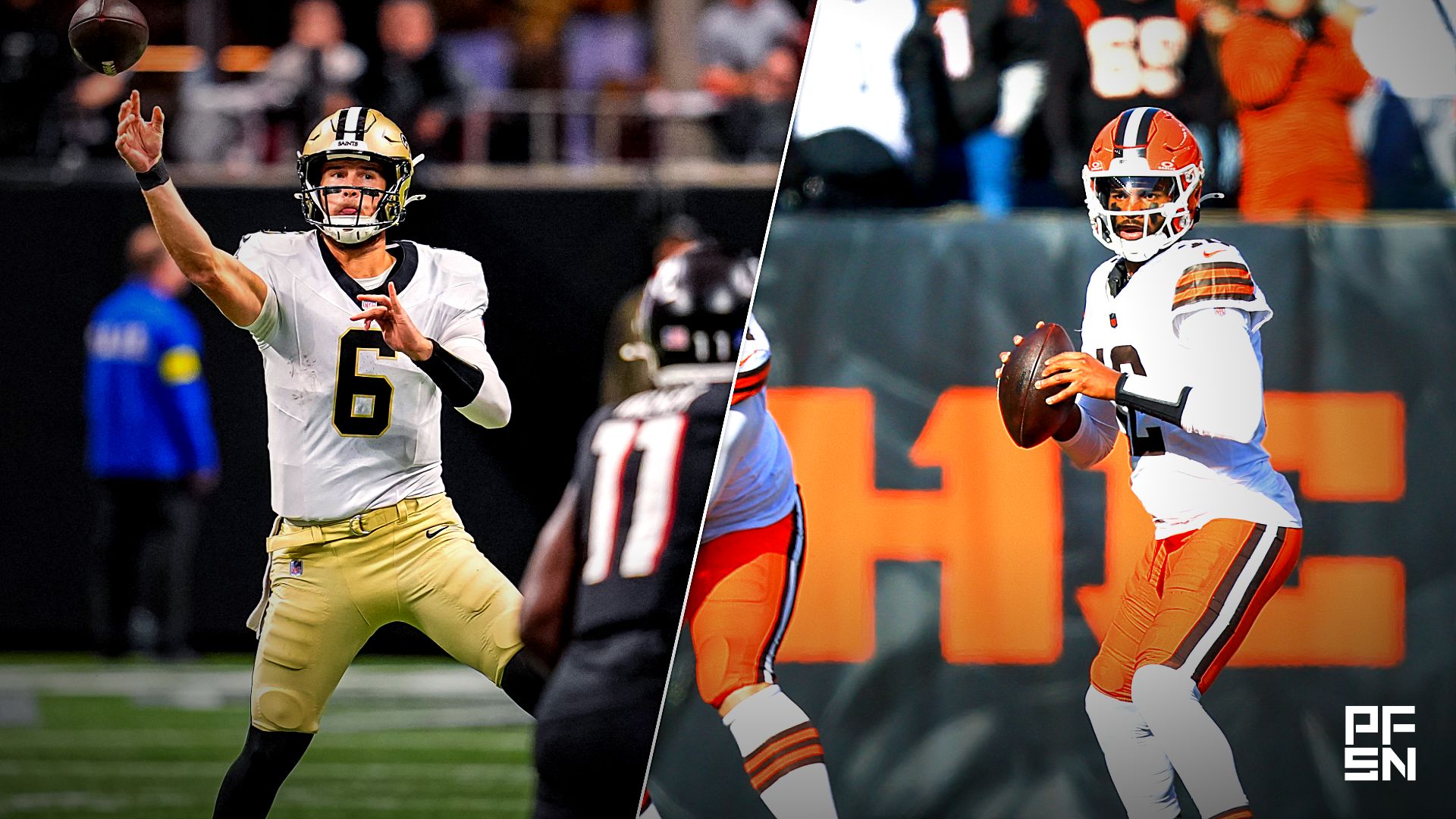
Winner: Cleveland Browns and Shedeur Sanders
The Cleveland Browns entered the 2026 NFL Draft with two major needs: offensive tackle and wide receiver. They addressed both with Spencer Fano and KC Concepcion. Fano may have been a slight reach, but at that point, it was important to take their guy. We saw four offensive linemen come off the board in six picks.
Trading back for better value could have meant settling for a secondary option, and while that might have graded better from the outside, it could have left frustration inside the building. Gaining a few picks in Round 3 and beyond would not have been worth that compromise.
Shedeur Sanders wins here as well. With no Ty Simpson to threaten his spot and two players who will help him be the best version of himself, the Browns are sneakily building a nice offense to pair with a defense we already know has a ton of talent.
Loser: Los Angeles Rams
Remember when the Green Bay Packers’ window to win a Super Bowl felt like it was closing, and we all hoped they’d get Aaron Rodgers the pieces to push for one more ring, only for them to stun us with the selection of Jordan Love?
Yeah, well, this feels very similar.
The Rams are in a Super Bowl window, and they spent the 13th overall pick on a luxury developmental quarterback. Make it make sense. Simpson might end up being the next coming of Love, but Rueben Bain Jr., Kenyon Sadiq, or any number of other talented players available at 13 could have been the piece that helped push the Rams across the line.
Rams fans, what would you rather have? Another five to 10 years of sustained playoff competitiveness but no Super Bowl, or a ring in 2026-27 and then a few years of pain if Matthew Stafford walks away? It’s a great opportunity for Simpson, but if the Rams fail to win a Super Bowl after getting so close this year, he immediately has a ton of pressure on his shoulders, and only a title in the next few seasons would be an acceptable return.
According to both PFSN analysts Ian Cummings and Jacob Infante, the pick earned the team a D- grade, one of the worst of the night.
Winner: Tyler Shough
Jordyn Tyson and Chris Olave give Tyler Shough a legitimate 1-2 punch at receiver. Combine that with the addition of David Edwards at guard and Travis Etienne Jr. at running back, and this offense is looking significantly more dynamic.
Etienne has Alvin Kamara-type traits with his pass-catching ability, and defenses are going to have to pick their poison with three very good playmakers on the field.
Add in Juwan Johnson and Noah Fant, two more than serviceable tight ends who can be useful in the passing game in the right situation, and Shough has all the help he could have asked for through this point of the offseason.
Winner: New England Patriots
Look, it was a rough day for the New England Patriots, but we are just going to focus on the football side of things here…
The Patriots needed help on their offensive line, and they got it. They now have a range of options. Caleb Lomu or Will Campbell could play on the inside, or they could shift Morgan Moses inside to left guard to help anchor the left side alongside Campbell.
BE AN NFL GM: PFSN’s Ultimate GM Simulator
Would they be willing to risk a young combination of Campbell, Lomu, and Wilson going out from center on the left side? Or could they use Moses and Mike Onwenu as holding options at guard and let the young players develop around a veteran base? Whatever New England decides, their offensive line is in a much stronger place than it was in San Francisco at the Super Bowl.
Oh, and they very well could be in line to add A.J. Brown at receiver later in the offseason after the Eagles drafted Makai Lemon.
Loser: Seattle Seahawks
Remember when Kansas City thought they were clever picking a running back after winning the Super Bowl? If the answer is no, that’s because it was Clyde Edwards-Helaire, who was outshone by a 7th-round pick from Rutgers in the following seasons.
MORE: Seahawks’ RB Depth Chart: Who Is the Starter in Seattle?
Yes, Seattle lost Super Bowl MVP Kenneth Walker III (ironically, to Kansas City), but this felt like a reach for a player many felt only got as many touches as he did to keep Jeremiyah Love fresh for Notre Dame.
Now, all eyes will be on Jadarian Price to see if he can live up to his first-round selection.
Winner: Ty Simpson
Simpson wasn’t a first-round prospect for everyone (myself being among those having him graded outside the Top 32), but his outcome will also be more dependent on situation as a result, and he landed in the best one.
Yes, the pressure will be high once he becomes the starter, but in the immediate timeline, he’ll have time to get healthy and stay healthy, he’ll learn behind an MVP and elite pocket passer in Stafford, and he’ll have the incubation of Sean McVay’s scheme on his side.
There’s a ton of uncertainty with Simpson, but if there’s any location where Simpson reaches his ceiling as a quality starter, it’s this one.
Loser: Monti Ossenfort
The Arizona Cardinals have had a perennial talent deficiency in the trenches under Monti Ossenfort, and they had a chance at third overall to either take Arvell Reese, trade down and reinforce the offensive line, or take Sonny Styles as a near-generational linebacker prospect.
Instead, they took a running back who, while a very good player, will be dependent on a line that still has holes at right guard and right tackle, as well as long-term uncertainty at left guard and center. The pressure is rising for Ossenfort, and using the third pick on a luxury position doesn’t help.
Winner: CJ Stroud
Keylan Rutledge was a slight reach on the consensus board, but he quietly has a very complete profile, as well as projected versatility to play at guard or center. He could start opposite Wyatt Teller at guard, or compete with Jake Andrews at the fulcrum.
Either way, the Texans are trending toward having a truly solid starting five on the OL, for a QB in CJ Stroud who’s been negatively impacted by inconsistent OL play for two years running.
The value can be contested, but Rutledge was the right archetypal pick, and he’ll help Stroud be at his most comfortable.
Loser: Kenyon Sadiq
The New York Jets are a tricky landing spot for Kenyon Sadiq. Geno Smith is an experienced but volatile QB who doesn’t stand to elevate Sadiq in his first year. Frank Reich is a respected but potentially outdated offensive mind, whose relative lack of pre-snap motion and inconsistency stretching defenses vertically could constrict Sadiq’s upside.
In 12 personnel sets, Mason Taylor and Sadiq incite intrigue, as does Sadiq’s versatility to split out into the slot, but it remains to be seen if this offensive structure will give him the proper support as he develops.
Winner: Dennis Allen
It’s pretty simple: Dennis Allen got my fourth overall prospect for his defense at 25th overall. Dillon Thieneman is a perfect fit alongside Coby Bryant with his ability to play single-high, two-high, and fulfill a multitude of box roles at a high level.
Both safeties are elite turnover threats, and Thieneman’s universal versatility will allow everyone to play freer and faster. In one offseason, the Bears’ safety room went from a glaring weakness to one of the best tandems in the league.