
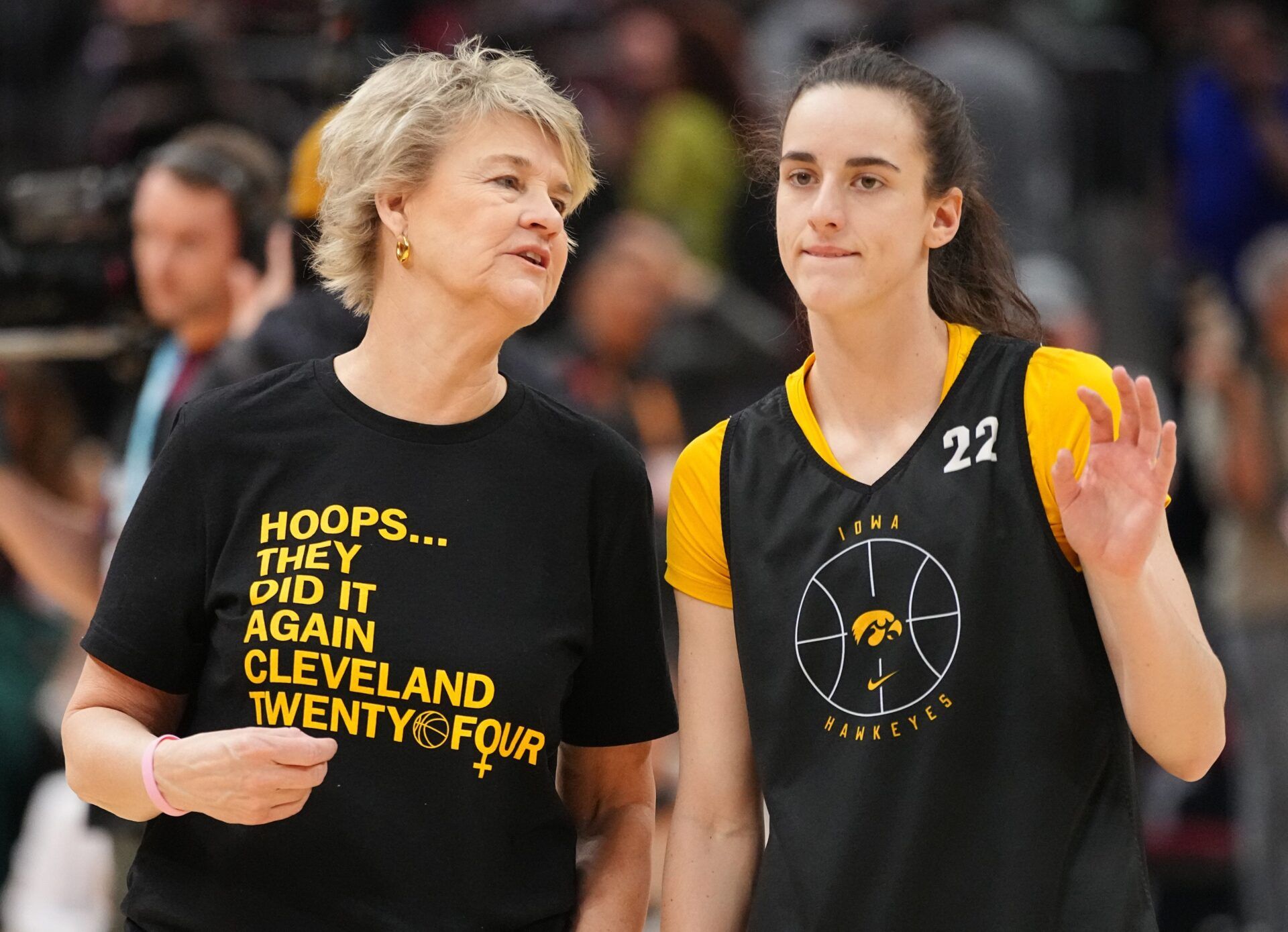
The transition from college to professional basketball rarely comes without growing pains, but for Caitlin Clark, one particular difference stands out.
The Indiana Fever rookie recently opened up about how her former Iowa coach Lisa Bluder’s meticulous preparation methods created expectations that now leave her bewildered by some of her WNBA teammates’ approach to the game. What did Bluder teach her, and how is it affecting her today?
How Did Lisa Bluder’s ‘Brainwashing’ Shape Caitlin Clark’s Basketball Mind?
During her appearance on women’s basketball legend Sue Bird’s YouTube show, Clark detailed how Bluder’s obsessive attention to detail created an environment where every player knew exactly what to do in any situation. The systematic approach was so thorough that Clark jokingly described it as brainwashing.
“Even our backup post players — I always think about how Coach Bluder ran practices and things. I’m very fortunate looking back, and now going to watch other colleges’ practices and things like that,” Clark explained.
“She really was so intentional about making sure everyone was on the same page and knew what they were doing and knew their role in a way,” Clark shared on Sue Bird’s “The Bird’s Eye View” YouTube channel.
The WNBA star explained how Bluder’s system eliminated confusion on the court. Every movement had a purpose, every cut had a destination, and every player understood their responsibility regardless of their basketball IQ.
“Like when I talk to people about it, I joke, like she brainwashed people — not like actually — but like brainwashed into like, ‘Okay, if you drive here, you’re going here and you’re going here. And like, even now at the professional level, I’m like, how do people not know where to move? Like, it blows my mind still,” Clark revealed.
This methodical approach created seamless team chemistry that transcended individual talent levels. Clark praised how Bluder could take players with varying basketball knowledge and mold them into a cohesive unit.
“Like she was so smart. She was able to construct the team and make sure everyone always knew what they were going to do, whether you were the smartest basketball player on the team or you weren’t, you were always on the same page with your teammates,” she said.
What Records Did Clark and Bluder Achieve Together at Iowa?
The partnership between Clark and Bluder produced one of the most dominant runs in women’s college basketball history. Clark became the NCAA Division I all-time leading scorer with 3,951 points while leading the Hawkeyes to consecutive national championship games in 2023 and 2024.
Throughout her four seasons at Iowa, Clark averaged 28.4 points and 8.2 assists per game. Her senior campaign featured a record-breaking 31.6 points per game while setting the single-season mark for three-pointers made with 201 attempts.
Bluder’s 24-year tenure at Iowa concluded when she retired in May 2024, just weeks after Clark’s college career ended. The timing marked the end of an era that transformed both women’s basketball and Iowa’s program into a national powerhouse.
Why Does Professional Basketball Frustrate Clark Now?
The contrast between Bluder’s systematic approach and professional basketball’s varied coaching philosophies has created an adjustment challenge for Clark. Her rookie WNBA season with the Indiana Fever exposed her to different preparation methods and team concepts that operate far differently from Iowa’s structured environment.
Clark’s playful reference to being “brainwashed” reveals how deeply Bluder’s coaching philosophy influenced her basketball understanding. The thorough preparation that became second nature in college now makes Clark question why professional teammates sometimes appear confused about basic positioning and movement.
Despite breaking numerous records during her rookie season, Clark continues adapting to coaching styles that don’t match the detailed preparation she experienced under Bluder. Her comments highlight how college experiences can shape professional expectations, sometimes creating frustration when those standards aren’t universally met.
The adjustment reflects a broader challenge many college stars face when transitioning to professional sports, where individual preparation and basketball knowledge can vary significantly among teammates and coaching staffs.
