
In the dimly lit corridors of WNBA power, a question has long echoed: Who truly pulls the strings of the Atlanta Dream? Beneath the roar of the crowd and the shimmer of red, silver, white, and blue, a trio of visionaries quietly shapes one of women’s basketball’s most intriguing narratives.
Their identities—real estate titans, a former two-time WNBA Champion, and a steadfast executive—reveal not just ownership, but an unfolding story of legacy, risk, and the relentless pursuit of a championship dream.
Behind every buzzer-beater and every sold-out matchup lies the influence of Larry Gottesdiener, Suzanne Abair, and former All-Star Renee Montgomery.
MORE: Atlanta Dream 2025 WNBA Schedule: List of All Games, Key Matchups, and More
Unveiling the Minds, Money, and Moments Behind the Atlanta Dream
In March 2021, real estate magnates Larry Gottesdiener and Suzanne Abair (chairman and COO of Boston’s Northland Investment Corporation) led a successful bid alongside former Dream guard Renee Montgomery, marking the first time a former WNBA player held an ownership stake in her old team.
Royalty in the house 👑
3x WNBA MVP Lisa Leslie and 2x WNBA Champ Renee Montgomery sit courtside as the New York Liberty take on the Atlanta Dream! pic.twitter.com/F1HCcevZOy
— WNBA (@WNBA) September 19, 2024
But the road to this landmark sale was anything but smooth. In early 2021, then-co-owner and U.S. Senator Kelly Loeffler, whose public denunciations of the Black Lives Matter movement sparked widespread outcry in 2020, agreed to sell her majority stake amid player-led activism that also contributed to the election of Senator Raphael Warnock.
This pivotal moment not only reconfigured the Dream’s boardroom but also galvanized the franchise’s commitment to social justice off the court.
The Dream’s origins trace back to 2008, when the WNBA awarded Atlanta an expansion franchise. The inaugural squad struggled to a 4–30 record, emblematic of the growing pains faced by new franchises.
Yet, by 2010, Atlanta astounded the league with its first Finals appearance—only to fall short against the Seattle Storm. Two more Finals berths followed in 2011 and 2013, a testament to the front office’s ability to assemble rosters that could defy expectations, even if the ultimate prize remained elusive.
Over the years, the Dream’s home has shifted in tandem with its ambitions. From downtown’s Philips Arena to McCamish Pavilion on Georgia Tech’s campus, and then to the intimate 3,500-seat Gateway Center Arena in College Park since the 2021 season, the franchise has sought venues that match its evolving identity.
Unlike half of the league, Atlanta operates independently of an NBA counterpart, forging its own path both in the locker room and the boardroom.
What is Atlanta Dream’s Net Worth?
On the business side, the Dream’s valuation tells its own story of a league in ascendance—but still with room to grow.
According to Sportico data reported by Sports Illustrated, the Dream ranked as the least-valued WNBA franchise in 2024 at $55 million, generating $8.8 million in revenue in 2023.
Axios reported similar figures, underscoring the Dream as the league’s least-valued team—a far cry from the New York Liberty’s $130 million valuation or the Las Vegas Aces at $140 million.
Yet context matters. The WNBA’s collective valuation stands at just over $1.16 billion, and analysts anticipate a significant uptick as media rights deals expand and sponsorships deepen. For a franchise that sold out season tickets in 2024, the stage is set for growth, especially under owners whose real estate acumen and player-centric vision could unlock new revenue streams.
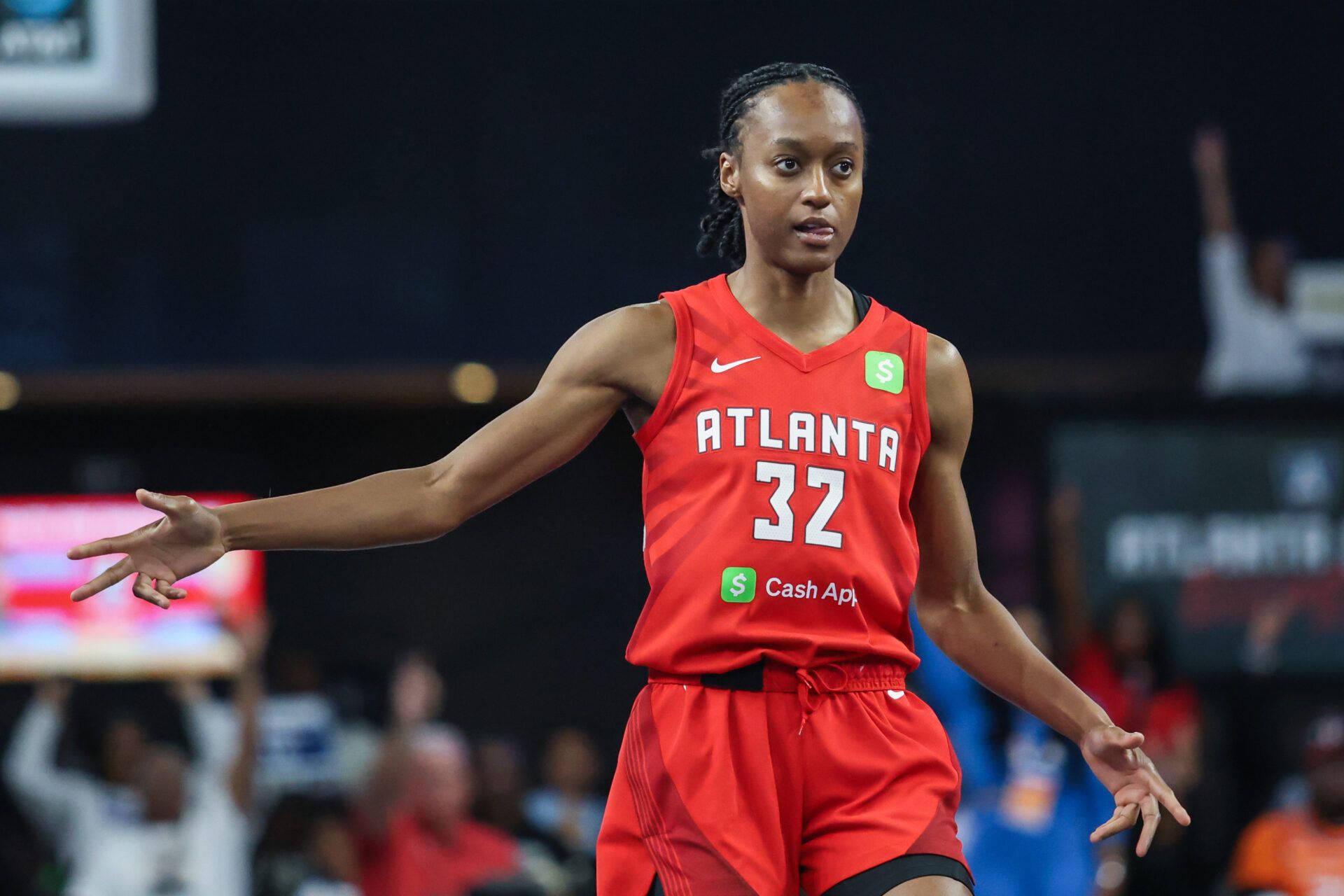
In May 2025, the Dream announced Cash App as their Official Financial Services Partner, marking the WNBA’s first team-level deal with the fintech giant and signaling a strategic push toward younger, digitally engaged audiences.
I knowwww you see it 🔥#DoitfortheDream x @CashApp pic.twitter.com/tAIZrj4lu8
— Renee Montgomery (@ReneeMontgomery) May 21, 2025
Dream’s Ownership Aims for the 2025 Title
Meanwhile, front office and roster moves under President & COO Morgan Shaw Parker and coach Karl Smesko have prioritized defensive rigor and veteran leadership.
All-Star center Brittney Griner has been on adding buckets non-stops this season, while rookie sensation Te-Hina Paopao adds scoring flair. With the blend of Nia Coffey, Naz Hillmon, Rhyne Howard, Allisha Gray, Brionna Jones, and more, Atlanta eyes a return to the playoffs for the first time since 2018.
With a leadership triumvirate that spans real estate prowess, executive acumen, and firsthand player insight, the Atlanta Dream stands poised at an inflection point. With sell-out crowds, marquee partnerships, and an ambitious front office, the franchise could soon chase the upper echelons of the WNBA’s financial leaderboard—and perhaps, finally, the sport’s ultimate prize.
