
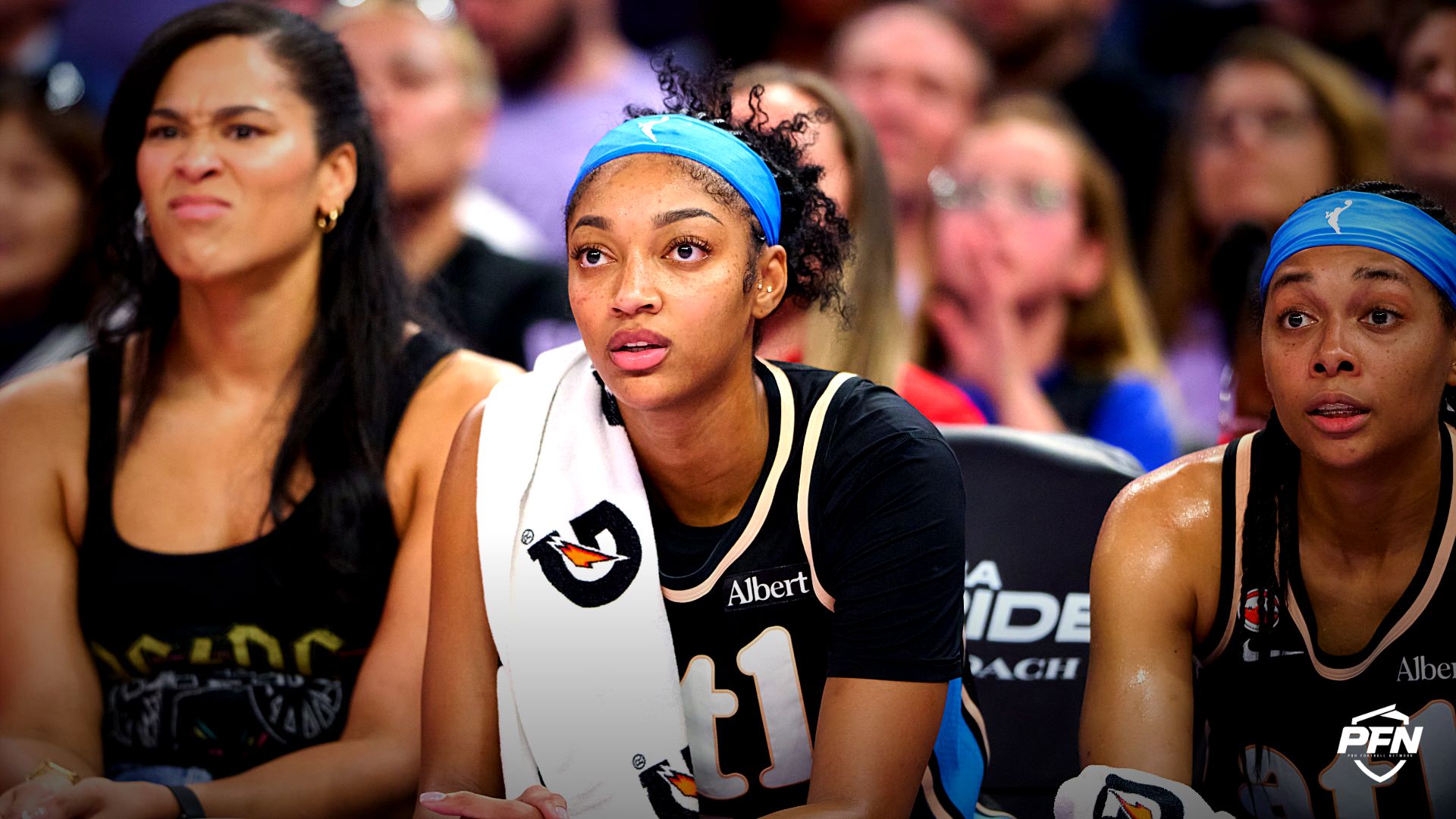
Angel Reese and the Atlanta Dream found themselves at the center of an unexpected controversy before their highly anticipated showdown against the Indiana Fever on Sunday.
While Caitlin Clark and the Fever stood on the court for the U.S. national anthem, Reese and her Dream teammates reportedly remained in the locker room.
The decision quickly drew criticism from political commentators, WNBA observers, and sports fans, taking attention away from what was supposed to be one of the league’s biggest games of the season.
Dan Dakich Puts Angel Reese and Dream on the Spot Over National Anthem Decision
The Dream had already moved the highly anticipated matchup from their usual home at Gateway Center Arena in College Park, Georgia, to the much larger State Farm Arena in Atlanta. The move paid off at the gate, with more than 16,000 fans filling the venue for a game that ultimately went to overtime.
But before the basketball began, the anthem became the talking point.
The Fever stood on the court while the Dream remained inside, prompting former Indiana coach Dan Dakich to question the decision on social media.
“Curious for you “longtime” @WNBA fans…Why exactly are @AtlantaDream mad at the United States? They leave during the anthem… is that some ‘protest’ or just what they do?” Dakich wrote.
Curious for you “longtime” @WNBA fans…
Why exactly are @AtlantaDream mad at the United States ?
They leave during the anthem.. is that some “protest” or just what they do?— Dan Dakich (@dandakich) August 18, 2026
There is, however, an important context surrounding the decision. Staying in the locker room or tunnel during the national anthem has been practiced by some WNBA teams, including the New York Liberty, Golden State Valkyries, and the Dream.
The league also does not enforce a strict requirement that teams must be on the court for the anthem, giving organizations flexibility in how they handle the pregame tradition.
That practice has also been used as a form of protest. In 2020, WNBA teams such as the Liberty and Seattle Storm remained off the court during the anthem in response to racial injustice and the death of Breonna Taylor.
That history did little to quiet the latest debate.
Dakich’s criticism was relatively measured compared with some of the reactions that followed. Civil rights lawyer Leo Terrell described the Dream’s decision as “unAmerican” and a “betrayal” to the country. Terrell later celebrated when Reese missed a point-blank opportunity in regulation that could have given Atlanta the victory.
Reese and the Dream ultimately had no answer in overtime.
The Fever pulled away for a hard-earned 95-91 victory, turning what had already been a politically charged pregame discussion into another layer of drama surrounding one of the WNBA’s most closely watched rivalries.
The basketball result is now in the books, but the anthem controversy is unlikely to disappear as quickly. For the Dream, the decision may have been routine; for critics, it carried a very different message.
And until Reese or the organization offers more clarity about why the team remained inside, the question Dakich raised will continue to hang over the conversation.
