
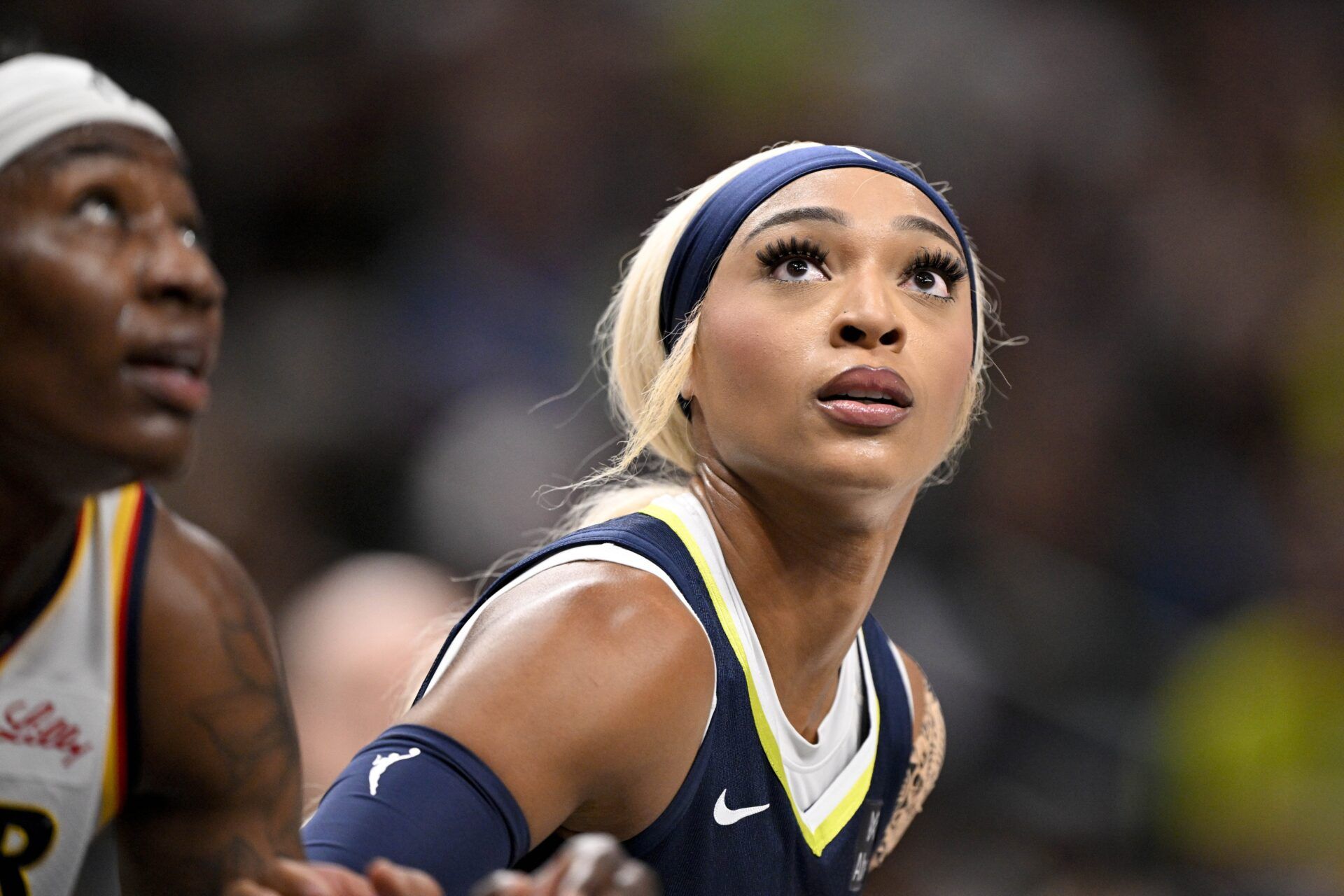
Although the NBA and WNBA share many similarities, there are notable differences in certain areas, particularly regarding finances. One such stark difference came to light after the Minnesota Lynx acquired DiJonai Carrington in a blockbuster trade.
Significant Difference Between NBA and WNBA Highlighted in the DiJonai Carrington Trade
Dallas Wings traded Carrington to the Minnesota Lynx for Diamond Miller, Karlie Samuelson, and Minnesota’s 2027 second-round draft pick. As NBA insider Bobby Marks noted, a trade like this won’t likely happen.
“Unlike the NBA, there are no salary matching rules in the WNBA,” Marks wrote on X. “The only requirement is that the acquiring salaries have to fit below the $1.5M hard cap.”
Unlike the NBA, there are no salary matching rules in the WNBA.
The only requirement is that the acquiring salaries have to fit below the $1.5M hard cap. https://t.co/ByK8HwbSCC
— Bobby Marks (@BobbyMarks42) August 3, 2025
The WNBA operates under a hard salary cap of approximately $1.5 million per team for the 2025 season. Unlike the NBA, which has a soft cap with exceptions, the WNBA’s cap is rigid and not flexible.
In the NBA, salary matching rules dictate that when teams trade players, the salaries of the traded players must generally be within a certain percentage of each other. It is a key part of the salary cap and luxury tax system.
It’s designed to maintain competitive balance and prevent teams from easily circumventing spending limits. The allowable salary difference in a trade depends on the team’s cap status and the size of the outgoing salary.
For outgoing salaries up to $7.5 million, the incoming salary can be up to 175 percent of the outgoing salary plus $250,000. If the outgoing salary is between $7.5 million and $29.5 million, the incoming salary can be up to 125 percent of the outgoing salary plus $250,000.
For outgoing salaries above $29.5 million, the incoming salary can be up to 100 percent of the outgoing salary plus $250,000.
Read More: How Much Do WNBA Players Get Paid? How Caitlin Clark and Co.’s Contracts Compare to NBA and NCAA
Teams above the first apron face stricter rules. They must match salaries within 110 percent of the outgoing salary, cannot aggregate contracts, and cannot take back more players than they send out.
Teams above the second apron face even tighter restrictions. They must match salaries dollar-for-dollar. Additional restrictions include no sign-and-trade deals, no use of trade exceptions, and limitations on using cash in trades.
Although salary matching is a great rule in the NBA, the WNBA doesn’t require it due to its smaller scale and lower salaries. The league’s financial constraints and focus on growth prioritize simplicity in trades.
The WNBA generates significantly less revenue than the NBA. They make approximately $200 million annually, much less than the NBA’s $10-13 billion.
This smaller revenue pool and reported annual losses of $40–50 million limit the league’s ability to implement salary matching. As such, they allow teams to focus on roster construction rather than complex financial mechanisms.
