
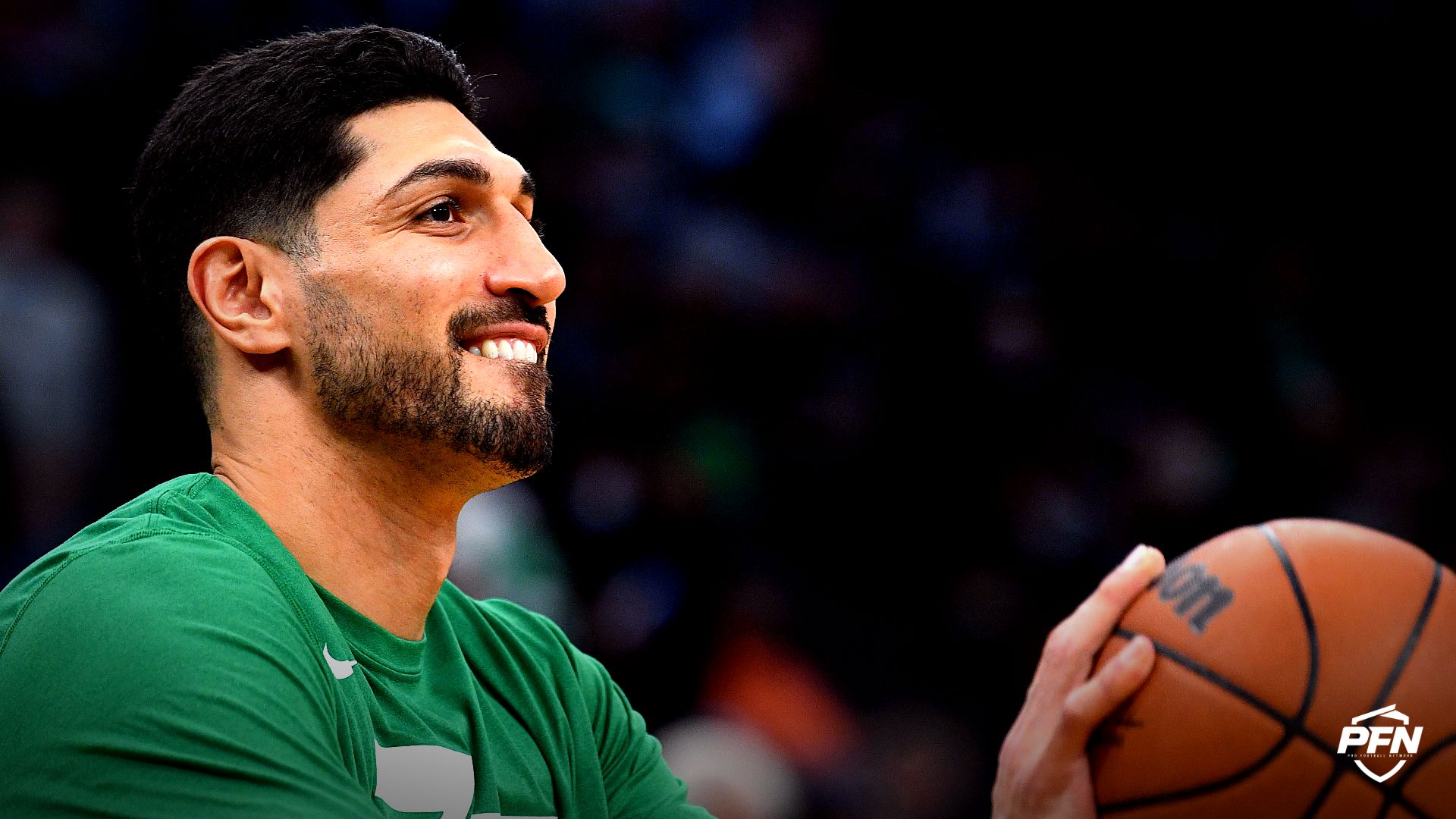
Earlier this month, Enes Kanter announced that “after careful consideration and reviewing current eligibility guidelines” he was “officially declaring myself a WNBA prospect,” immediately pushing himself into the center of arguably the most heated debate in WNBA history.
The controversy began gaining momentum last month after Indiana Fever guard Sophie Cunningham argued that women should be protected from competing against “biological men.” Kanter’s declaration has since added another layer to the increasingly frictional discussion over transgender eligibility in women’s basketball.
On Friday, the former NBA lottery pick revealed what prompted his decision.
Enes Kanter Reveals Who Encouraged Him to Make WNBA Move
Cunningham’s position has drawn both support and criticism from within and around the WNBA. It also brought renewed attention to comments made in May by Golden State Valkyries star Gabby Williams, who said she “would welcome a trans athlete on my team or against my team anytime.”
That comment became a key moment for Kanter, who said it helped convince him to pursue a WNBA opportunity.
“One player came out and literally said, ‘I welcome trans athletes in my team any day and every day.’ She even said, ‘There’s no problem with me going against a trans athlete.’ … I was like, if they don’t have problems with it, why not just go and take my shot and try to play basketball in the WNBA?” Kanter said in an interview with the American First Policy Institute.
Enes Freedom reveals the moment of inspiration to join the WNBA:
“I’m on my couch, watching the WNBA and the post-game interviews. One of the players came out and said, ‘I welcome trans athletes in my team any day and every day.’ And even said, ‘There’s no problem with me going… pic.twitter.com/F7vVbtAuLE
— jay plemons (@jayplemons) August 14, 2026
“It seems like the league itself plus the players have no problems with it. The WNBA itself, players, especially the coaches, are the ones that have been advocating trans people playing in women’s sports, so I’m not sure why I’m getting all this backlash. They are the ones who encouraged me to do this.”
Kanter also pointed to WNBA coaches Cheryl Reeve, Stephanie White and Natalie Nakase, who have opposed the exclusion Cunningham has advocated for in discussions about transgender athletes.
Another former NBA player, Royce White, also declared himself eligible for the 2027 WNBA Draft, prompting Commissioner Cathy Engelbert to meet with team presidents and general managers on Wednesday to discuss the issue.
The meeting produced no definitive eligibility ruling. The league also said, via a statement released to ESPN:
“We strongly denounce the bad-faith efforts to use these topics to demean or marginalize others.”
Kanter responded on Wednesday, challenging the league’s position.
“The WNBA says a woman is anyone who claims to be one. So if I say I’m a woman, you have to accept it. Those are the rules the WNBA created. Why does anyone get to decide whose journey is real and whose isn’t? Who gets to judge? Rules Are Rules!” the former Boston Celtics center tweeted.
Engelbert said the league “will continue to engage all league stakeholders in the coming weeks and months.”
Kanter’s refusal to back down has made the 2027 WNBA Draft, scheduled for next April, even more intriguing and highly anticipated. The 6-foot-10 center’s declaration has turned an ongoing debate into a question the league can no longer leave unanswered.
How will its eligibility rules be interpreted when a player like Kanter actually seeks entry?
