
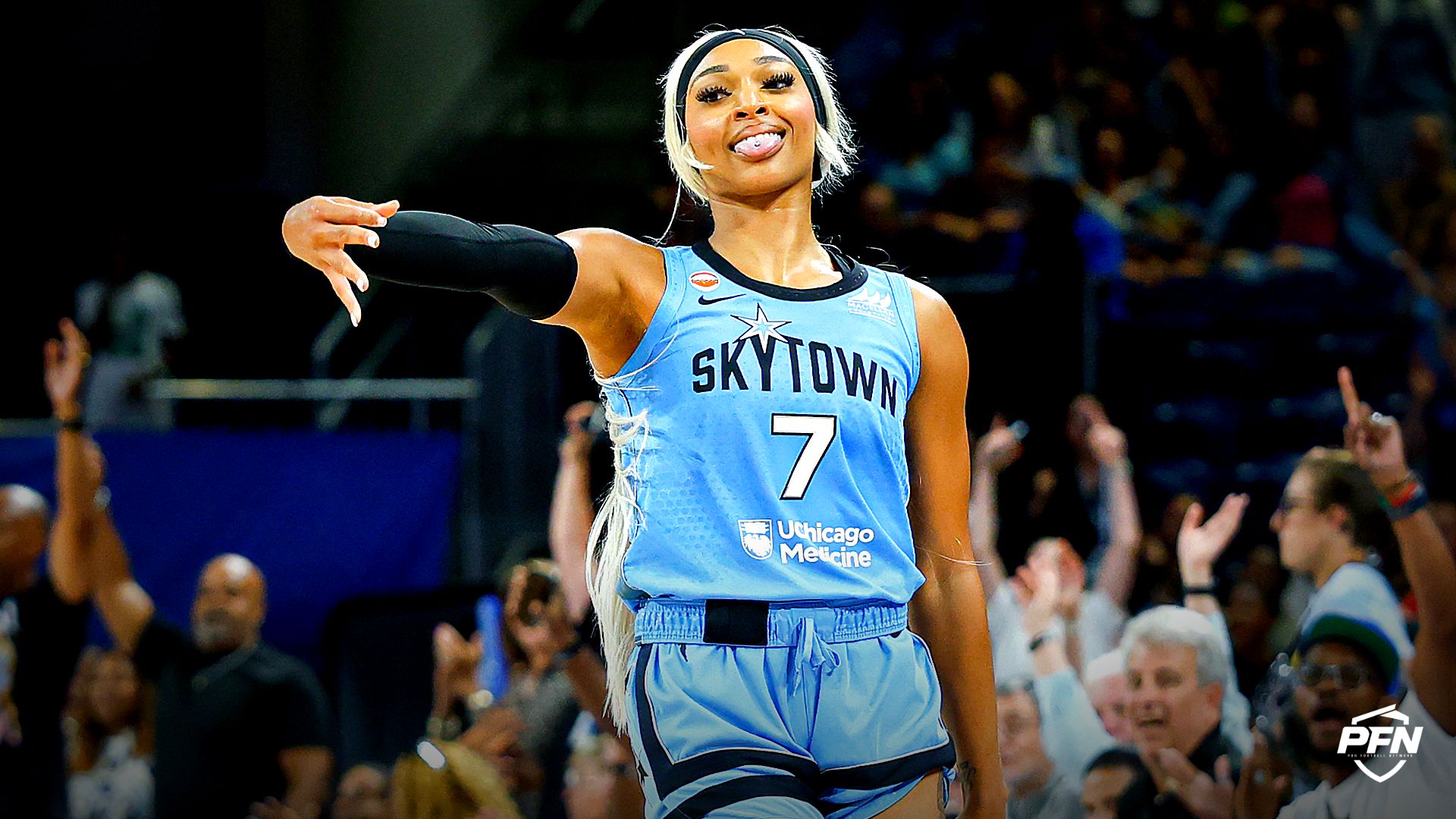
DiJonai Carrington has found herself at the center of a WNBA controversy that has drawn sharp criticism from sports analyst Jason Whitlock.
A little over a week ago, the Chicago Sky guard struck Indiana Fever guard Sophie Cunningham around the neck area, sending her to the floor. The play resulted in a Flagrant 2 foul and Carrington’s ejection.
Almost immediately afterward, Carrington posted “White Privilege” on social media, taking the controversy well beyond the basketball court and into an issue Whitlock discussed on Sunday.
Jason Whitlock Sounds Alarm Over DiJonai Carrington’s Physical Play and Social Media Post
Carrington’s hit on Cunningham generated widespread backlash, but her social-media post sparked an entirely different conversation. The remark drew criticism from analysts, WNBA observers, and even non-basketball fans who questioned what she meant.
Carrington later pushed back against those interpretations, insisting that her “White Privilege” comment was not about the foul or the resulting penalty. She said that the connection was made by her critics rather than by her.
However, Carrington did not publicly explain what prompted the post, leaving the issue open to further speculation.
Whitlock addressed the controversy on Sunday during an interview with journalist Bill O’Reilly, arguing that the WNBA could face serious consequences if it does not take a stronger stance on Carrington’s physical play.
“DiJonai Carrington should never play in the WNBA again. … Let’s say the next white girl she goes after suffers a serious injury, and they will say, ‘Look, hey, this league didn’t do anything about DiJonai Carrington. There’s a pattern of behaviour here on the court. They didn’t take strong enough positions against what she was doing. She played the race card. She’s doing this intentionally,” Whitlock said.
“The WNBA is opening itself up to a lawsuit that could destroy this league if they keep letting this woman back out there who has no control of her emotions, no control of her racism. I think they’re playing with fire, but I will not be shocked when they get burned.”
Whitlock’s comments come as scrutiny surrounding Carrington has extended beyond sports media. Florida Attorney General James Uthmeier also weighed in after the Cunningham incident.
“The WNBA knows better than to play games down here in Florida, because I’ll be charging people with assault,” Uthmeier tweeted. He later modified his statement with another message:
“I should probably clarify … assault and battery.”
Whitlock believes the league needs to look at Carrington’s history rather than treating the Cunningham incident in isolation. Earlier in the interview, he referenced Carrington’s eye poke involving Caitlin Clark in 2024 before returning to the hit on Cunningham.
Still, Whitlock’s claims about potential lawsuits or intentional conduct are his opinions, not facts. Carrington was disciplined for the Cunningham incident under WNBA rules, while any legal consequences would require a separate process and factual determination.
For now, Carrington remains a WNBA player, but the controversy has clearly grown beyond one foul. Between her physical play, an unexplained social-media post, and criticism from figures outside basketball, the Sky guard has put the league under a brighter spotlight and more intense scrutiny.
