
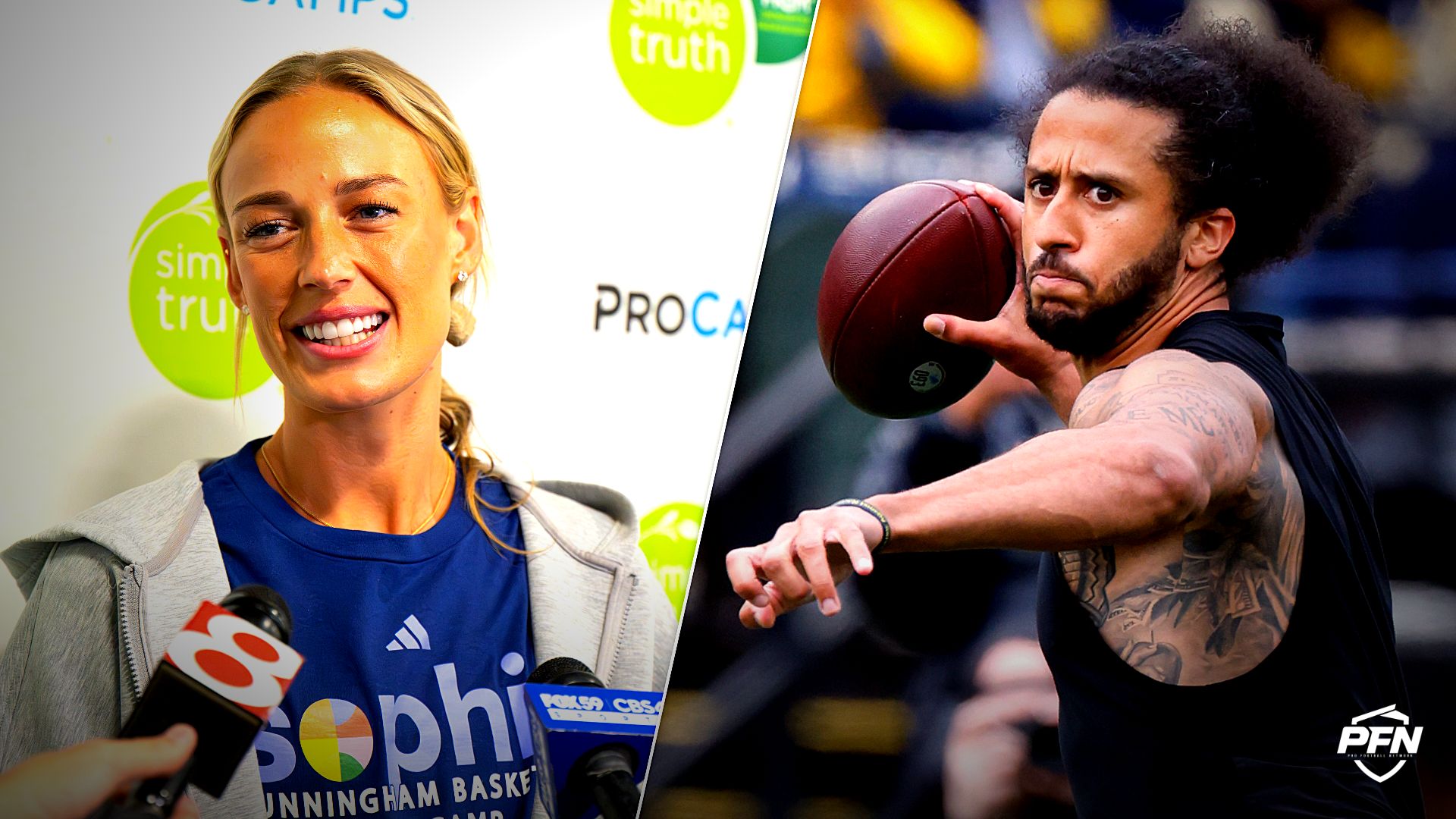
About two weeks ago, Sophie Cunningham doubled down on her stance against transgender athletes competing against women. The Indiana Fever guard insisted that she is “not a very political person,” but won’t back down from her “beliefs” and “morals,” which include protecting girls and women from going up against “biological men.”
On Monday, in an op-ed in The Guardian, Howard Bryant strongly reacted to Cunningham’s comment about being apolitical and her stance on trans athletes.
Sophie Cunningham Draws Colin Kaepernick Comparison in Ongoing Debate
Cunningham’s unshakable stance on transgender athletes competing in women’s sports has grown into one of the most polarizing storylines in the sports world and beyond. In recent weeks, Fever games have been accompanied by demonstrations from supporters and critics alike, while politicians, media personalities, athletes, and fans have all weighed in on the debate.
Now, veteran sports columnist Bryant has joined the discussion with a provocative argument.
“Indiana Fever guard Sophie Cunningham is now in the act, accepting the role as the right’s anti-Black, anti-transgender culture war ambassador, the role originally intended for Caitlin Clark,” Bryant wrote.
“Cunningham plays the role of the blithe and bubbly iconoclast, oblivious to the world around as she unapologetically speaks her truths, but she is every bit as political as Colin Kaepernick, Megan Rapinoe, or her locked-armed, T-shirt-wearing colleagues that defined the WNBA when she first entered the league in 2019.”
The comparison was striking because of Kaepernick’s place in sports history.
The former San Francisco 49ers quarterback became one of the most divisive figures in American sports after kneeling during the national anthem to protest police brutality and racial injustice in 2016. His demonstrations sparked a nationwide debate that extended far beyond football.
President Donald Trump condemned Kaepernick’s protest, calling it “a terrible thing” and suggesting he “find a country that works better for him.”
Kaepernick couldn’t find a team willing to sign him after the 2016 season and later filed a grievance alleging that the NFL and team owners had blackballed him and colluded to keep him out of the league.
Bryant argued that Cunningham now occupies a similarly political space. Cunningham, however, has already rejected that characterization.
In an interview with ESPN’s Hallie Grossman last month, she pushed back against being labeled “MAGA Barbie” or anti-transgender. She said her position is rooted in personal “morals” and fairness to women.
Cunningham stressed that she simply wants “to extend love,” emphasizing the importance of “truth” and “being honest.” She added that protecting opportunities for girls and women remains central to her position.
As the conversation continues to stretch beyond basketball, Cunningham’s comments and the reactions they generate remain some of the most closely watched topics polarizing sports, culture, and politics.
