
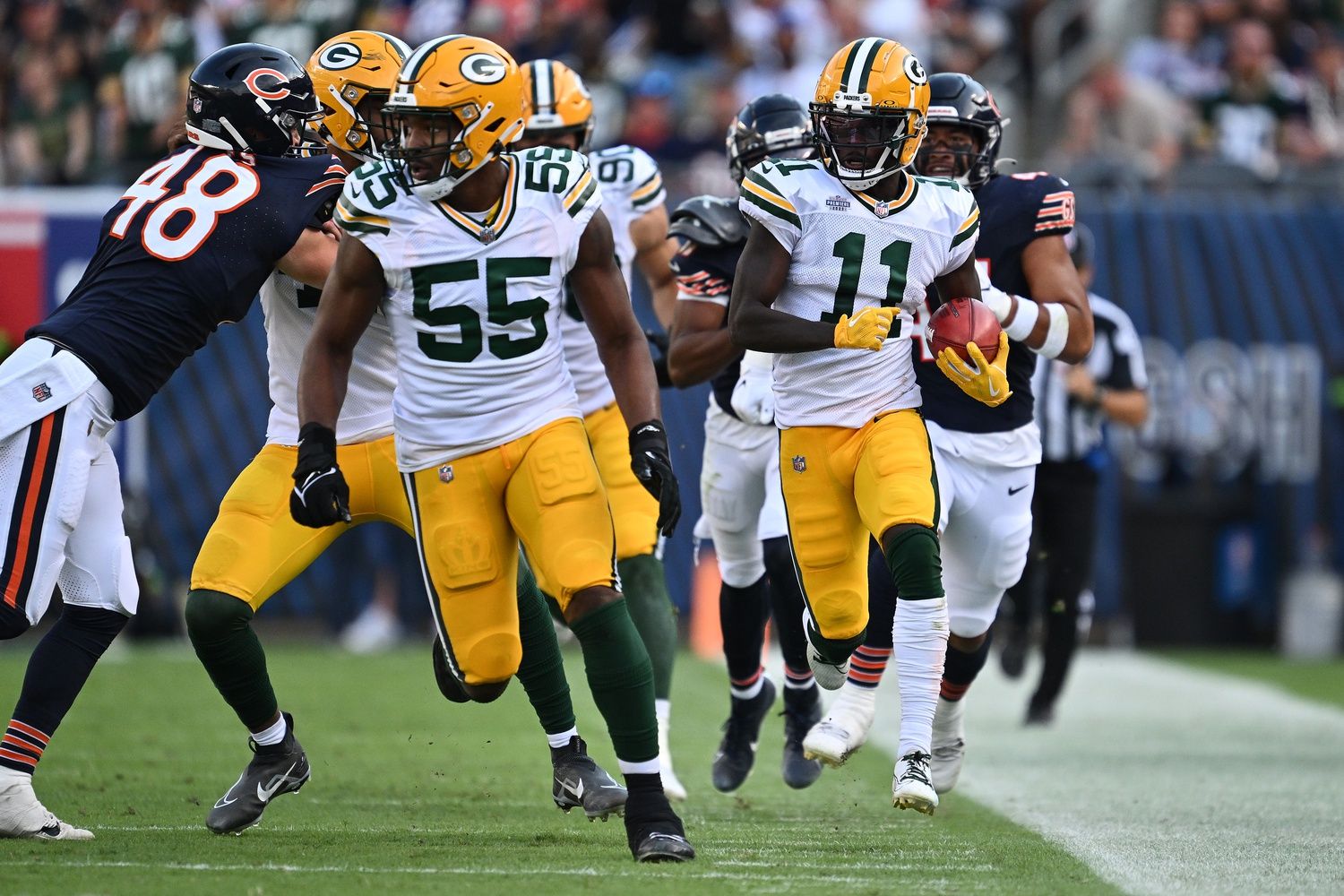
While watching an NFL game, you have likely noticed that when the ball carrier goes out of bounds, the clock only stops sometimes. At other times, it continues to run even after the player goes out of bounds. Why is that? Let’s delve into the NFL’s rules to understand.
When Does the Game Clock Stop?
There are three times when the clock will stop when a runner goes out of bounds:
- After a change of possession
- After the two-minute warning of the first half
- Inside the last five minutes of the second half
There Is One Key Exception
There is one exception when the clock will continue to run after a ball carrier steps out of bounds, even if the game is in the last two minutes of the first half or the last five minutes of the second half: if the ball carrier goes out of bounds backward after being contacted by a defender.
Not too long ago, this occurred on the NFL’s biggest stage. During the 2023 NFL Playoffs, Dallas Cowboys tight end Dalton Schultz was hit by a San Francisco 49ers defender and was backward while stepping out of bounds. As a result, the clock continued to run. This cost the Cowboys precious seconds as they tried to tie the game.
FOX’s Greg Olsen explained what happened to viewers: “When you go out of bounds, you have to be going forwards if you are contacted by the defender… You’ve gotta turn up and be physical into contact and get that official to stop the clock.”
Greg Olsen was all over the ruling to wind the clock on a Dalton Schultz catch.
“When you go out of bounds, you have to be going forwards if you are contacted by the defender… you’ve gotta turn up and be physical into contact and get that official to stop the clock.” 🏈 pic.twitter.com/KmwR4Nh5Pq
— Awful Announcing (@awfulannouncing) January 23, 2023
What Happens in All Other Situations?
For most of an NFL game, if a ball carrier runs out of bounds, the clock will stop long enough for refs to spot the ball. Once the official spots the ball and gives the signal, the clock will resume running.
But again, during the last two minutes of the first half and the last five minutes of the second half, the clock remains stopped until the next play begins.
It’s also worth noting that the clock will stop if there is an injury, review, penalty, or timeout of any kind. (However, in the final two minutes of each half, the refs can enforce a 10-second runoff if a team seems to be faking injuries to stop the clock because they are out of timeouts).
Has This Clock Stoppage Rule Always Been in Place?
This hasn’t always been the rule. The league’s owners approved the current rule after the 1990 NFL season. Before this rule change, the clock would stop anytime a runner went out of bounds.
Why did the league make this change? In an effort to speed up the game. That same year, the NFL also reduced halftime from 15 minutes to 12 minutes.
MORE: Simulate the NFL Season With PFSN’s Playoff Predictor
After the 1990 season, they also considered implementing a rule change that would start the game clock after an incomplete pass. However, the competition committee ultimately decided not to present this to the owners for a vote.
In 2008, college football adopted similar rules for runners going out of bounds.

Regardless of whether the runner goes out of bounds or not.
Per the NFL Rule Book it is actually whenever there is a change of possession the clock will stop. I could not find an explanation about the time on the clock so thank you for that.