
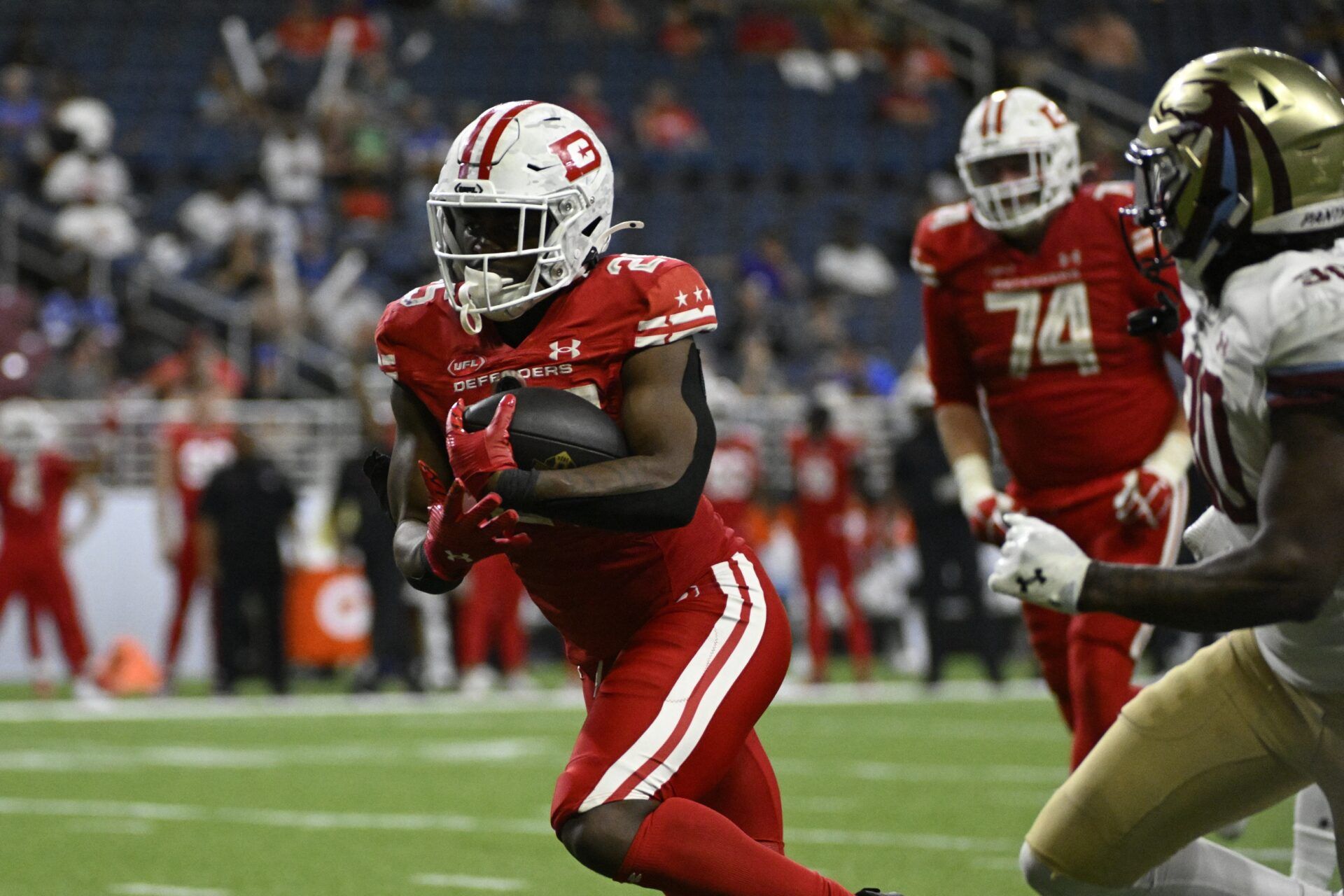
Dwayne “The Rock” Johnson’s league, the UFL, co-owned with Dany Garcia and RedBird Capital Partners since the 2024 XFL-USFL merger, operates as a calculated bet for everyone involved: players trade short-term earnings for a shot at life-changing NFL money.
UFL players will earn a minimum of $64,000 for the 2026 season, roughly 14 times less than the NFL’s rookie floor of $885,000. That gap tells only part of the story, as the math makes sense when you consider more than 20 UFL players landed on NFL rosters in 2024 alone. Spring football has become the clearest path back to the league for players cut from NFL training camps.

How Much Will UFL Players Earn in 2026?
The UFL’s collective bargaining agreement, ratified in April 2025, sets the minimum salary for 2026 at $6,400 per game. Players participating in all 10 regular-season games earn $64,000, up from $62,005 in 2025 and $55,000 in 2024.
Year-round health care, a major sticking point in negotiations, now includes seven months of active coverage plus subsidized COBRA for the remaining five months.
“UFL players are not millionaires,” Harry Marino, president of Sports Solidarity and the union’s lead negotiator, said when the CBA was announced. “Like many Americans, they are simply hard workers looking for fair pay and healthcare from an employer who can afford it.”
Quarterbacks earn the same base salary as every other position, a departure from the XFL’s model that reportedly paid top signal-callers between $200,000 and $400,000.
The UFL’s fiscal approach prioritizes sustainability over star power. Bonuses remain modest: $7,500 for league MVP, $5,000 for Player of the Year, $500 for Player of the Week, and $5,000 for each player on the championship team.
Compare that to the NFL, where the 2026 rookie minimum is $885,000, and veterans with seven or more credited seasons earn at least $1.3 million. Even NFL practice squad players take home $13,750 per week. A player spending just five weeks on an NFL practice squad would out-earn a full UFL season.
Comparing UFL Coaching Salaries to NFL Staffs
The UFL’s coaching ranks feature recognizable names working for a fraction of their previous earnings. Former Oklahoma head coach Bob Stoops earned more than $1 million in the XFL’s 2020 iteration, according to bankruptcy proceedings. Skip Holtz, Wade Phillips, and other veteran coaches accepted pay reductions to remain in spring football after the merger.
For the 2026 season, the UFL signed all head coaches to year-long contracts rather than the seasonal deals previously used. Exact figures remain undisclosed, but XFL head coaches in 2023 earned six figures annually on multi-year deals. Those numbers dropped when the leagues combined.
BE AN NFL GM: PFSN’s Ultimate GM Simulator
NFL head coaches operate in a different financial universe. Top-tier coaches earn between $15 million and $20 million annually. John Harbaugh, Sean McVay, Andy Reid, and their peers command salaries that dwarf entire UFL team payrolls.
The disparity extends throughout the coaching staff. NFL coordinators routinely earn seven figures while UFL assistants work for amounts closer to what high school coaches make in affluent districts.
What the UFL offers instead is opportunity. Coaches looking to rebuild reputations or stay connected to the game find a platform that values their experience without the year-round grind of college football’s recruiting demands. For Johnson and his ownership group, paying established names creates credibility the league couldn’t buy with unknown staff.
The salary structure reflects the UFL’s position in professional football’s hierarchy. It’s not trying to compete with the NFL’s payroll. It’s trying to produce players and coaches worthy of it.
