
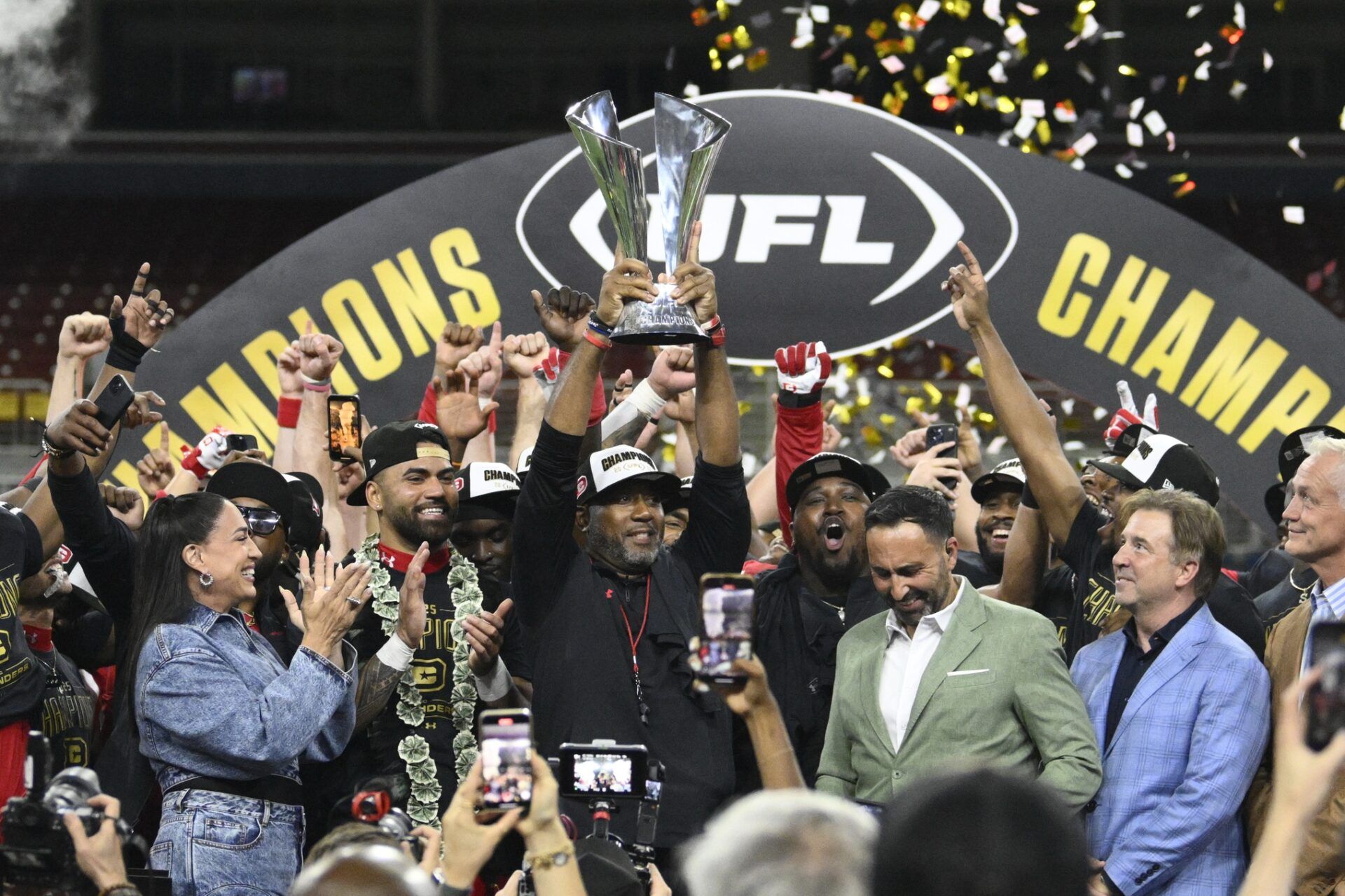
The UFL kicks off its 2026 season Friday, having banned the tush push weeks after an NFL competition committee co-chairman confirmed they won’t even discuss outlawing it. That split decision captures the philosophical divide between the leagues better than any rulebook comparison ever could.
Spring football has become the NFL’s unofficial research and development department. The dynamic kickoff that’s now standard in the NFL? Born in the XFL. But the UFL isn’t just testing concepts for its big brother anymore. It’s making bolder choices the NFL won’t touch.

How the Tush Push and 1-Foot Catch Rule Define the NFL-UFL Split
The NFL voted 22-10 in favor of banning the tush push in May 2025, falling short of the 24 votes needed. Competition committee co-chairman Rich McKay said in February there’s “no team proposal” targeting the play for 2026. The conversation is dead.
The UFL went the other direction entirely. Dean Blandino, the league’s head of officiating, announced a ban on any play where the quarterback takes a snap under center and gets pushed forward by teammates. “We want every play, if possible, to have a football action,” Blandino told Fox Sports.
The catch rule represents another fork in the road. The UFL now requires only 1 foot in bounds, matching the NCAA. The NFL’s 2-foot rule remains in place.
A play like Indiana Hoosiers quarterback Fernando Mendoza’s game-winning touchdown pass to Omar Cooper Jr. is the type of play that wouldn’t count under NFL rules. The UFL made a choice about which version of football it wants to be.
These aren’t just rule tweaks. They’re statements about what each league values. The NFL protects its traditions and lets market forces (the Philadelphia Eagles’ declining tush push efficiency fell to roughly 63.6% in 2025 after peaking above 80%) determine whether plays survive. The UFL intervenes to shape the game it wants.
4-Point Field Goals Change Late-Game Math in the UFL
The UFL’s most dramatic innovation awards 4 points for field goals of 60 yards or longer. NFL kickers converted 12 of 22 attempts from that range in 2025. The UFL had 0 such attempts last season, but that changes when the reward doubles.
“Kicking a 65-yard field goal is a lot harder than one from 35,” Blandino told ESPN. “Why should they count the same?”
The math matters. A team down by 4 can tie with a single long kick instead of needing a touchdown. Coaches who would normally settle for field position might let their kicker take a shot worth an extra point.
BE AN NFL GM: PFSN’s Ultimate GM Simulator
The UFL is betting that changed incentives produce better television. The punt ban adds another layer. Once an offense crosses midfield, it cannot punt, period, even if penalties or sacks push it back behind the 50.
The 2-minute warning lifts this restriction. Until then, every drive that reaches the opponent’s territory must end in a scoring attempt or a turnover on downs.
The conversion menu creates even more late-game scenarios. Teams can kick a 33-yard extra point for 1, go for 2 from the 2-yard line, or attempt a 3-point conversion from the 8-yard line. A touchdown sequence can now produce anywhere from 6 to 9 points, depending on the choices.
Both leagues run versions of the dynamic kickoff, though the UFL moved coverage players back 5 yards from where they lined up last season to create more return opportunities. The NFL is considering its own tweaks at next week’s owners meetings in Arizona.
What emerges from this rule landscape is two leagues stress-testing different visions of professional football. The NFL trusts its traditions, and the UFL bets on intervention. By the time summer arrives, we’ll know which approach produces better games.
