
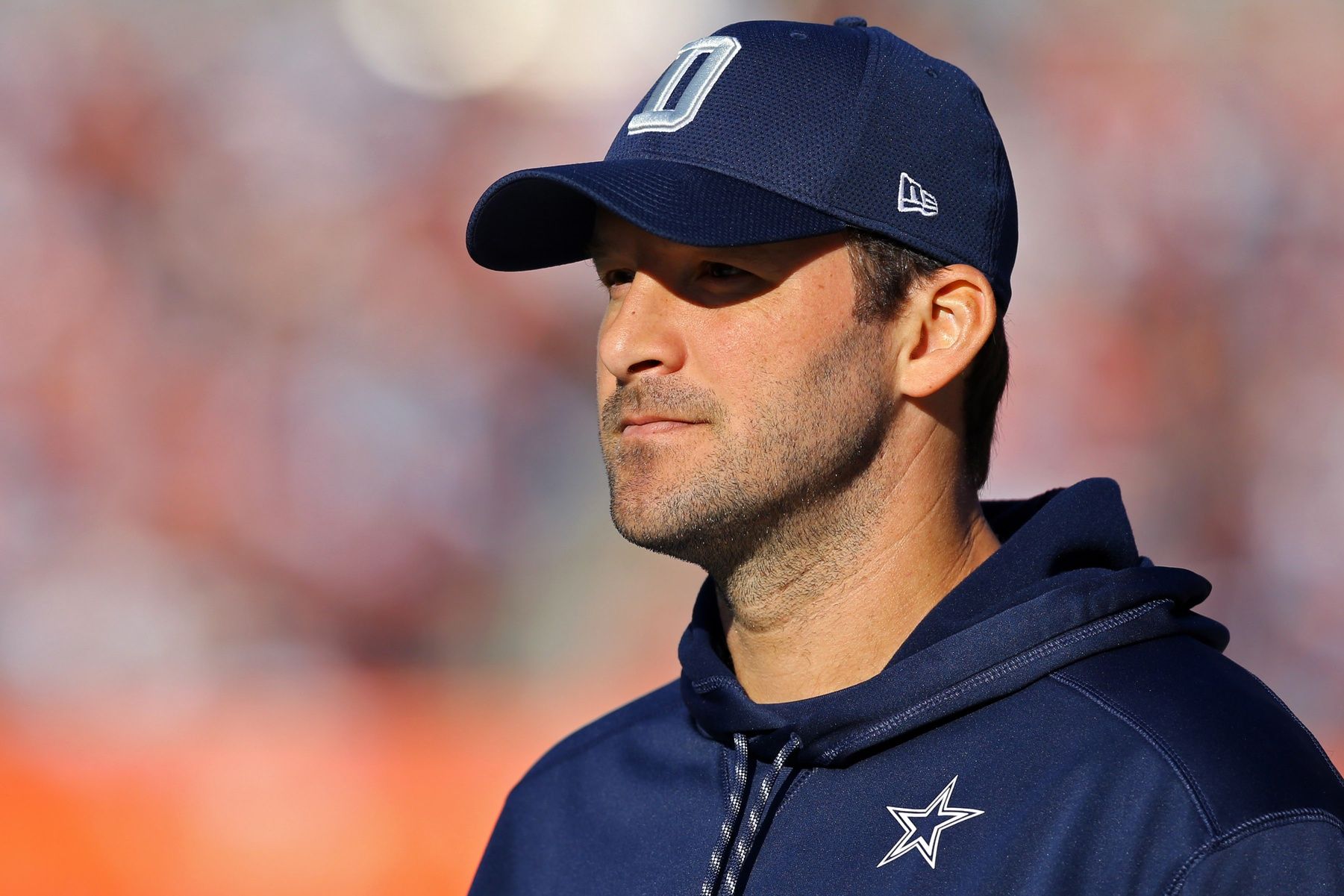
Tony Romo once revolutionized the economics of NFL television. Now, as criticism grows and new options pop up, his groundbreaking CBS contract is back in the spotlight.
Romo’s voice still anchors some of the league’s biggest games. But as the NFL’s broadcast landscape evolves, the question is no longer how much he makes; it’s how long he remains the unquestioned face of CBS’s top booth.
Tony Romo’s CBS Contract Timeline and What Comes Next
After hanging up his cleats with the Dallas Cowboys in 2017, Tony Romo transitioned effortlessly into broadcasting. Teaming up with Jim Nantz, Romo quickly became a sensation on CBS. His knack for breaking down defenses, predicting plays, and explaining strategies in real time set a new benchmark for NFL analysts.
That early success paved the way for a deal that changed the game. In 2020, Romo signed a 10-year, $180 million extension with CBS, making him the highest-paid sports broadcaster ever at that time. The impact was immediate. Troy Aikman secured an $18 million-per-year contract with ESPN, and Tom Brady later surpassed them all with a staggering $375 million deal with Fox.
Understanding the context of Romo’s deal is crucial. CBS didn’t have much leverage; there wasn’t a clear successor waiting in the wings, and Romo’s value soared. The network invested heavily to ensure stability at the top of its NFL coverage.
Five years later, that investment looks more complicated.
Fan criticism has steadily grown. Viewers have taken issue with Romo’s delivery, energy, and tendency to lean heavily into quarterback praise, particularly in games involving Patrick Mahomes and Josh Allen. The frustration peaked during the recent Wild Card matchup between the Bills and Jaguars, when social media backlash was swift and loud.
Romo acknowledged the performance afterward. “We were just grinding through it,” he said on SiriusXM, citing illness in the booth. That explanation did little to quiet critics who feel the decline has been ongoing rather than isolated.
Financially, CBS is committed. Romo still has four years remaining on the original 10-year agreement. Walking away would be costly, and there is no public indication that the network plans to do so. Still, league observers believe the situation is being monitored closely, mainly as CBS quietly builds alternatives.
One of those alternatives made his presence felt as J.J. Watt’s debut as a game analyst alongside Ian Eagle drew positive early reviews. Watt showed polish, enthusiasm, and growth potential. More importantly, he gives CBS something it lacked when Romo signed his extension: options.
This doesn’t mean Romo is leaving. Not yet. But the dynamics have shifted. CBS no longer operates from a position of necessity. Competition within the booth, changing audience expectations, and the weight of Romo’s contract have all converged.
Romo revolutionized NFL broadcasting once. The next chapter may depend on whether he can evolve again and whether CBS believes the best version of its future still runs through him.
