
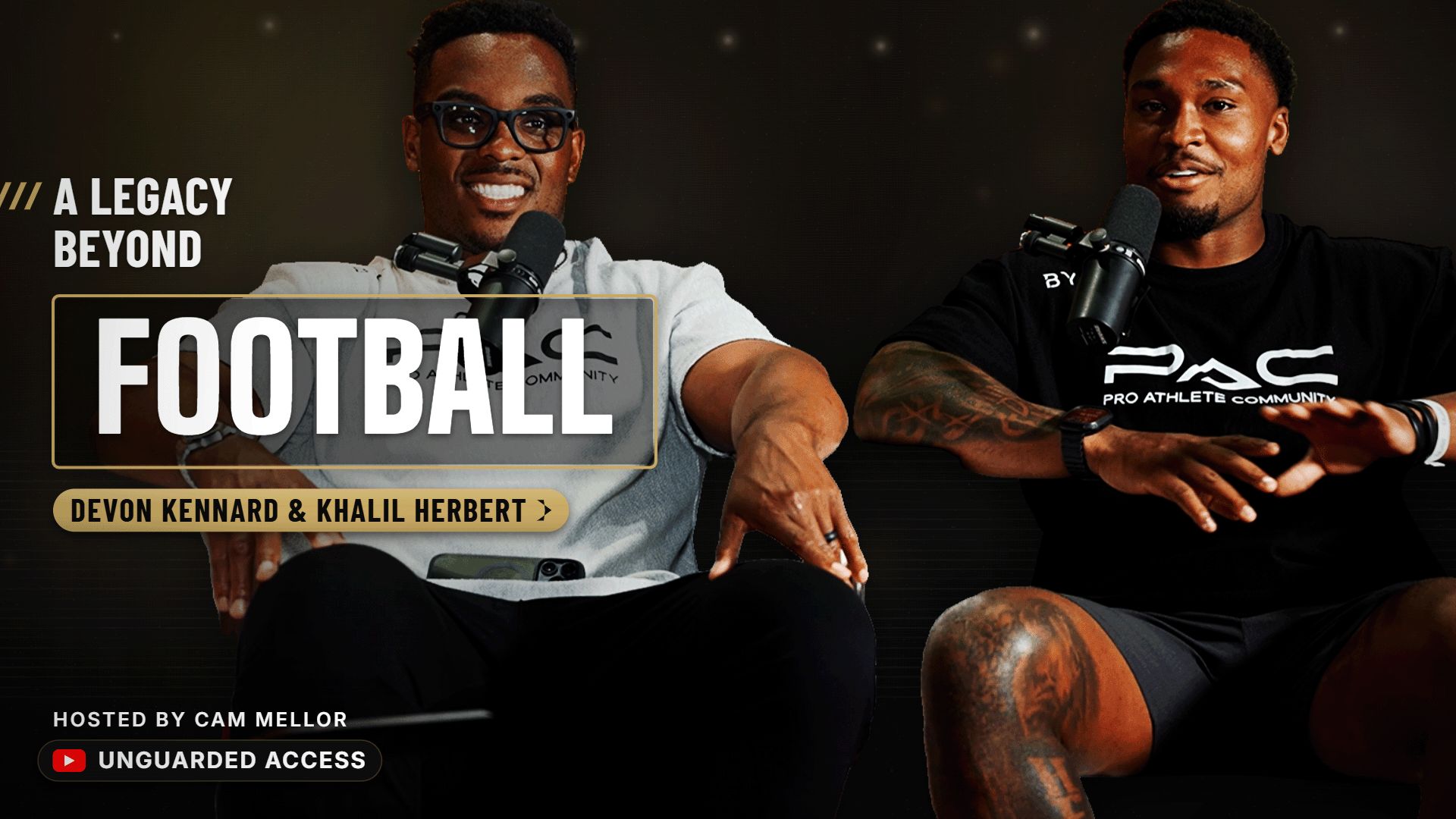
Devon Kennard arrived at USC in 2009 as a consensus five-star recruit, ranked among the top defensive line prospects in the country, recruited by Pete Carroll’s staff. What followed was nearly four years of trying to stay upright.
“I mean, to be frank, it was hard,” Kennard told PFN’s Unguarded Access at Pro Athlete Community’s Accelerate Event in Phoenix, a multi-day conference designed to prepare players for their post-NFL careers. “It taught me resilience. I went through a lot of different emotions of anger, frustration, resentment, bitterness, depression.”
NFL veterans don’t often use that last word about their college careers. Kennard, who played nine seasons for the Giants, Lions, Cardinals and Ravens before retiring in October 2023, said it without flinching.
How USC’s Sanctions and Carousel Broke Devon Kennard’s Game Plan
Kennard came out of Desert Vista High School in Phoenix as a defensive end. At USC, the staff moved him almost immediately. Defensive line. Outside linebacker. Inside linebacker. Multiple defensive coordinators across his four years on campus. The NCAA tore through the program in June 2010 over the Reggie Bush case, gutting scholarships and banning postseason play. A torn pectoral muscle cost Kennard the entire 2012 season.
“I was coming out of high school, I was a top five recruit in the nation, the best [defensive end],” Kennard said. “I come out, go to SC, position changes, injuries, all this. I felt like I was working harder than everybody, and I just couldn’t catch a break.”
His father, Derek Kennard, had started at center for Dallas in Super Bowl XXX while playing through a separated shoulder. Devon grew up with that ring in the basement, the trophy he used to bring friends and dates over to see. By his junior year at USC, the family model felt unreachable.
MORE UNGUARDED ACCESS: The Candid Ty Montgomery Story You’ve Never Heard
“Often times the things that hurt you in the moment are preparing you for something,” Kennard said. “It made me realize I needed to tether my identity to something bigger than just football. No matter how good I was or how hard I worked, the game was not always going to be loyal to me.”
From Sam Linebacker to Kennard Capital: How the Worst Years Built His NFL Career
The position changes Kennard resented at USC turned out to be the foundation of his draft profile. The New York Giants took him in the fifth round of the 2014 NFL Draft and asked him to play Sam linebacker in a 4-3 base. Drop into coverage. Carry verticals. Read curl-flat. Things a true defensive end never has to learn.
“If I didn’t change positions and I didn’t understand what a weak hook was, a curl flat, carry [two-high] vertical, I wouldn’t have been able to do that,” Kennard said. “I don’t know what my career would have done.”
He stuck around for nine seasons. Captain in Detroit. Walter Payton NFL Man of the Year nominee in 2019. A 2020 reunion with the Arizona Cardinals, his father’s first NFL team, made the Kennards the third father-son duo to play for the franchise.
He retired on his own terms in October 2023, then scaled the business he’d built during his playing years. Kennard Capital and 42 Solutions now deploy eight figures of capital across Arizona real estate and private lending. He’s written two books on real estate and personal finance, sits on PAC’s advisory board, and speaks to active players about what comes after.
The mindset he uses now, he says, traces directly back to what USC took from him.
“There’s a lot of people who don’t understand the difference between what’s mandatory and what’s necessary,” Kennard said. “Everybody does what’s mandatory to keep their job, to make sure they can provide for their kids. But not many people are willing to do what’s necessary to be as successful as they can. I’m willing to do what’s necessary. That’s the formula for being successful in your next endeavor outside of the game.”
The worst four years of his life paid for the next four chapters.