
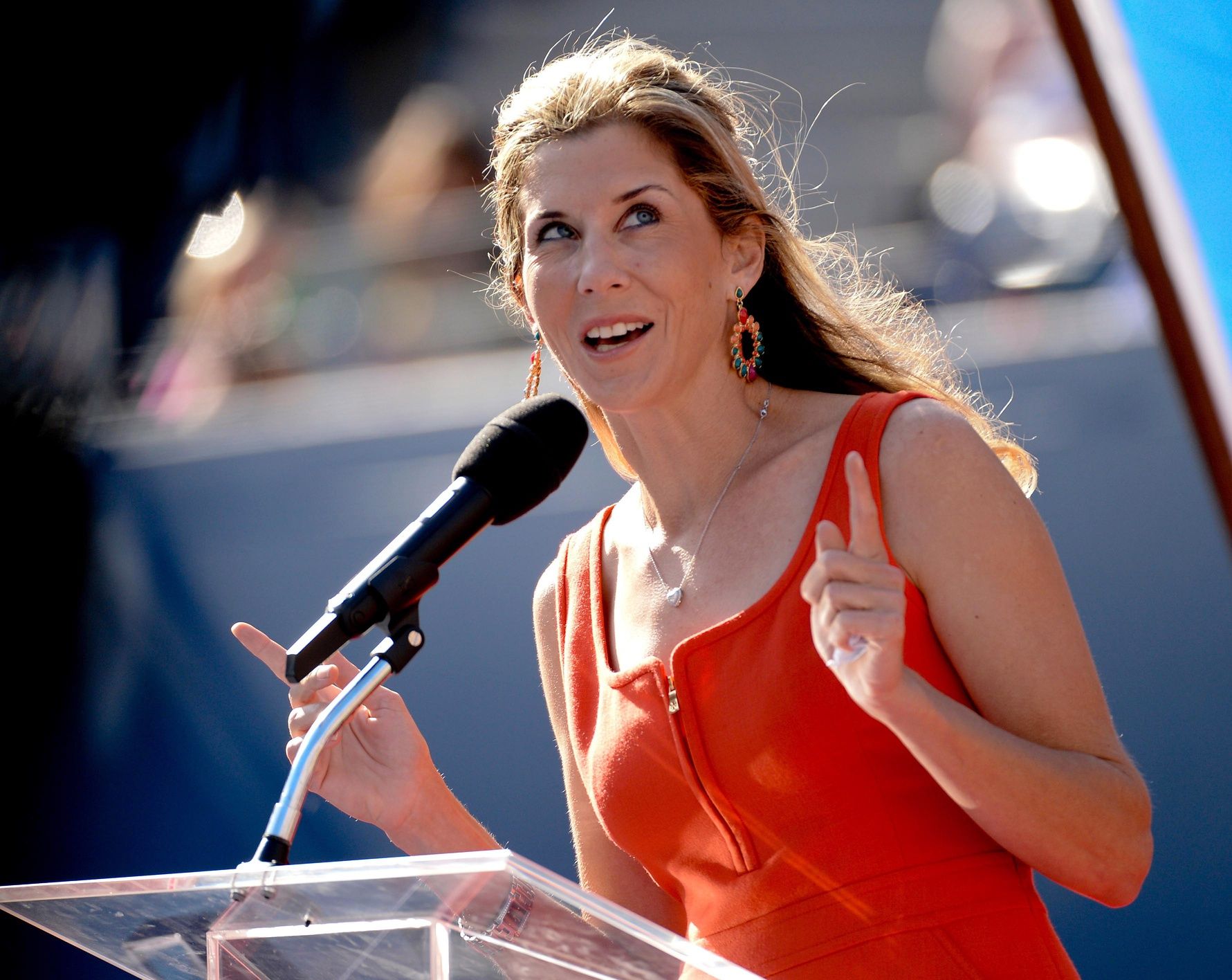
Monica Seles once shared her feelings of inadequacy on the court after returning to play following her infamous stabbing incident. The former World No. 1 expressed that her generation of players was the last to be marketed primarily for their tennis skills, while subsequent generations were increasingly promoted for their off-court persona, which affected her self-confidence.

When Monica Seles Opened Up About Feelings Inadequate
Seles, widely regarded as one of the greatest tennis players of her time, turned professional in 1989. During her career, she won nine Grand Slam singles titles, including four Australian Opens, three French Opens, and two U.S. Opens.
Seles claimed 53 WTA Tour-level singles titles, held the World No. 1 ranking for 178 weeks, earned a bronze medal for the United States, and achieved many other accolades. She played her final professional match in 2003 and officially retired from the sport in 2008.
However, a tragic incident in Seles’ life had a profound impact on her career. In April 1993, while competing at the Citizen Cup in Hamburg, Germany, she was attacked and stabbed during a match. At the time, she was playing against Magdalena Maleeva and was forced to retire due to the incident.
The attacker, Günter Parche, was an obsessed fan of Steffi Graf. After a two-year hiatus, Seles made her comeback in 1995 at the Canadian Open, where she won the title by defeating Amanda Coetzer in the final.
Seles has also openly discussed her personal struggles that followed. After the stabbing incident and her father Károly’s cancer diagnosis and subsequent death, she sought comfort in food, leading her to suffer from binge eating disorder (BED).
In a 2009 interview with The Guardian, Seles reflected on how her generation of players, like Graf and Martina Hingis, were primarily marketed as tennis players. She noted that with the emergence of younger players like Anna Kournikova, the focus shifted, and players began to marketed on the basis of their looks and off-court persona.
“My generation was the last when you were marketed really as a tennis player – Graf, Hingis. But when Anna Kournikova came along, there was this whole other thing – suddenly it was all about looks,” Seles said.
The former World No. 1 remarked that tennis is “unforgiving” for players who struggle with their weight, explaining how it affected her self-confidence when she compared herself to the younger generation.
“Tennis is pretty unforgiving if you are carrying weight. You are expected to wear short skirts, and you are compared to all these 16- and 17-year-olds. Nobody needed to tell me – I only had to look in the mirror or try on my clothes. I tried so hard to lose weight,” she added.
Kournikova, a former Russian professional tennis player, turned pro in 1995 and became a U.S. citizen in 2010. During her career, she won two Grand Slam titles in doubles: the 1999 and 2002 Australian Opens alongside Hingis. She also won the 1999 and 2000 WTA Finals with the Swiss and achieved the World No. 1 ranking in doubles, among other accomplishments.
MORE: How Many Children Does Anna Kournikova Have? All To Know About Her and Enrique Iglesias Relationship
Outside of tennis, Kournikova had a minor role in the film ‘Me, Myself & Irene,’ was named one of PEOPLE magazine’s 50 Most Beautiful People, and was voted “hottest female athlete” by ESPN.com. She also starred in her now-partner Enrique Iglesias’ music video and graced the covers of the Sports Illustrated Swimsuit Issue and numerous other publications.
