
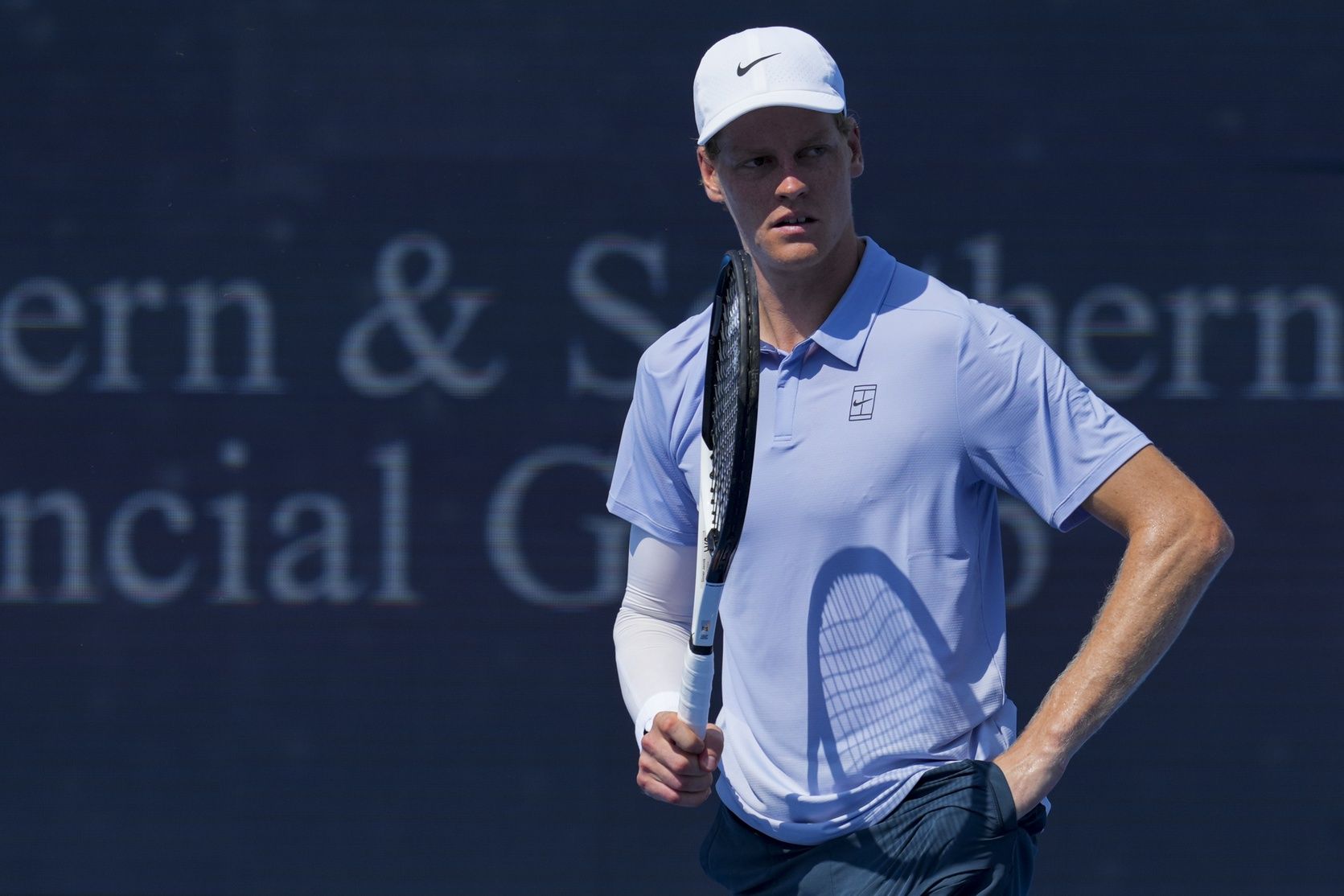
The tennis world was shocked when defending champion Jannik Sinner retired from his Shanghai Masters third-round match against Tallon Griekspoor due to severe cramping.
While many speculated about the cause, renowned coach Patrick Mouratoglou has provided expert insight into what really happened to the world No. 2.

What Did Patrick Mouratoglou Say About Jannik Sinner’s Shanghai Masters Cramps?
Sinner’s title defense ended on Sunday evening when the Italian was forced to retire while trailing 6-7(3), 7-5, 3-2 against Griekspoor. The world No. 2 appeared to struggle from late in the second set, rushing to place ice towels around his neck during changeovers before the start of the third set.
After suffering severe cramps in his right thigh, Sinner required assistance to leave the court after two hours and 36 minutes of grueling tennis. His opponent, Griekspoor, acknowledged the difficult circumstances, stating, “This is definitely not the way you want to win. Brutal conditions here in Shanghai all week already.”
Following Sinner’s retirement, Mouratoglou shared his expert analysis of the situation. “To explain Sinner’s cramps, there is only one word: humidity,” he said. He revealed that Taylor Fritz had experienced similar problems during the tournament, adding context to players’ widespread struggles.
The renowned coach also highlighted just how extreme the conditions were, noting: “We saw Novak Djokovic throw up two times.” Footage showed the Serbian star vomiting on court during his match against Yannick Hanfmann, though he managed to fight back and win 4-6, 7-5, 6-3.
Mouratoglou explained that cramps were not new for Sinner, saying, “It’s not the first Jannik cramps. He had cramps against Carlos in Roland-Garros, but this was tension.” However, he emphasized that the Shanghai situation was different due to the environmental factors.
The coach provided tactical insight into how players could better prepare for such conditions, saying, “Until it happens to you, there is no reason to change anything. Once it happened, his team will probably organize differently next time he’s gonna play in such conditions.” He suggested increasing fluid intake before matches, explaining, “Probably increase the drinking also before the match, because during the match, at a certain point, you cannot drink more.”
Mouratoglou stressed the importance of electrolyte management in extreme humidity: “This is where water drop, for example, is important because when you sweat that much, you’re losing also everything that is in your body that you need to function. If something is missing, your body can shut down, and that’s what happened.”
View this post on Instagram
Perhaps most revealing was Mouratoglou’s global ranking of the most challenging tennis conditions. “Everybody says that conditions are extreme in Australia, 39 degrees is brutal, but it’s not even close to what you can experience in Asia or in New York sometimes,” he explained. His ranking placed Asia as No. 1 for brutal conditions, followed by the US Open on humid days and Cincinnati and Miami, with Australia ranking third despite its reputation for extreme heat.
The conditions at Shanghai have been particularly brutal, with humidity levels reaching over 80% and temperatures hitting 92°F (34°C). Multiple players have struggled or withdrawn from matches due to the oppressive environment, raising concerns in the tennis world.
