
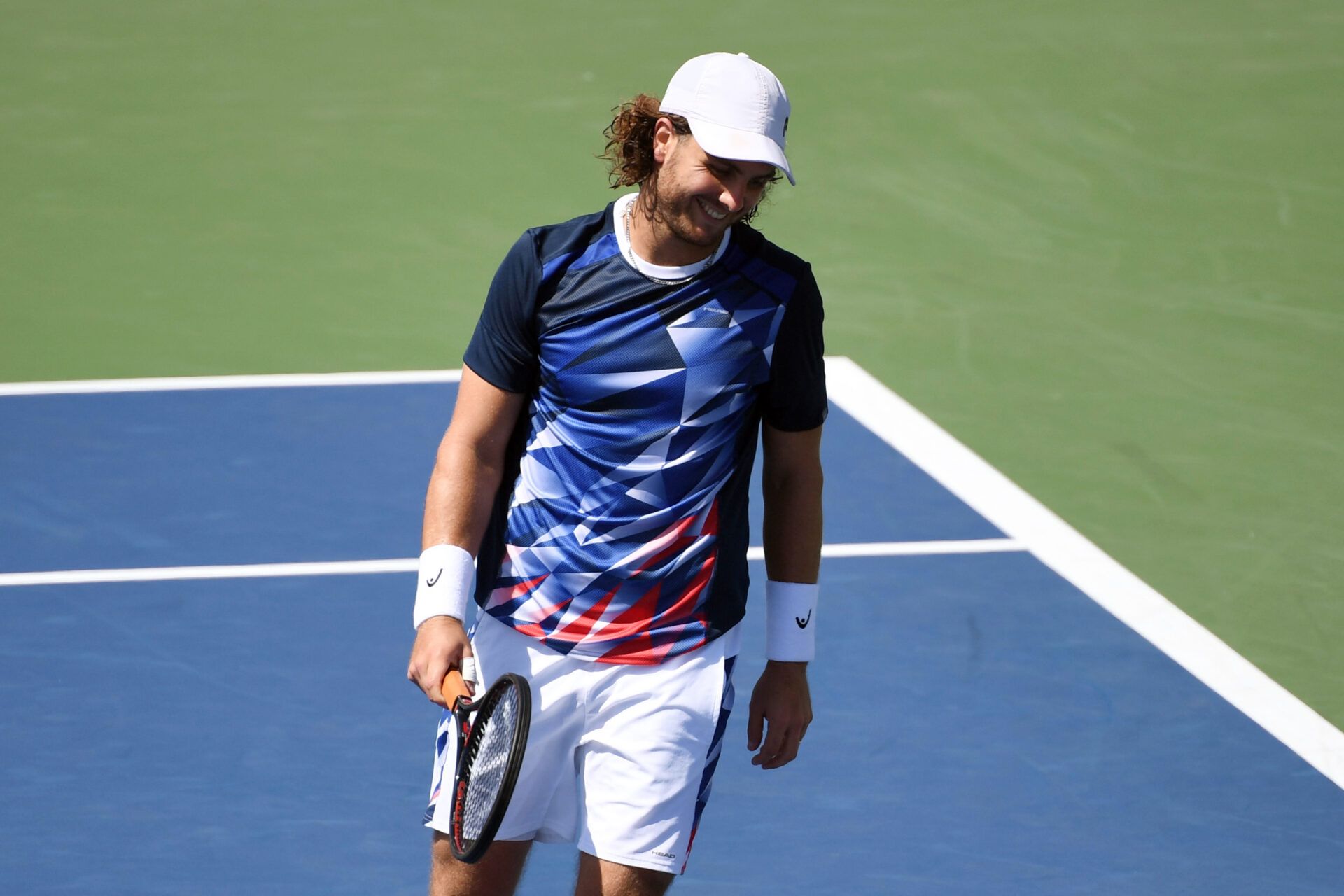
Marco Trungelliti spent 18 years as a ghost in professional tennis. He was always too good to quit but never quite good enough to break through to the sport’s upper echelon. That finally changed on the clay courts of Morocco, when he became the oldest player to reach his first ATP final.
The 36-year-old Argentine defeated Corentin Moutet 4-6, 6-3, 6-4 to reach the semifinals of the ATP 250 event in Marrakech. The victory pushed him to No. 85 in the live rankings. When the official list is updated on Monday, he will become the oldest player to make his top-100 debut since 1975.
Trungelliti has a story about standing up to a corrupt system and nearly losing his career for it.

The Price Tag on Marco Trungelliti’s Integrity
A first-round loss at a lower-level event might pay just a few hundred dollars. Fixers know exactly how to exploit that desperation. In 2015, they approached Trungelliti and offered him up to $100,000 to manipulate matches at the ATP level.
For a player ranked outside the top 100, that is truly life-changing money. He could have taken the cash and solved his financial problems instantly.
Instead, he said no. He reported the incident to the Tennis Integrity Unit (TIU). His testimony helped expose a broader match-fixing network within Argentine tennis, leading to bans for several players.
Although he was hailed as a hero, the locker room turned on him. Prominent players, including Sergiy Stakhovsky, publicly labeled him a snitch. Trungelliti faced severe isolation and relentless bullying from peers who felt he broke an unwritten code of silence.
MORE: NCAA Tennis: Stanford Upsets Wake Forest Amid Line Call Controversy
The backlash extended far beyond dirty looks in the player lounge. He received death threats back home. The situation became so toxic that he was forced to flee Buenos Aires entirely, eventually settling in Barcelona and later Andorra.
Trungelliti opened up about the ordeal in an interview with La Nacion. He detailed the deep depression that followed his decision to speak out.
“It was hard as time went by and the bullying, pointing, a lot of little voices that I didn’t like began,” Trungelliti said. “It’s like I began to experience everything that was seen in the movies. I am referring to the fear that my family felt, to the general senselessness that we encountered.”
He admitted that the lack of support from governing bodies like the ATP and the International Tennis Federation nearly broke him. They demanded integrity from their players but offered little protection when one actually stepped up.
Yet, he refused to back down. In a witness statement during the investigations, Trungelliti made his stance perfectly clear. He said he would rather kill his career 700 times than be part of that system.
Trungelliti’s Long Road to the Marrakech Final
For years, that principled stand defined him more than his forehand. He kept grinding away in relative obscurity. He achieved cult hero status in 2018 after losing in the qualifying rounds of Roland Garros and driving 10 hours back to Barcelona.
He was enjoying a visit from his 88-year-old grandmother when he got a call saying a lucky loser spot had opened up in the main draw. Train strikes had paralyzed travel across France. He loaded his mother, brother, and grandmother into a rental car and drove 10 hours back to Paris.
He arrived just before midnight. He then took the court and upset Bernard Tomic in four sets. That marathon road trip showed exactly who he is.
He relies on grit, family, and a stubborn refusal to quit. Those same traits fueled his current run in Marrakech. He arrived in Morocco playing the best tennis of his life.
MORE: Jannik Sinner Coaches Kids During Monte-Carlo Event With Alexander Zverev Ahead of Clay Debut
The comeback victory over Moutet in the quarterfinals showcased his evolved mental game. He dropped the first set but never panicked. He just kept digging out points and forcing the third seed into uncomfortable errors.
He then faced top seed Luciano Darderi and beat him 6-4, 7-6(2) to reach his first ATP final. With that, he became the oldest player to reach his first ATP final.
“Making the top 100 was a big goal for basically my whole career,” Trungelliti said after his quarterfinal win. “I feel over the past two years, I was getting closer and closer in terms of level and mentally. Physically, I have been doing a lot better than my whole life, which helps a lot.”
Trungelliti spent over a decade dealing with the darkest reality of the sport. He absorbed threats and kept showing up to work.
He finally arrived in the top 100 on his own terms. Nobody can ever say he cut a corner to get there.
