
The Association of Tennis Professionals (ATP) Board of Directors has approved a significant update to its competition rulebook, establishing new protocols to manage extreme weather conditions. The decision introduces mandatory safeguards aimed at protecting player health starting with the 2026 season.
This policy shift comes after prolonged debate within the tennis community regarding the sustainability of the current calendar and the physical risks posed by increasingly severe global temperatures

ATP’s New Protocols To Deal With Extreme Conditions
For years, players have contended with grueling environments, often criticising the tour for lacking clear, standardized safety measures comparable to the WTA’s existing heat policies. The physical toll has been evident, with athletes frequently citing heat exhaustion as a primary factor in mid-match retirements.
In response to this growing pressure, the ATP’s newly approved regulations introduce objective metrics to determine when play must be modified or halted.
The ATP Board of Directors approved implementation of a new heat rule effective from 2026 season. Key provisions:
•Cooling breaks to be introduced
•A 10-minute break after 2nd set will be permitted if requested by either player
•Play will be suspended when WBGT exceeds 32.2°C pic.twitter.com/MMyhtydmNP— Parsa (@Parsa_Nemati) December 15, 2025
Under the new framework, effective in 2026, cooling breaks will be formally introduced into the match format. A specific provision allows for a 10-minute break after the second set if requested by either competitor, providing a crucial window for physiological recovery.
Most significantly, the board established a hard limit for play: matches will be immediately suspended when the Wet Bulb Globe Temperature (WBGT) – a composite measure of heat, humidity, wind speed, and solar radiation – exceeds 32.2°C.
This threshold removes subjective decision-making from officials, ensuring a uniform safety standard across all tour-level events.
Major Meltdowns in North American and Asian Swings
The urgency for reform peaked during the 2025 season, particularly during the North American hard-court swing and the Asian swing. The Cincinnati Masters in August became a flashpoint for the controversy. Temperatures regularly topped 35°C with humidity pushing 70%, creating what Felix Auger-Aliassime described as an “oven.”
The conditions led to alarming scenes, including Arthur Rinderknech collapsing on court and Frances Tiafoe retiring with heat-aggravated issues. Coco Gauff’s former coach, Brad Gilbert, publicly advocated for an ATP equivalent to the WTA’s heat rule, noting the disparity in player protection.
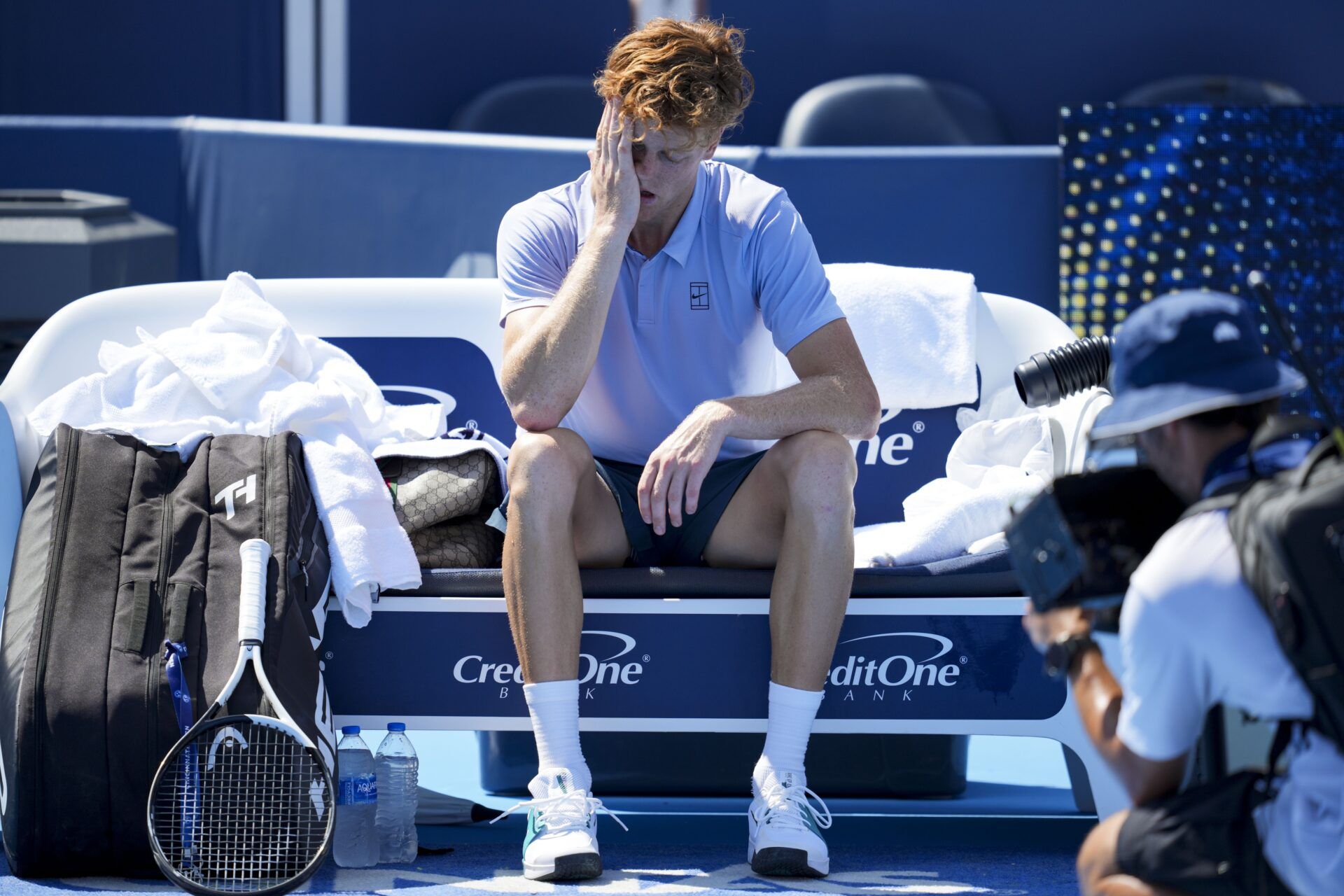
The situation deteriorated further at the Shanghai Masters in October. Players faced “sauna-like” conditions with humidity levels exceeding 80% and temperatures hitting 34°C. The toll on the field was heavy; defending champion Jannik Sinner was forced to retire against Tallon Griekspoor after severe cramping left him unable to walk.
Even veteran Novak Djokovic admitted to battling nausea, calling the humidity “brutal day after day.” The frustration boiled over when Holger Rune, during a medical timeout, was overheard asking officials if players were expected to “die on the court.” These high-profile incidents effectively forced the ATP’s hand, leading directly to the new mandates confirmed this week.
The ATP approves the implementation of new heat rules, effective in 2026, following complaints from Jannik Sinner, Novak Djokovic, and others.
