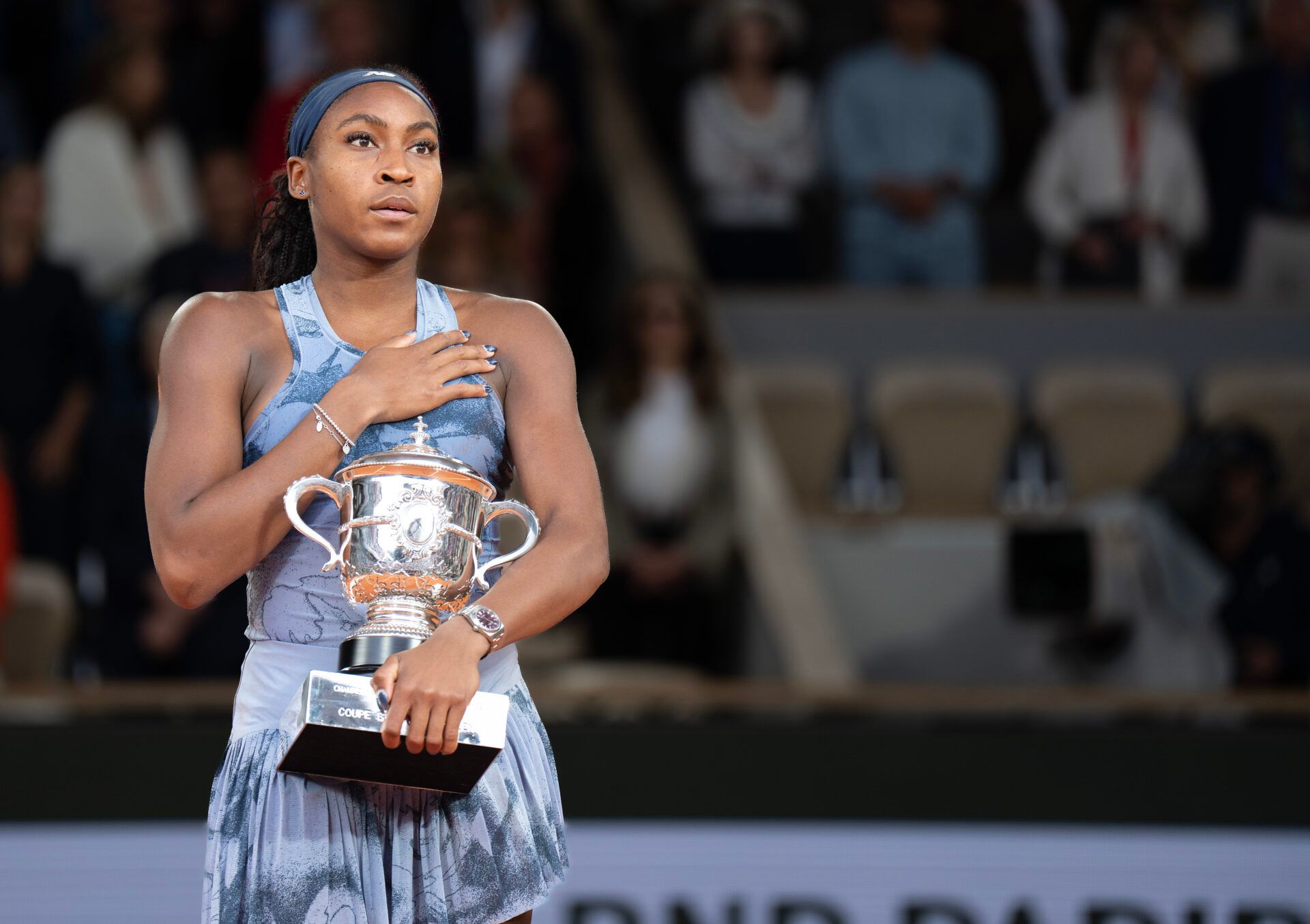
Tensions between players and Grand Slam tournaments over prize money are reaching a boiling point. Following a joint player statement signed by Jannik Sinner, Carlos Alcaraz, Aryna Sabalenka, Coco Gauff, Iga Świątek, and many more, expressing disappointment with the prize money allocation for the upcoming French Open, former ATP pros Sam Querrey and Steve Johnson have weighed in on the controversy.
Sam Querrey Urges Jannik Sinner, Coco Gauff, and Others to Boycott French Open Over Revenue Split
At the heart of the players’ frustration is the massive discrepancy between the tournament’s skyrocketing profits while the players’ share staying stagnant. The prize money has declined from 15.5% in 2024 to 14.3% in 2025, and it’s projected to be 14.9% in 2026, despite increasing revenues.
In 2025, the French Open officially reported revenues of €395 million ($461 million), a 14% year-on-year rise. Still, players’ prize money increased by just 5.4%. This year, Roland-Garros announced a 9.5% increase in prize money. Still, with revenues projected to exceed €400 million ( $468,426,000) in 2026, the players state that their share “will likely still be less than 15%, far short of the 22% that players have requested to bring the Grand Slams into line with the ATP and WTA Combined 1000 events.
The US Open had a total prize purse of $90 million last year (around 15%), while the Australian Open offered close to $40 million this year (around 16%), and Wimbledon paid out $72.59 million in prize money last year(~12–15%).
During a recent podcast segment on “Nothing Major Show,” Querrey broke down the exact financial disparities driving the players’ frustrations. The percentage of revenue actually being shared with the athletes at majors is drastically lower than in other major global sports.
To put that into perspective, athletes in major North American sports leagues like the NBA, NFL, and NHL typically negotiate collective bargaining agreements that guarantee a nearly 50/50 split of all league revenue.
He argued that releasing joint statements and complaining to the media would not help against the tournament organizers.
“The winner this year gets 2.8 million euros. Roland Garros generated 395 million euros last year. [That] is a 14% year-on-year increase, yet prize money only rose by 5.4%. So, the players get a total of 14.3% of total revenue. For reference, we talk about prize money on this show a lot. Like the NBA, NFL, NHL, it’s around a 50% revenue split,” Querrey noted.
“I get the whole dynamic is different. But at some point here, until the players just boycott, they have to just stop complaining, right?” Querrey asked bluntly. “If the players didn’t play Roland Garros and be like, ‘We’re not going to play it,’ I literally believe the prize money would shoot up to 25% of revenue share.”
Steve Johnson fully agreed with Querrey’s view that a boycott is the only real solution the players have. However, he was quick to point out the harsh logistical realities of organizing a strike in an individual sport.
Unlike the NBA or NFL, which have powerful, unified players’ associations, tennis players are essentially independent contractors. Getting the top-ranked superstars to align financially with the players on the lower levels is no easy task.
“Yeah, I mean, that’s the only way to do it, right?” Johnson agreed. “Because at a major… if you include qualifying, there’s 300 and there’s 400 people that would need to in unison do something together, which will never happen.”
Johnson also pointed out the huge taxation players face when competing in Paris, noting that the French government will “get you for taxes like 14 years later!”
The list of signatories who expressed “their deep disappointment” includes Sabalenka, Gauff, Świątek, Jessica Pegula, Madison Keys, Jasmine Paolini, Emma Navarro, Zheng Qinwen, Paula Badosa, and Mirra Andreeva on the women’s side, and Sinner, Alcaraz, Alexander Zverev, Taylor Fritz, Casper Ruud, Daniil Medvedev, Andrey Rublev, Stefanos Tsitsipas, and Alex De Minaur.
The Italian Open main draw runs from today, May 5, to May 17, before Roland Garros on May 24. Whether the Grand Slam authorities will agree to the players’ conditions will have to be seen.
