
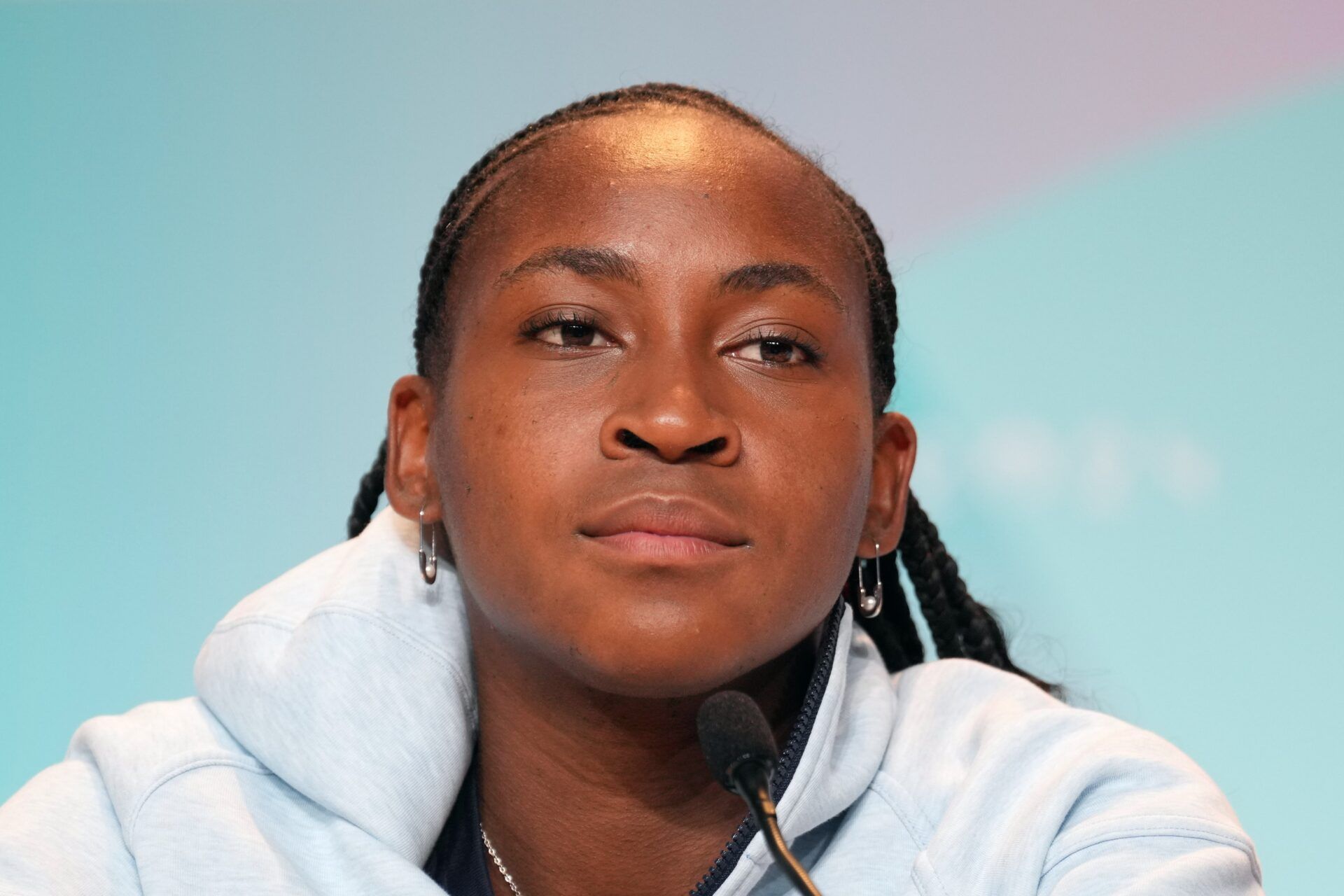
Coco Gauff did not shy away from addressing the growing concern over the spate of retirements and walkovers that have plagued the tournament. Speaking at her post-match press conference after reaching the quarterfinals, the American highlighted the toll the current WTA schedule takes on players’ bodies, questioning the sustainability of the mandatory event rules and the increasingly packed calendar.
Her candid remarks come amid a week where seven players or doubles teams withdrew mid-match or handed walkovers, including Zheng Qinwen and Iga Świątek’s third-round opponent, Camila Osorio.

How Widespread Are Retirements and Walkovers at This Year’s China Open?
The China Open has been under the spotlight due to the frequency of retirements this year. Zheng Qinwen, a local favorite returning from elbow surgery in July, was forced to retire during her third-round match against Linda Noskova after signaling discomfort during a medical timeout. Other notable retirements on the women’s side included Loïs Boisson trailing Emma Navarro and Osorio against Świątek.
Men’s matches were also affected, with Jakub Menšík bowing out in his quarterfinal against Alex De Minaur due to knee trouble, fourth seed Lorenzo Musetti retiring mid-match with a thigh injury, and eighth seed Daniil Medvedev retiring in the semifinal due to cramping. Even top-seeded doubles teams Lloyd Glasspool and Julian Cash handed a walkover in the ATP 500 quarterfinals.
View this post on Instagram
Amid this backdrop, Gauff, who reached the quarterfinals, addressed the topic in depth in her post-match press conference. She acknowledged the reasoning behind the WTA’s mandatory rules, noting their connection to prize money and tour commitments.
“Yeah, I mean, obviously with the mandatory rules, I know why it’s in place with prize money and everything. Do I agree with them? I mean, I guess on a business point, it can kind of make sense. But on, like, a player health standpoint, I don’t really agree with it,” she said.
How Does Coco Gauff View the Impact of Mandatory Rules on Players?
Gauff explained that the current calendar makes it almost impossible to participate in all six mandatory 500-level events while maintaining peak performance in larger tournaments. “Especially now with more and more events being two weeks, it just doesn’t really make sense to strain your body,” she added.
She highlighted the impractical sequencing of events, noting that back-to-back WTA 1000 tournaments followed by a Grand Slam and a 500-level event puts players under immense pressure. Gauff cited her own example, explaining she had to skip the Washington, D.C. event because playing it in addition to Cincinnati and Montreal would have been physically impossible.
She also called attention to how the current structure diminishes the significance of 500-level events, saying, “I definitely would love to see somehow how we can balance that out to make it a little bit easier for players in tournaments to make those decisions. Honestly, as a top player, you see most of the top 5, top 10 playing very limited 500s just because when you make it deep in a two-week tournament, it doesn’t make sense to play one.”
Her remarks echo concerns voiced by Świątek and other leading players about the season’s physical demands and the challenge of navigating mandatory participation rules.
MORE: Iga Świątek Lashes Out at Scheduling and WTA Rules After Opponent Retires During China Open 3R
