
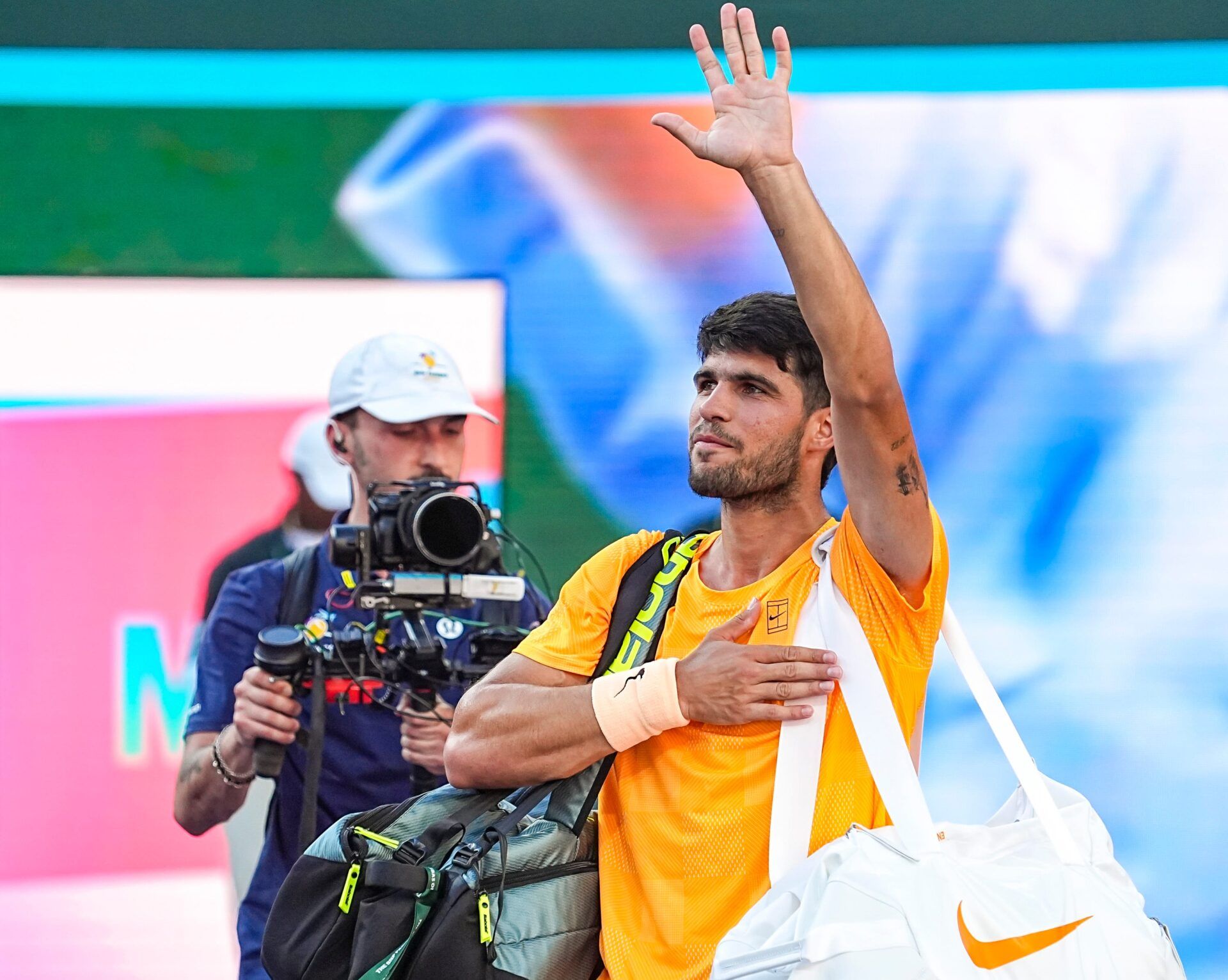
Unlike team sports, where you can blend into a huddle or a crowded locker room, tennis is completely solo, leaving players feeling like their every single move is under a magnifying glass. For years, Grand Slams have been pushing for “all-access” coverage, chasing behind-the-scenes drama for the fans. But after a massive wave of backlash from the sport’s biggest names like Carlos Alcaraz and Coco Gauff, the French Open is finally pulling the plug on invasive backstage cameras.
French Open Bans Backstage Cameras After Coco Gauff, Carlos Alcaraz, and More Voice Concerns
On Friday, Amelie Mauresmo, the director of Roland Garros, confirmed that they have heard the players’ complaints and that there will be no camera access to the players’ areas to protect their privacy.
The tipping point for this shift happened earlier this year at the 2026 Australian Open. After a frustrating loss against Elina Svitolina, Gauff walked away from the court seeking a quiet hallway. She just wanted a private second to vent her anger and smash her racket, but a backstage tracking camera recorded the breakdown and made the footage viral.
Gauff didn’t hold back in her press conference. “I tried to go somewhere where they wouldn’t broadcast it, but obviously they did,” she said. The 22-year-old added that she avoids breaking rackets on court because she doesn’t think it sets a good example, mentioning a moment at the 2021 French Open that she didn’t want to repeat.
“Maybe some conversations we can have because I feel like at this tournament the only private place we have is the locker room,” Gauff added.
Iga Świątek immediately came to Gauff’s defense, bluntly asking whether tournament organizers were treating players like “animals in the zoo.” That opened the floodgates for the rest of the tour to chime in. “I empathize with her. It’s really sad that you can’t move away anywhere and hide and fume out your frustration, your anger in a way that won’t be captured by a camera,” said Novak Djokovic. Her fellow Americans, Jessica Pegula and Amanda Anisimova, also backed her against the invasion of privacy.
Nothing much changed even after that. Right before the recently concluded Monte-Carlo Masters, Alcaraz condemned the invasion of privacy, saying, “It’s too much.” “For the fans, it’s great. They love seeing what goes on behind the scenes, what we do, what the facilities inside the tournaments look like. But for the players, it’s a bit strange because we don’t really have anywhere to relax anymore because we’re constantly thinking there are cameras and that everyone is watching us,” said the world No. 2. Jelena Ostapenko also joined the protest, saying, “There should be a limit.”
KEEP READING: Coco Gauff Cites Carlos Alcaraz As She Condemns Privacy Violations: ‘It’s Gone Too Far’
Most recently, Alexander Zverev revealed that he was forced to change his mobile phone code after it was shown during a broadcast.
The French Open is setting a bold example with this decision. Hopefully, every tournament can set this boundary to ensure that after the match point, the athletes can finally drop their armor and relax.
