
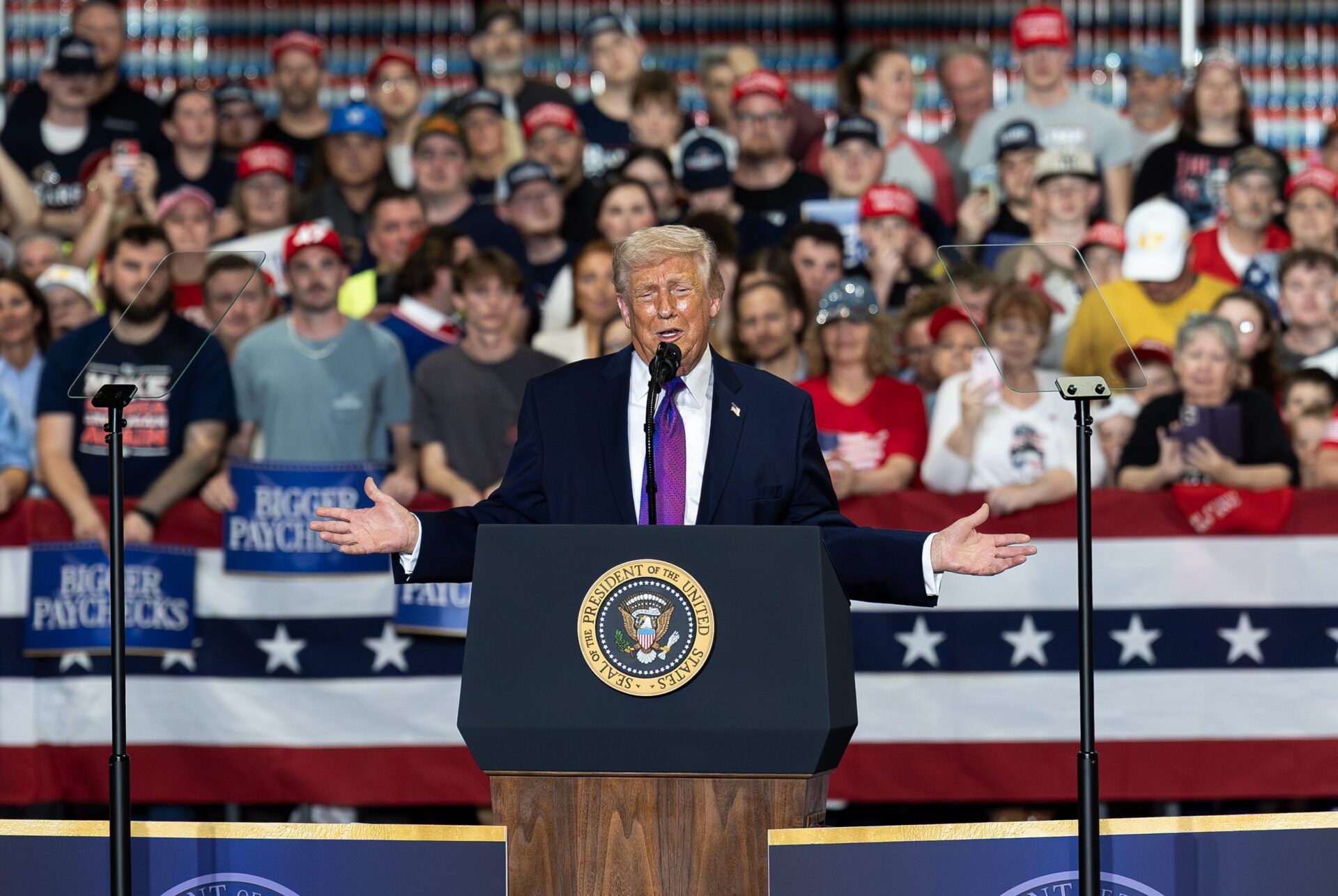
The participation of the Iranian national football team in the 2026 FIFA World Cup is now uncertain amid escalating political tensions between Iran and the United States. U.S. President Donald Trump stated that Iran’s national team would still be welcome to compete in the tournament, but also questioned whether it would be appropriate for them to attend under the current circumstances.

Donald Trump Says Iran Welcome at 2026 FIFA World Cup
Trump said on Truth Social (via Aaron Rupar on X), “The Iran National Soccer Team is welcome to The World Cup,” but raised concerns, saying, “I really don’t believe it is appropriate that they be there, for their own life and safety.” In response, Iranian officials declared the team would not participate following the killing of Supreme Leader Ali Khamenei.
Iran’s sports minister, Ahmad Donyamali, said the political situation makes their participation impossible. “Considering that this corrupt regime has assassinated our leader, under no circumstances can we participate in the World Cup,” Donyamali said. “Our children are not safe and, fundamentally, such conditions for participation do not exist.”
He added that the ongoing conflict has caused significant casualties and damage across the country. “Given the malicious actions they have carried out against Iran, they have forced two wars on us over eight or nine months and have killed and martyred thousands of our people. Therefore, we certainly cannot have such a presence,” he said.
FIFA president Gianni Infantino confirmed Trump’s assurance that Iran could participate. FIFA has yet to clarify next steps if Iran withdraws or how security issues would be handled if the team competes. Trump has a good relationship with the president of FIFA, who has been urging him to allow the Iranian team to participate.
MORE: FIFA Chief Details Donald Trump Discussion Over Iran’s 2026 FIFA World Cup Participation
The 2026 FIFA World Cup will run from June 11 to July 19, with matches in the United States, Canada, and Mexico. Iran’s group-stage games were set for U.S. cities like Los Angeles and Seattle, making their participation on American soil sensitive.
The diplomatic crisis stems from a military offensive launched by the United States and Israel against Iran on February 28. Tehran has responded with missile and drone strikes targeting Israeli positions, U.S. military bases across the Middle East, and other regional infrastructure.
With the tournament just months away, FIFA now faces the complex challenge of navigating the intersection of sport, politics, and international security.
