
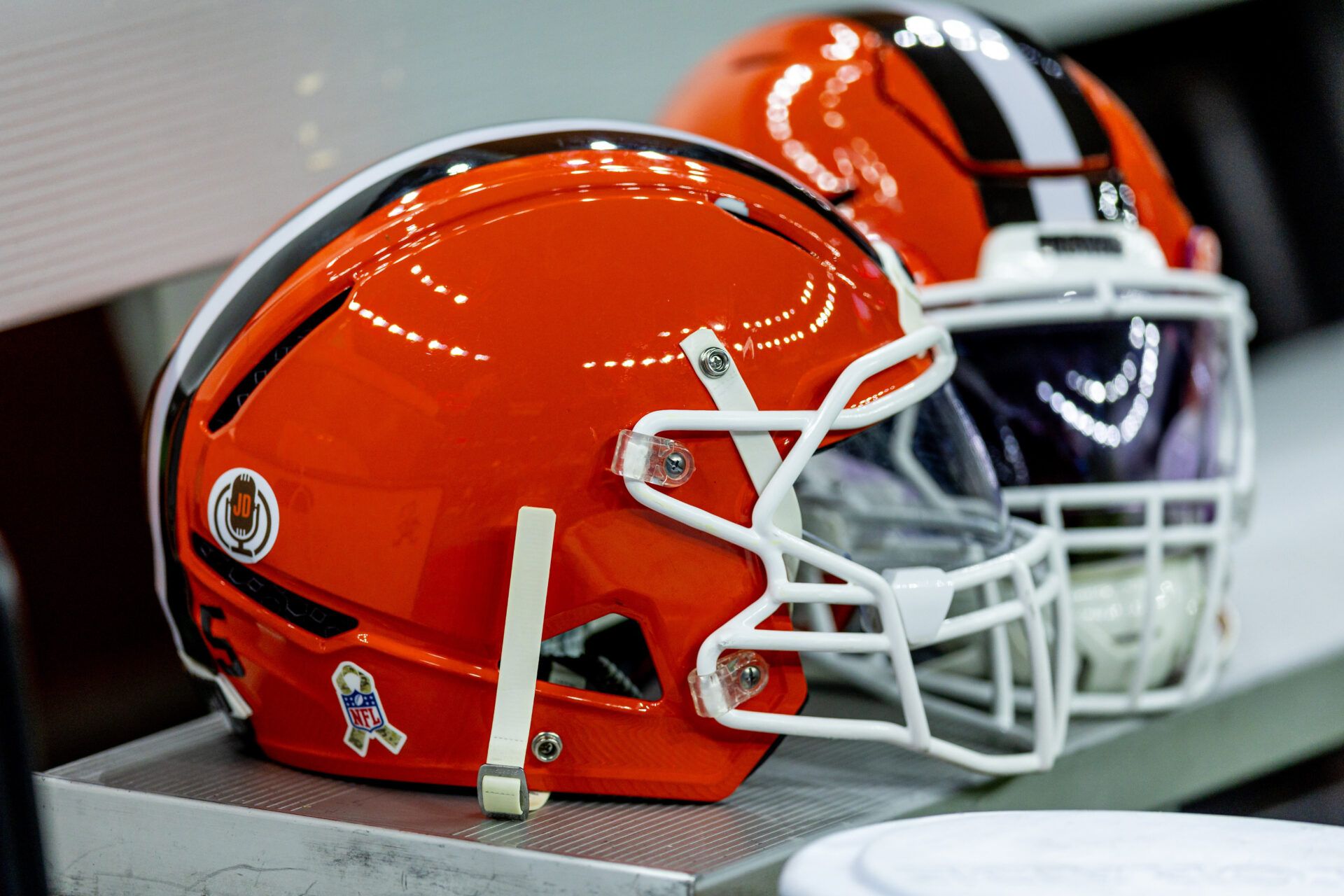
Every NFL team understands that quarterback is the most important position in football. The fortunes of an entire franchise can turn on a dime if they can just find the answer at quarterback. For the past 25 years, no team has shuffled through more quarterbacks than the Cleveland Browns. Let’s go through the bad, the good, but mostly the bad of how the Browns, in 2025, are still searching for their franchise quarterback.
Cleveland Browns QB Draft History
In 1996, the original Cleveland Browns moved to Baltimore, becoming the Ravens. It is certainly not lost on Browns fans that the Ravens have been one of the most successful organizations in the NFL since their inception, winning two Super Bowls. Meanwhile, the Browns have made the playoffs just three times since returning as an expansion team in 1999, winning one game (in 2021, over the Steelers).
The Tim Couch Era (1999-2003)
A big reason for over 25 years of failure is their inability to find a quarterback. That all started back in 1999, when the expansion Browns were given the No. 1 overall pick, selecting Tim Couch.
The rookie started immediately, and it wasn’t pretty. In 14 starts, Couch went 2-12, completing 55.9% of his passes while throwing for 15 touchdowns and 13 interceptions.
Couch wound up playing for only five years, all with the Browns. By 2003, he was no longer starting. That honor went to Kelly Holcomb, who wasn’t any better, going 2-6 in his eight starts. Couch’s career ended at the age of 26 with a 22-37 record.
Signing Veteran QBs (2004-2005)
With their rookie and patchwork fill-ins not getting the job done, the Browns sought to turn their fortunes around with an established veteran. Ahead of the 2004 season, Cleveland signed five-year San Francisco 49ers starter Jeff Garcia.
In 2001 and 2002, Garcia led the 49ers to 12-4 and 10-6 records, respectively. Despite showing obvious signs of decline in 2003, completing 57.4% of his passes en route to a 5-8 record, the Browns banked on the veteran turning things around for both himself and their team.
Garcia wound up starting 10 games for the Browns, going 3-7 in the process. He moved on after just one season.
In 2005, the Browns tried the veteran route again, this time signing former Super Bowl-winning QB Trent Dilfer. For those unfamiliar or who may not remember, Dilfer is widely considered one of the worst quarterbacks to ever win a Super Bowl.
Dilfer was nearing the end of his career (he wouldn’t play in 2006 before his final year in 2007). He started 11 games for the Browns, going 4-7 while throwing more interceptions (12) than touchdowns (11).
Earlier that year, the Browns drafted Charlie Frye in the third round. After the Dilfer experiment flopped, they let Frye finish out the season. The rookie completed under 60% of his passes, throwing just four touchdowns against three interceptions in five starts.
Charlie Frye (2005-2006)
Even though he didn’t show much in his rookie audition, the Browns gave Frye the entire 2006 season to prove himself. It went about as well as you’d expect a random third-round Browns QB to perform.
Frye started 13 games, throwing 10 touchdowns and 17 interceptions en route to a 4-9 record. He served as a backup in 2007 before bouncing between two other teams in 2008 and 2009, which marked the end of his career at age 28.
The Hope Year (2007)
For the first time since their expansion year in 1999, the Browns took a first-round quarterback, selecting Brady Quinn at No. 22 overall. Quinn was a very popular college player, and it was a genuine surprise that he fell as far as he did in the 2007 NFL Draft.
Nowadays, most first-round rookie QBs start right away. This was still an era where guys often sat for a year or two. Quinn didn’t start a single game as a rookie. Instead, 2005 sixth-rounder Derek Anderson played in all 16 games, starting 15.
The Browns signed Anderson the previous year after he was released by the Ravens, with no one expecting Anderson to be particularly good. He appeared in five games in 2006, throwing five touchdowns and eight interceptions. While it’s not clear why the Browns went with him as their starter, somehow, it worked.
Anderson led the Browns to a 10-6 record and second place in the AFC North. Unfortunately, this was a strong year for the AFC, so Cleveland did not make the playoffs. But for the first time, they had real hope at QB, as Anderson threw for 3,787 yards and 29 touchdowns.
At the same time, Anderson completed only 56.5% of his passes and also threw 19 interceptions, suggesting this might’ve been all smoke and mirrors.
The Quarterback Carousel (2008-2009)
In 2007, the Browns thought they had a surprise in Anderson and their future in Quinn. A year later, it was clear they had neither.
Anderson opened the season as the starter but was nowhere near as good as the previous year, throwing nine touchdowns and eight interceptions in 10 games (nine starts). A midseason MCL injury ended his season, leading the Browns to rotate quarterbacks the rest of the year.
Quinn made his first career starts—three in total. It was immediately clear he was not an NFL-caliber talent. Quinn quickly gave way to Ken Dorsey who, at age 27, was in what would be the final year of his short career. Bruce Gradkowski started the final game of the season.
In 2009, the Browns gave Quinn another shot at the starting job, despite what they learned in 2008. It went about as expected. After 2.5 disastrous outings, Quinn was benched for Anderson. He started the next five games before the team went back to Quinn. The Browns, as you can imagine, struggled mightily.
A decade into their reemergence, the Browns were back where they started.
The Very Dark Years (2010-2011)
In 2010, the Browns again went the veteran route. In a move reminiscent of the Jeff Garcia signing, they tapped Jake Delhomme to be their answer.
Delhomme had been the Panthers’ starting quarterback for the previous seven seasons, leading them to a Super Bowl appearance in the 2003 season. That was a long time ago, though.
Then 35 years old, Delhomme had shown clear signs of decline the year before, throwing eight touchdowns against 18 interceptions. Nevertheless, the Browns made him their starter.
Delhomme injured his ankle in Week 1, prompting the team to turn to veteran Seneca Wallace. Earlier that year, the Browns drafted Colt McCoy in the third round. After just one win in four starts, the Browns gave the rookie a chance.
McCoy started five games before Delhomme was able to return. He also started the final three games of the season.
After a 2-6 record that saw him throw six touchdowns and nine interceptions, the Browns decided McCoy might be their QB of the future. Inexplicably, he was handed the reins in 2011.
McCoy started 13 games, throwing 14 touchdowns against 11 interceptions, and finished with a 4-9 record. He spent just one more year with the Browns before bouncing around as a backup for another decade. McCoy started 15 games the rest of his career.
Failed First-Rounders (2012-2014)
Once again, the Browns hit the reset button. For the third time, they drafted a quarterback in the first round. This one arguably being their biggest failure.
Brandon Weeden was an incredibly productive college quarterback. He was also 29 years old in his rookie season.
Weeden started 15 games as a rookie, throwing 14 touchdowns, 17 interceptions, and averaging a modest 225 passing yards per game. He went 5-10.
In 2013, the Browns opened the season with Weeden, but it was another year of the QB carousel. Weeden, Jason Campbell, and Brian Hoyer each made at least three starts.
Somehow, Josh Gordon led the league in receiving yards in 14 games. The Browns went 4-12.
In 2014, it was time for another reset. With the exact same pick they used to take Weeden two years earlier, the Browns selected Johnny Manziel as the fourth first-round QB in franchise history.
Manziel was a disaster from the start. As we later learned through his documentary on Netflix, he never took football seriously. A first-round pick in 2014, Manziel’s career ended in 2015 at 23 years old. He went 2-6 in eight career starts.
More Veterans (2014-2016)
With Manziel a bust, the Browns started Hoyer for most of the 2014 season. He was never the answer, though. So, in 2015, the Browns went back to the same veteran plan that failed with Garcia and Delhomme, signing 36-year-old Josh McCown.
While McCown did throw 12 touchdowns and only four interceptions, he led the Browns to a 1-7 record. It was once again time for a reset.
In 2016, the Browns hoped Robert Griffin III could revive his career. Griffin was an exciting rookie in 2012, but a devastating knee injury derailed his potential.
Unfortunately, Griffin couldn’t get his rhythm back, going 1-4 in five starts. With no point in continuing with an ineffective McCown—who went 0-3 in his three starts—the Browns gave third-round rookie Cody Kessler half the season to audition. He went 0-8.
Deshone Kizer (2017)
Deshone Kizer gets his own section because of the pure bewilderment it caused. Considered a poor prospect, the Browns didn’t even take Kizer in the first round. Yet, he started immediately as a rookie second-rounder.
In a spectacular display of futility, Kizer went 0-15, throwing 11 touchdowns and a league-leading 22 interceptions. The Browns traded him to the Packers the following offseason, where he played one more year before his career ended.
The Baker Mayfield Era (2018-2021)
In 2018, for the fifth time, the Browns used a first-round pick on a quarterback. For the first time since Couch in 1999, it was the No. 1 overall pick, and they used it to select Baker Mayfield.
Even though Kizer, a second-rounder, was thrown into the fire immediately, Mayfield was not. Tyrod Taylor started the season until an injury knocked him out of the team’s Week 3 game. Mayfield took over and led the Browns to their first win since 2016. It goes without saying he was the starter for the rest of the year.
The Browns were far from great, but Mayfield went 6-7 in his starts (7-7 including Week 3).
Mayfield started for four consecutive seasons, the longest streak of any Browns QB in history. Of course, in typical Browns fashion, they found a way to mess it up.
Maybe Mayfield never would’ve developed into a true franchise QB had he stayed in Cleveland. But it’s hard to argue that he’s not one now. He is currently the Bucs’ answer at quarterback, and we should expect him to be their starter for at least the next half-decade.
Yet, after four years, the Browns traded Mayfield in 2022. He spent time with the Panthers and Rams before playing well enough at the end of the season to earn a shot with the Bucs in 2023. There, he proved he was their guy. Could he have been that for Cleveland? Maybe. We’ll never know.
The Worst Move in NFL History (2022–Present)
All of the above brings us to today. After missing the entire 2021 season due to allegations of sexual abuse, the Browns traded for Deshaun Watson ahead of the 2022 season and signed him to a five-year, fully guaranteed $230 million contract. It is, without question, the worst contract in the history of professional football.
In Cleveland’s defense, when we last saw Watson in 2020, he led the league with 4,823 passing yards and threw 33 touchdowns against just seven interceptions. With Houston, Watson was one of the best quarterbacks in the league.
That said, Watson missed the entire 2021 season and was suspended for the first 11 games of 2022. That’s a long time to be out of football.
When Watson returned in 2022, he did not play well. He went 3-3 but completed just 58.2% of his passes. This is a guy who completed 70% of his throws the last time he was on the field. Watson was rusty, which is understandable given how long he’d been away from football.
In 2023, Watson started Week 1 but lasted just three games before getting hurt. He returned after a two-week absence, only to get hurt again. After missing another game, he started two more before a shoulder injury ended his season.
Watson didn’t look like himself, but he went 5-1 with eight total touchdowns and four interceptions. That was enough for the Browns to believe a healthy Watson in 2024 would keep them competitive.
The 2023 season was wild. Cleveland started five different quarterbacks. After trying P.J. Walker and Dorian Thompson-Robinson, they turned to veteran Joe Flacco, who went 4-1 and led the team into the postseason.
Despite Flacco’s success, the Browns didn’t bring him back in 2024. He played well enough to earn a higher-paying backup job, and the team already had too much invested in Watson.
From the jump, it was clear that the Watson who played for the Texans wasn’t coming back. What ended up happening was even worse.
Before tearing his Achilles in Week 7, Watson started seven games. He failed to reach 200 passing yards in any of them. He threw five touchdowns (and rushed for a sixth) with three interceptions. The Browns were 1-6.
By many metrics, Watson wasn’t just the worst QB in football—he was among the worst in NFL history. His performance, paired with the injury, puts his future in serious doubt.
The Browns appear to be moving on at quarterback. It would be a major surprise if Watson played another game for them.
The Future
What will the Browns do next in their never-ending quest for a franchise quarterback? It doesn’t seem like they’re interested in Shedeur Sanders, and the Jaxson Dart to Cleveland rumors are speculative at best. However, they are almost certain to draft a QB at some point—even if it’s not until the third round or later.
The Browns have been rumored to be involved in the pursuit of Kirk Cousins, which is still an option.
Currently, the quarterbacks atop the Browns’ depth chart are Kenny Pickett and Joe Flacco. Unless they trade for Cousins, the training camp QB battle will be between the two former first-rounders.
Flacco is 40 years old and clearly nothing more than a temporary fix, if he were to win the job. Pickett is 27 and, after flaming out with the Steelers, was serviceable as Jalen Hurts’ backup on the Eagles’ Super Bowl-winning squad.
Pickett probably isn’t an NFL-caliber starting quarterback, but he offers a little hope. The sad truth is, after 25 years, the Browns are no closer to finding their answer at quarterback than they were when they started.
