
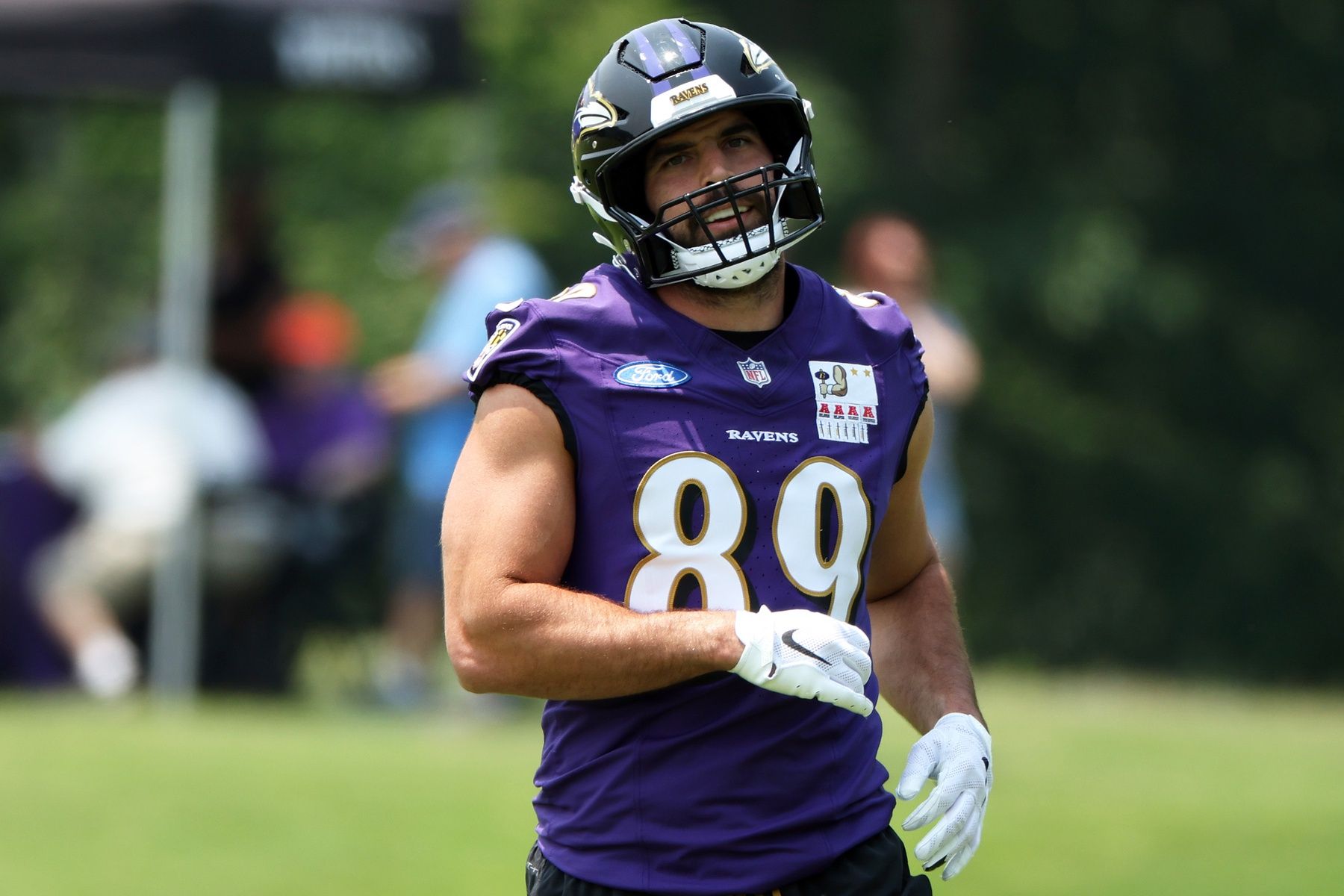
A 1-5 start has shifted the Baltimore Ravens’ season from survival to strategy, and league chatter has turned toward three‑time Pro Bowl tight end Mark Andrews. Now, the question is whether the Ravens entertain calls and if a surging NFC team answers first.

Could Mark Andrews Land With the Seattle Seahawks?
Multiple trade reports have connected Andrews to potential suitors as Baltimore reassesses its 2025 plans. The Seattle Seahawks keep appearing in those scenarios. The Ravens’ offense has sputtered amid injuries and uneven quarterback availability, and teams with playoff aspirations are probing veteran upgrades.
Recent landing‑spot analysis lists Andrews among the top names who could be moved if Baltimore pivots to asset value. It points to a deep tight end room that includes Isaiah Likely and an opportunity to recoup picks. A mock trade proposal specifically identified the Seahawks as a fit if Baltimore sells, noting that a familiar coach now runs the sideline in Seattle, one with institutional knowledge of Andrews’ impact.
Not at IOL. Mark Andrews would be nice if he became available https://t.co/rZD7Jj4V3F
— Mark Schlereth (@markschlereth) October 16, 2025
Andrews’ resume explains why his name rises in these conversations: across his Baltimore tenure, he has 457 receptions, 5,704 yards and 53 touchdowns; a performance that has anchored the middle of the field and stabilized drives.
With the Ravens struggling, analysts have speculated that an expiring‑timed window could nudge Baltimore to listen if the return matches Andrews’ value. Separate reporting has also floated other NFC destinations, underscoring broader interest in the position for teams aiming to add a chain‑moving target before the stretch run.
How Would Mark Andrews Fit the Seahawks’ Scheme?
Scheme fit is the main reason Seattle keeps cropping up. Under head coach Mike Macdonald, the Seahawks have leaned into adaptable personnel groupings and matchup creation, with an offense that benefits from a tight end who wins between the numbers and on third downs. Andrews profiles that piece as leverage‑beating releases, option routes that convert against man or zone, and red‑zone reliability that raises situational efficiency.
Recent evaluations have highlighted the drop in yards per catch this year (8.8, down from a 12.5 career average) as a product of Baltimore’s offensive context more than the player, suggesting usage could rebound in a system that isolates linebackers and safeties with motion and formation variance.
From a roster perspective, Seattle’s tight end room would gain a proven volume target who can align in‑line or detached, expand play‑action concepts, and give the quarterback a high‑percentage outlet when protections slide. That fits the Seahawks’ approach to sustaining drives and shaping field position without overexposing the perimeter.
Macdonald’s familiarity with Andrews from Baltimore is frequently cited in rumor pieces as an accelerant for any install, minimizing the learning curve midseason. All of that is speculative until a team picks up the phone, but it explains why Andrews appears on shortlists as the deadline approaches. The production matches the need, and the fit is clean.
