
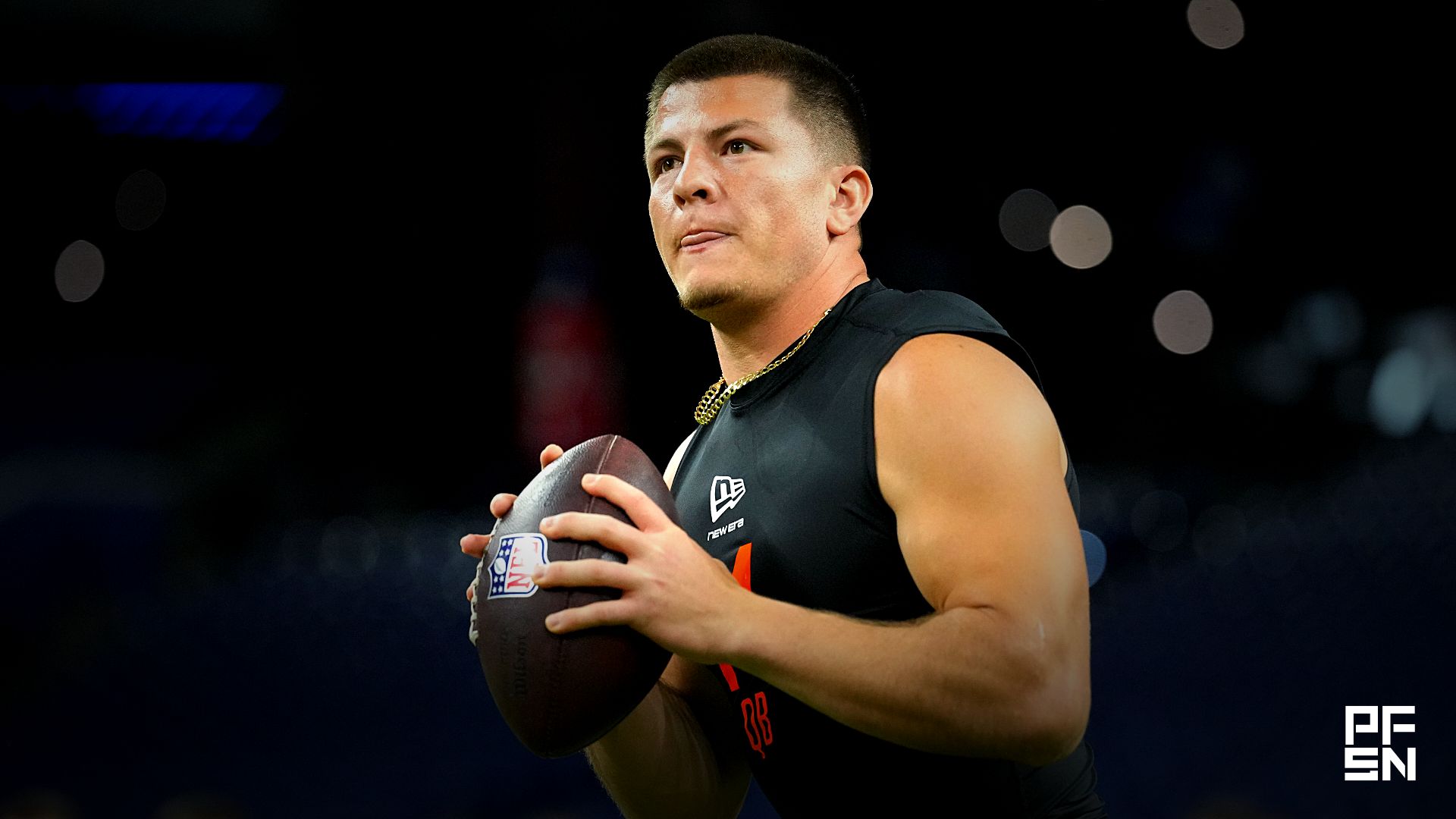
The NFL Draft is always followed by a frenzy of undrafted free agent (UDFA) signings as teams scramble to secure the best remaining talent. When the Baltimore Ravens recently signed rookie quarterback Diego Pavia to a three-year contract, eyebrows naturally raised across the fanbase.
Why would an undrafted rookie be handed a multi-year deal before ever taking a professional snap? For many fans, a three-year contract sounds like a massive commitment, sparking rumors that the front office saw hidden, franchise-altering potential. However, the truth behind this agreement is grounded purely in standard NFL economics.

Why Diego Pavia’s Contract Is Standard NFL Business
To the casual observer, a multi-year contract in professional sports implies long-term job security and a mountain of guaranteed money. Consequently, when news broke about Pavia’s three-year agreement, message boards immediately buzzed with speculation. Was this a sign that Pavia is destined to secure the primary backup role right out of the gate?
The reality is that the contract’s structure heavily favors the team. It serves as a procedural safeguard for the franchise rather than a guaranteed golden ticket for the rookie.
To dispel the myths surrounding these post-draft agreements, Fox Sports NFL reporter Greg Auman provided some much-needed clarity on how front offices operate regarding incoming undrafted talent.
Auman explained: “Most undrafted NFL rookies sign three-year deals. Anything less, they’re just exclusive-rights free agents and can be re-signed for the veteran minimum. Only guarantee is in first year. Signing a three-year deal is the norm.”
Most undrafted NFL rookies sign three-year deals. Anything less, they’re just exclusive-rights free agents and can be re-signed for the veteran minimum. Only guarantee is in first year. Signing a three-year deal is the norm.
— Greg Auman (@gregauman) April 28, 2026
Breaking down Auman’s insight reveals the shrewd nature of NFL roster management. If the Ravens had only signed Pavia to a one-year contract, he would become an exclusive rights free agent (ERFA) at the end of his rookie season.
Under ERFA rules, a team can effortlessly retain a player simply by offering them a one-year contract at the league minimum salary. This leaves the young player with absolutely no negotiating power to test the open market or sign elsewhere.
By signing Pavia to a three-year deal upfront, Baltimore streamlines this entire process. They lock in three years of team cost-control without having to deal with future ERFA paperwork, while only putting a minuscule signing bonus or first-year salary guarantee on the line.
MORE: NFL UDFA Tracker 2026: Latest Undrafted Free Agent Signings Following the 2026 NFL Draft
If Pavia struggles to adapt to the speed of the professional game during training camp, the Ravens can release him with virtually no financial penalty.
Ultimately, Pavia’s three-year contract with Baltimore is standard operating procedure, not a shocking endorsement of his immediate future on the depth chart. He will still have to battle fiercely during training camp and the preseason to earn his spot on the 53-man roster or the practice squad. The multi-year deal simply ensures that if he does prove to be a hidden gem, the Ravens already have him secured at a true bargain price.
