
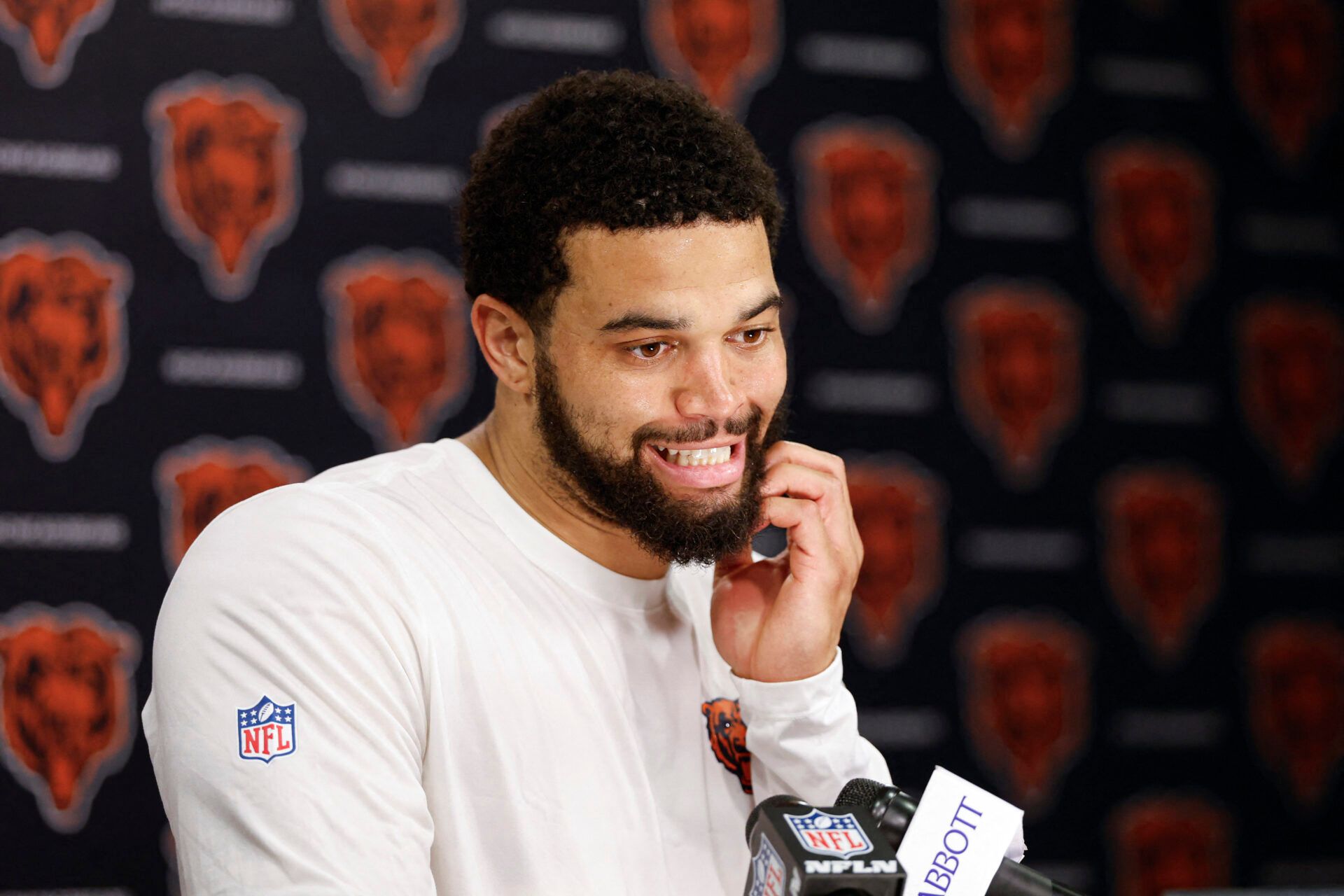
The Chicago Bears boasted one of the NFL’s most explosive turnarounds, all thanks to head coach Ben Johnson and his magic work on Caleb Williams. Yet, as the Bears prepare for the upcoming season, prominent NFL analyst Mina Kimes has raised a red flag about the Bears.

Why Mina Kimes Is Concerned About Caleb Williams’ Pass Protection
Despite Williams’ elite developmental trajectory that saw him cut his total sacks from a brutal 68 as a rookie down to just 24, Kimes believes a sudden cocktail of offseason injuries and structural roster turnover could rapidly compromise the young quarterback’s protection.
“Just want [Caleb Williams] to play like a tick faster and not just for his own sake and the efficiency of the passing game,” Kimes said on NFL Live on Monday. “But if there’s one thing I don’t love or concern I have, there’s some changes on this offensive line that was dominant last year.”
The bedrock of Chicago’s pass protection fractured unexpectedly this spring when Pro Bowl center Drew Dalman announced his shocking retirement. In a swift bid to stabilize the interior, the Bears traded for veteran center Garrett Bradbury.
While Bradbury brings 105 career starts of veteran stability, his anchoring ability down the stretch of his career represents a distinct style change from Dalman’s dominant metrics. Rising star left tackle Ozzy Trapilo’s ruptured patellar tendon only worsened the situation.
REDRAFT THE ENTIRE NFL: PFN’s FREE NFL Ultimate Redraft Simulator
With Trapilo sidelined, the Bears are forced to lean back on Braxton Jones. While Jones has structural starting experience, Kimes fears the cumulative weight of these moving parts will break the continuity that made this unit elite.
If the offensive line regresses, the burden of proof falls entirely on Williams. “I do think if that line takes a little bit of a step back, which seems possible, Caleb has to help mitigate that by throwing the ball a bit faster,” Kimes said.
PREDICT THE NFL SEASON: PFN’s FREE NFL Playoff Predictor
Next Gen Stats reveal that Williams’ actual Time to Throw increased to a lengthy 3.20 seconds. He avoided sacks not by getting rid of the ball instantly, but through logic-defying mobility and spatial awareness. Kimes warns that playing backyard football behind a transitioning offensive line is a dangerous gamble.
“He’s always going to have a long time to throw,” Kimes said. “It’s just the nature of his style of play, and his ability to avoid sacks all on his own helps that. But I do think if he can play just a little bit faster that could help address what I do see as potential problem areas.”
If Williams can manipulate his release by just a fraction of a second, he can mask the vulnerabilities at center and left tackle.
