
The Edmonton Oilers are searching for answers after a gut-punch overtime loss that has pushed their season to the edge. They came out flying with early control and urgency, but that grip loosened as the Anaheim Ducks battled back and forced overtime. In that extra frame, everything turned on one chaotic moment, as a loose puck crept over the line and led to a long, tense review that ultimately went against Edmonton.
Now, with frustration building around the decision, the spotlight is on the officials’ explanation and how a Connor McDavid-led group can recover from it. Across NHL history, teams that fall into a 3-1 series deficit have rallied to win just 32 times, a number that doesn’t make for good reading in Edmonton.
NHL Explains Controversial Overtime Goal As Oilers Question Call vs Ducks
The turning point came in overtime when Ryan Poehling forced a loose puck toward the net, creating a scramble around Tristan Jarry. On-ice officials signaled a good goal, which meant any review required clear evidence to overturn the call.
According to the NHL Situation Room explanation shared by insider Michael Russo, the puck fully crossed the goal line, sealing a 4-3 win for Anaheim and giving them a 3-1 series lead.
The explanation did little to quiet the debate. Several broadcast angles appeared inconclusive, with the puck partially hidden near Jarry’s skate, making it difficult to clearly track its position.
Analysts and commentators questioned whether there was enough visual proof to confirm the decision, especially given the standard needed to overturn an on-ice ruling. The gap between the official explanation and what viewers saw fueled the ongoing discussion.
Oilers’ head coach, Kris Knoblauch, also questioned the decision, saying, “I can’t see it going in. I can’t see the line. … Wasn’t very definitive.”
From a game perspective, Edmonton had positioned itself well early. Kasperi Kapanen scored within the opening minute, and Ryan Nugent-Hopkins added a power-play goal to build a 2-0 lead. Anaheim responded in the second period through Cutter Gauthier and Mikael Granlund, shifting momentum before the teams entered the final frame tied.
The Oilers briefly regained control when Evan Bouchard scored early in the third, but defensive coverage broke down again. Jeffrey Viel tied the game, exposing issues in net-front coverage and puck management. These same concerns carried into overtime, where the controversial goal ultimately decided the outcome.
Jarry, making his first playoff start for the Oilers, delivered a solid performance with 34 saves and kept Edmonton in position late. However, missed chances proved costly, including key stops by Lukas Dostal against Connor McDavid in the closing moments of regulation. Edmonton’s inability to convert those opportunities left the door open for Anaheim.
The broader concern now extends beyond one call. Edmonton has allowed 17 goals over the last 3 games, highlighting the ongoing defensive issues for the team. Through four games, they’ve allowed 20, tied for the highest amount they’ve leaked, matching their 1982 season.
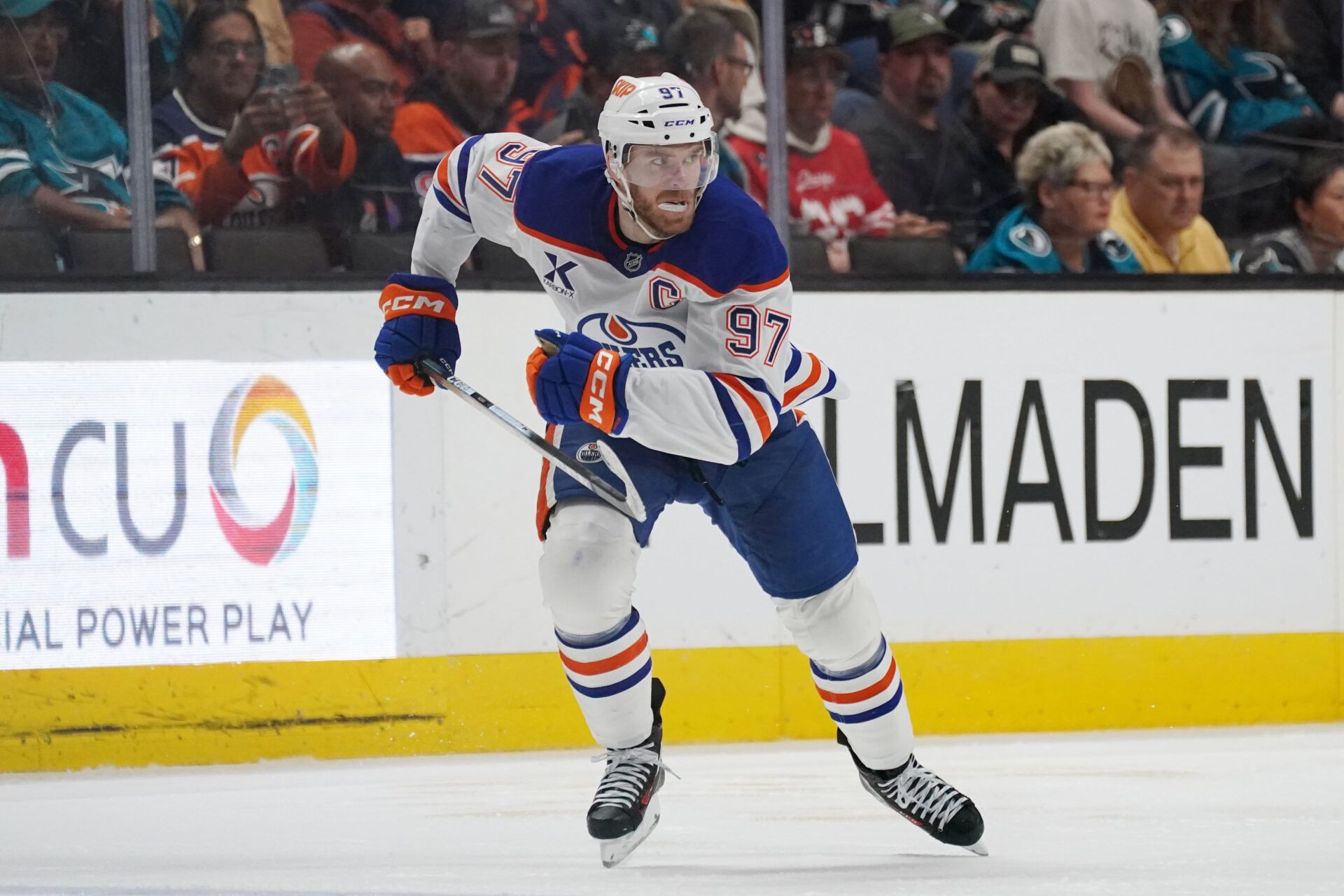
For McDavid, the pressure continues to build as his pursuit of a Stanley Cup remains unresolved. Despite another elite season with 138 points and deep playoff runs in recent seasons, including back-to-back Final appearances, the team is now staring elimination right in the face.
The Oilers must respond in Game 5, needing both defensive stability and timely execution to extend their season.
ALSO READ: Connor McDavid Puts Cards on the Table Over Tristan Jarry’s Performance in Oilers’ Game 4 Loss
