
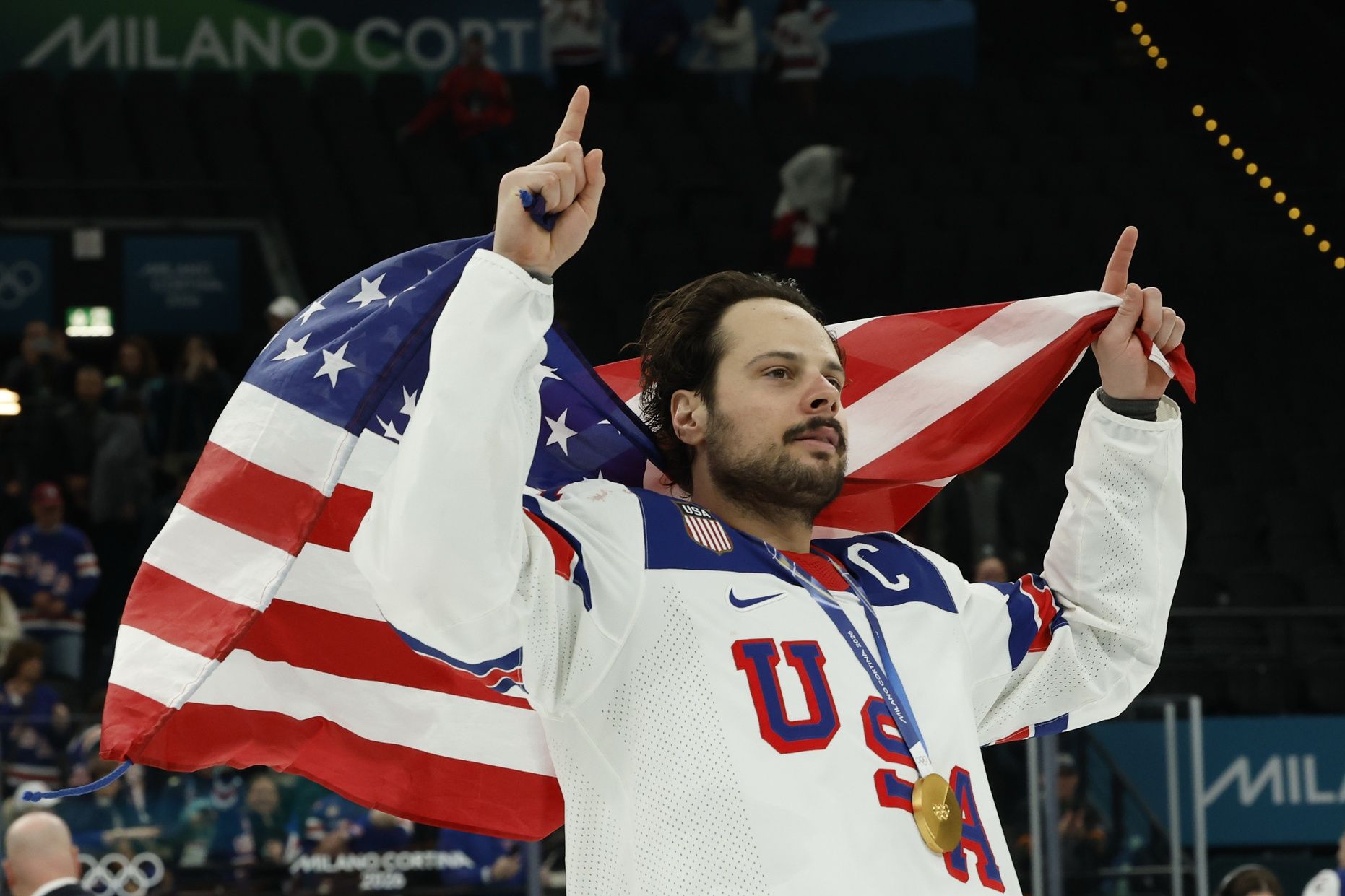
The 2026 Winter Olympics in Milano Cortina ended with Team USA defeating Canada 2-1 in overtime to win gold, snapping a 46-year drought and doing it on the anniversary of the 1980 “Miracle on Ice.”
Now, with eyes already drifting toward the 2030 Winter Olympics in the French Alps, the question becomes: who will lead the next gold medal charge? While new faces will certainly emerge over the next four years, several NHL stars already look like strong bets to anchor Team USA’s 2030 roster.

1) Auston Matthews
As Team USA captain and Toronto Maple Leafs captain, Auston Matthews should still be a dominant presence in 2030. At 32 years old, he’ll likely serve as one of the veteran leaders of Team USA. While many forwards see a slight dip in their early 30s, Matthews’s elite shot, strength, and hockey IQ suggest he’ll remain among the NHL’s top offensive threats. His game isn’t built solely on speed, which should help him age well.
2) Quinn Hughes
Quinn Hughes will be 30 in 2030, which is the perfect age for a top defenseman. He’s already seen as one of the best in the world and should continue to lead Team USA’s blue line.
Even though he missed the 2025 4 Nations Face-Off with an oblique injury, he came back strong and played an important role in the 2026 Olympics. With his talent, skating ability, and leadership, he looks like a safe bet for 2030.
3) Brock Faber
Brock Faber will be 27 in 2030, right in the heart of his prime. The Minnesota Wild defenseman’s steady two-way play, high hockey IQ, and growing international experience make him an ideal complement to Hughes on the blue line.
By 2030, he could evolve from a reliable presence to one of the defensive leaders of the team.
4) Jack Hughes
Jack Hughes looks like a strong bet to suit up at the 2030 Winter Olympics. As of February 2026, the 24-year-old New Jersey Devils star played a pivotal role in Team USA’s gold-medal run in Milan, scoring the overtime winner against Canada. By 2030, he’ll be 28, right in the heart of his prime.
5) Tage Thompson
Tage Thompson projects as another strong candidate. He’ll be 32 in 2030 and, if healthy, remains a matchup nightmare thanks to his size and scoring touch.
He’s dealt with injuries at times, so durability will be the biggest factor over the next four years. But if he stays on track, he’s more than capable of holding down a top-six role.
6) Brady Tkachuk
Brady Tkachuk will be 30 when the 2030 Olympics begin, still within the window where power forwards can dominate physically and emotionally.
He brings grit, edge, and leadership, qualities that are invaluable in short international tournaments. His ability to play a heavy game while still contributing offensively makes him an important piece of the puzzle.
7) Jack Eichel
Jack Eichel will be 33 in 2030. While that’s veteran territory, elite centers often age well thanks to their vision and hockey intelligence.
Despite a serious neck injury earlier in his career, Eichel has managed his health effectively and continues to produce. If that continues, he should remain a top-line option for Team USA.
On the Bubble for 2030 Olympics
Matthew Tkachuk could be in the mix, but wear and tear may be a factor at age 32, especially after playing through significant injuries in recent seasons. If healthy, though, he’s difficult to leave off any roster.
Dylan Larkin will also be 33 in 2030. If his speed and consistency hold up, he could still play an important depth role.
ALSO READ: Matthew and Brady Tkachuk Headline List of Team USA Stars Heading to Donald Trump’s White House
There’s plenty of hockey to be played between now and 2030. Breakout stars will emerge, and circumstances will change. But if the Games were held tomorrow, these seven NHL names would already look like the backbone of Team USA’s next Olympic gold medal pursuit.
