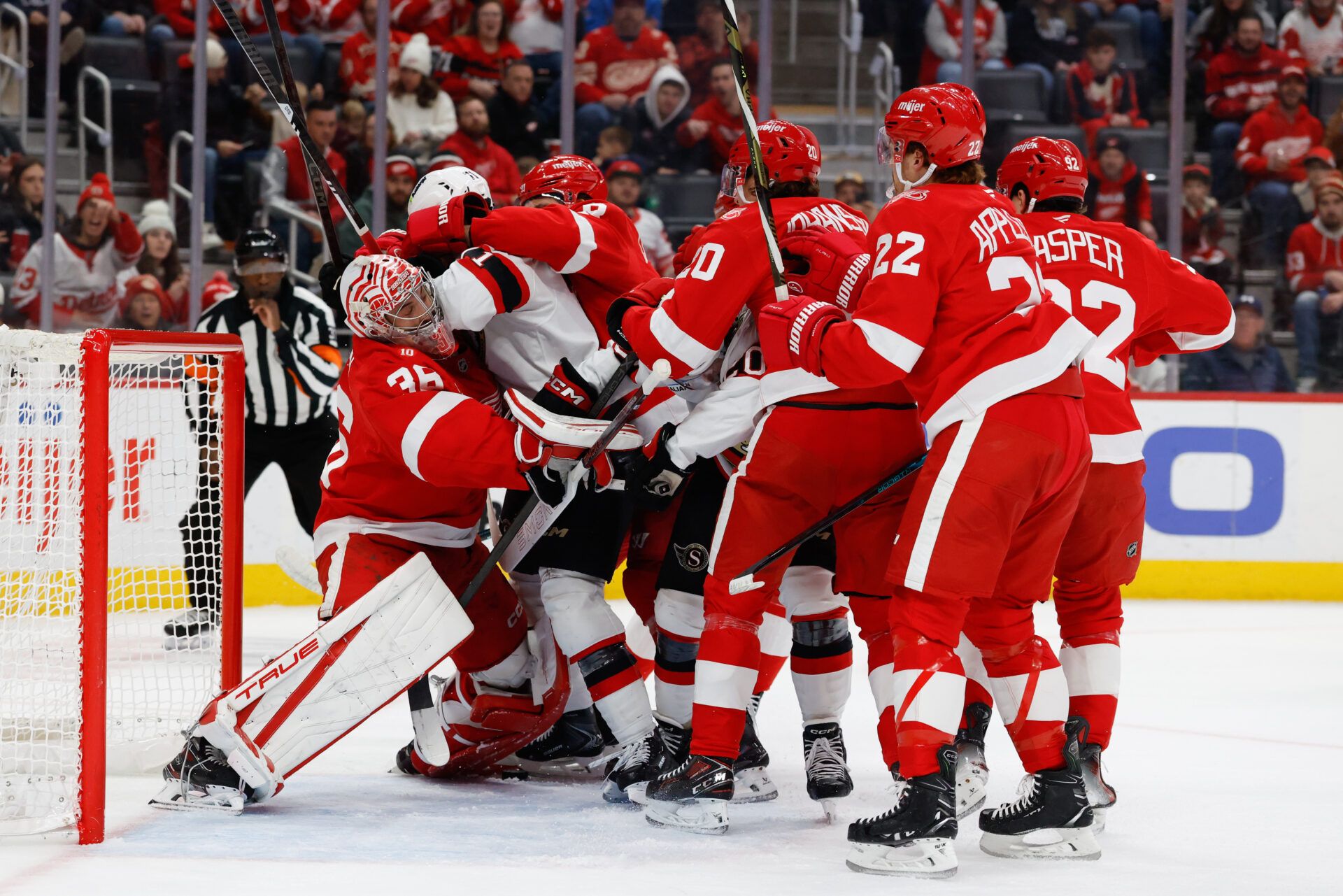
The Detroit Red Wings are in the offseason early after another difficult year in which they started strong but encountered a big slide in the final stretch. Although they floated at the top of the Atlantic division standings for a minute, they could not sustain that momentum as the pressure increased down the stretch.
While the front office moved ahead of the deadline, showing a clear intent to compete, the outcome did not match those expectations.
With outside patience starting to fade and internal pressure rising, the focus has turned squarely to Executive Vice President and General Manager Steve Yzerman. He now faces a difficult moment in his tenure as questions grow regarding the team’s overall direction and the timeline of the current rebuild.

David Pagnotta Points to Defining Offseason for Steve Yzerman After Red Wings’ Collapse
The season is over for the Red Wings, and the focus is squarely on Yzerman. His team missed the playoffs for the 10th straight season, extending the longest active drought in the league. This situation has added pressure on the front office, which was once allowed to build with patience.
NHL insider David Pagnotta outlined the situation clearly during a recent appearance on Off The Roster, stating, “I think that the leash is getting shorter for Steve Yzerman in Detroit. Obviously there’s a great relationship with ownership. At the end of the day, it’s time to win. It’s you-know-what or get off the pot.”
Detroit’s season showed two different paths. The team held a 12-point cushion in the playoff race on Jan. 24 and looked secure. From that point, a 9–16–5 stretch exposed issues in late-game execution and scoring depth. In April, they were able to secure just two wins, a month that mattered the most.
Yzerman attempted to address roster gaps at the deadline by adding Justin Faulk and David Perron. However, the cost of acquiring Faulk has drawn strong criticism. Detroit traded a 2026 first-round pick, a third-round selection, defenseman Justin Holl, and a top prospect, only to miss the postseason. That first-round pick now becomes a valuable asset for St. Louis, which has led some analysts to label the deal a failure.
Looking ahead, Yzerman does have flexibility. Detroit is projected to enter free agency with significant cap space. That gives room to reshape the roster, but internal decisions will take priority. Contract situations involving some important players and the integration of young prospects will shape the team’s direction going forward.
At the same time, the free-agent market is expected to be thin, which limits options. Detroit must also fill about 8 roster spots, making this offseason more complex than a simple retool.
ALSO READ: Red Wings Star Patrick Kane Puts Cards on the Table Over His Future in Detroit
