
There’s nothing quite like playoff hockey, and when the Stanley Cup Final heads into overtime, the tension reaches its peak. Fans hold their breath. Every shot could end it. Every mistake could cost a championship.
Unlike the quick overtime rules in the regular season, the NHL postseason brings a whole new level of drama, intensity, and endurance. And if you’re wondering just how overtime works or how many times it’s happened on hockey’s biggest stage, you’re about to find out.

What Happens When a Stanley Cup Playoff Game Goes to Overtime?
Overtime in the NHL playoffs is a completely different experience compared to the regular season. Once the third period ends in a tie, the game moves into sudden-death 20-minute periods of five-on-five play, repeated until one team scores. There are no shootouts, no three-on-three, and no time limits.
The teams take a 15-minute intermission, the ice is resurfaced, and they return with one mission: score before the other side does. If no one scores in the first overtime, they take another break and do it all over again. It’s hockey at its purest and most grueling. The teams also switch ends for each OT period, making line changes tougher and strategy more complex.
How Many Stanley Cup Final Games Have Gone to Overtime?
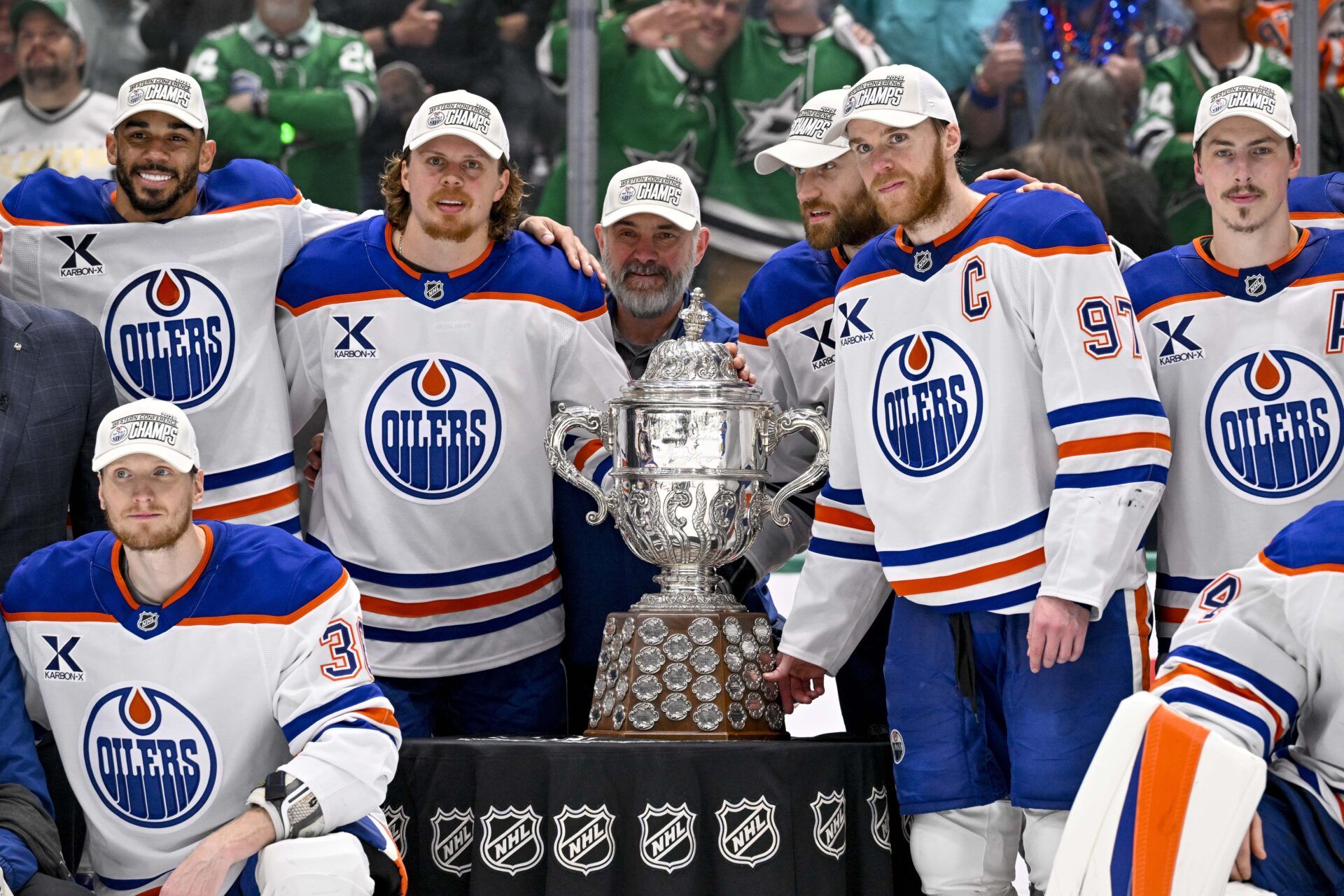
More than 90 Stanley Cup Final games have gone to overtime, showing just how evenly matched the best teams can be. This year alone, Game 1 of the Final between the Oilers and Panthers needed extra time to be decided, and it ended with Leon Draisaitl scoring the game-winner on a power play with just seconds left.
The Stanley Cup Final. It doesn’t get any better. pic.twitter.com/wAi7DijQuO
— Chris Johnston (@reporterchris) June 5, 2025
Eight Stanley Cup Final games have stretched into a third overtime period. The longest of them featured the Edmonton Oilers, when Petr Klima scored the game-winner at 15:13 of the third OT, securing a 3-2 victory over the Boston Bruins in the 1990 Final.
Longest games in NHL playoff history, ranked by total overtime played:
- 1936 Semifinals—The longest playoff game ever went into six overtimes, with the Detroit Red Wings defeating the Montreal Maroons 1-0. Mud Bruneteau scored the game-winner after 116 minutes and 30 seconds of overtime on March 24, 1936.
- 1933 Semifinals – Another six-overtime marathon saw the Toronto Maple Leafs edge out the Boston Bruins 1-0. Ken Doraty scored after 104 minutes and 46 seconds of overtime on April 3, 1933.
- 2000 Conference Semifinals – The Philadelphia Flyers beat the Pittsburgh Penguins 2-1 in a game that needed five overtimes. Keith Primeau ended it after 92 minutes and 1 second of OT.
- 2020 First Round – The Tampa Bay Lightning defeated the Columbus Blue Jackets 3-2 after 90 minutes and 27 seconds of overtime. Brayden Point sealed the game in the fifth overtime.
- 2003 Conference Semifinals – The Anaheim Ducks outlasted the Dallas Stars 4-3 with Petr Sykora scoring in the fifth OT, after 80 minutes and 48 seconds of extra time.
- 2023 Conference Finals – The Florida Panthers beat the Carolina Hurricanes 3-2 in a game that lasted into four overtimes. Matthew Tkachuk scored with just 12.7 seconds left in the period, ending 79 minutes and 47 seconds of overtime.
