
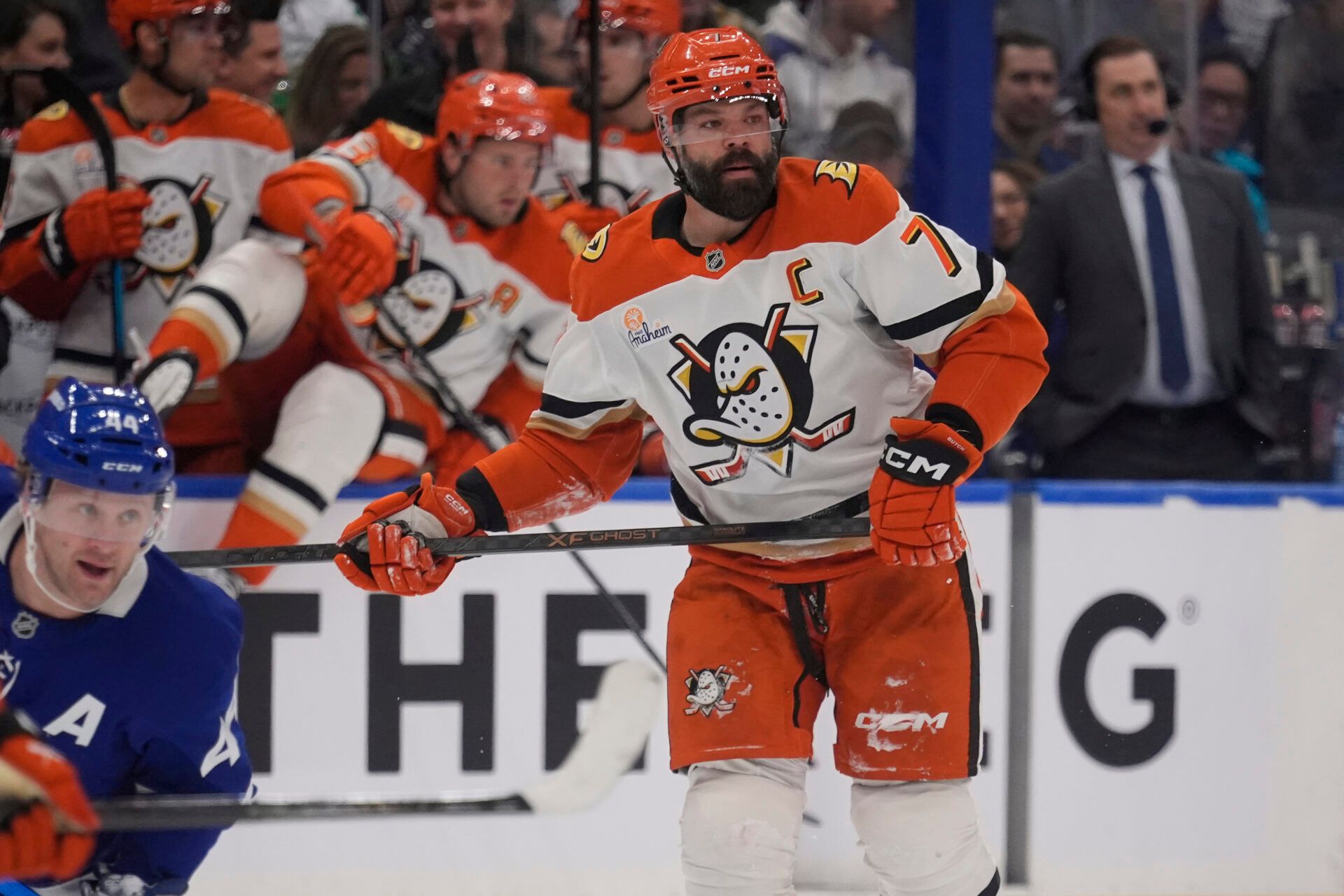
A dangerous play during a March matchup between the Anaheim Ducks and the Toronto Maple Leafs is getting discussed across the NHL. The incident left the Maple Leafs without their captain and triggered strong reactions from fans and analysts. After the league announced its ruling, questions surfaced about the length of the suspension.
Those concerns later led the NHL’s top player safety official to explain how the decision was reached.
George Parros Responds to Backlash Over Radko Gudas Suspension
The NHL suspended Radko Gudas for five games after his knee-on-knee hit injured Auston Matthews during the Thursday game against the Ducks. Matthews was handling the puck in the second period when the collision occurred, leaving him lying on the ice.
The Maple Leafs later confirmed that Matthews’ injury will keep him out for the rest of the 2025-26 NHL season. Meanwhile, following the review of the play, the league’s Department of Player Safety issued a five-game suspension to Gudas. This was done after a phone hearing, which is the maximum discipline allowed under that format.
The ruling drew criticism from several corners of the hockey world, including members of the Maple Leafs organization who believed the punishment should have been longer. During a media availability before the second day of NHL general manager meetings, George Parros spoke about the department’s approach to reviewing incidents.
“We came to it for good reason,” Parros said when asked about the ruling. He explained that the department focuses first on the details of the play itself before considering other factors.
“When we evaluate these plays, we look at the play and not the players. If we determine that play was worthy of supplemental discipline, we then look at history of the players involved and if there is an injury or not.”
Parros said the department followed that same approach while reviewing the Gudas hit. After completing its review, the group believed the five-game suspension was appropriate given the situation.
“This is how we come to make all of our decisions. We did this and made this decision under those circumstances, felt that this was the appropriate response and so I stand by it.”
Some reporters also questioned why the league did not hold an in-person hearing, which would allow the NHL to issue a suspension longer than five games. Parros said that the decision depends on whether the department believes a longer suspension is likely.
“We have incidents that occur that are toward that (five-game) threshold, but I do consider all those things every time,” Parros said. “If I don’t believe that six or higher is a real possibility, I don’t like necessarily calling an in-person hearing just to have a little bit of wiggle room.”
He also explained that an in-person hearing can create expectations for a much longer suspension. According to Parros, the league avoids that situation.
“When you do call in person, of course there’s reaction and maybe anticipation for a much larger number, and there’s no cap on that number, right? We know if it’s a regular hearing, it’s five games or less,” Parros said. “When it’s an in-person, it could be six to there’s no limit.”
For the Maple Leafs, the uncertainty has grown in the final stretch of the season, with their captain and one of the League’s top scorers out of the lineup. Although the Leafs are 0-1-1 since Matthews went down, their season can fully derail at any time, as they were already struggling to secure a playoff berth.
