
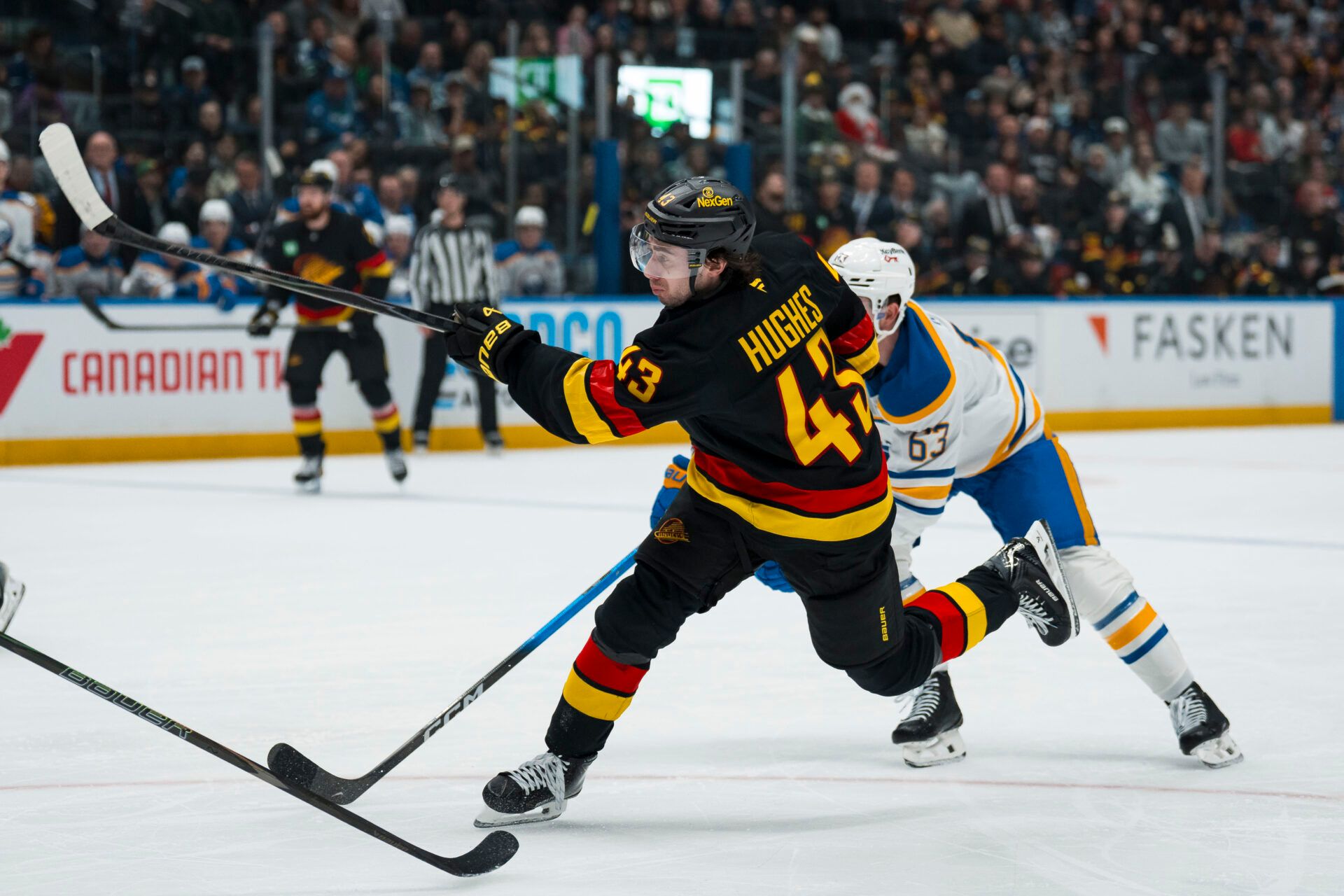
Amid a disastrous season, the Vancouver Canucks were considering trading many veterans. Foremost among them are Kiefer Sherwood, Evander Kane, and, perhaps, if playoff chances turned out to be absolutely zero, Elias Pettersson. However, trading franchise cornerstone Quinn Hughes wasn’t the Canucks’ first option.
Nonetheless, it happened. After much speculation, Hughes was traded to the Minnesota Wild in a blockbuster deal, sending ripples throughout the NHL community. To add to the development, an insider has weighed in on how the brand new Hughes-Wild partnership could impact Canucks’ division rivals, the Edmonton Oilers.
How the Quinn Hughes to Minnesota Wild Trade Affects the Edmonton Oilers
The elite blueliner was in the middle of excessive trade rumor noise, linking him most aggressively to the New Jersey Devils and the Detroit Red Wings. The Carolina Hurricanes, even the New York Rangers, and the Washington Capitals rose as potential trade destinations for the defenseman over time. Squashing all rumors, Bill Guerin decided to go all in to bolster his team’s playoff odds by adding Hughes to the Wild lineup. The price was steep, but Guerin didn’t budge.
In return for the star defenseman, the Wild had to send Marco Rossi, Liam Ohgren, Zeev Buium, and a first-round 2026 NHL draft pick to Vancouver. Minnesota is third behind the Colorado Avalanche and the Dallas Stars, with 41 points in the Central Division, and the team has just acquired Hughes. What does this mean for the Oilers?
According to The Athletic, with an increasingly formidable Central Division, the Oilers’ playoff situation has become a lot more challenging. Sure, Connor McDavid is on a roll, and the Oilers appear a lot steadier than they did previously. However, that does little to take away from the fact that the three best teams of the Western Conference, one of them now armed with one of the league’s best blueliners, are part of the Central Division.
“The three best teams in the Western Conference are now in the Central Division (Avalanche, Stars and Wild). For the Oilers, avoiding the Central bracket by finishing in the top three spots in the Pacific Division or the first wild card (seventh) is a matter of playoff life and death.,” wrote Alan Mitchell for The Athletic, aptly conveying Edmonton’s situation right now. The margin for error going forward is very slim for the Oilers.
“The Hughes trade has turned the Central into something resembling a hockey hellscape. A must to avoid,” Mitchell added, emphasizing the significance of the defenseman’s addition to the Wild lineup.
What could have been the year for a comeback for the Canucks has turned out to be a series of unanticipated events. What lies next for Vancouver remains to be seen.
