
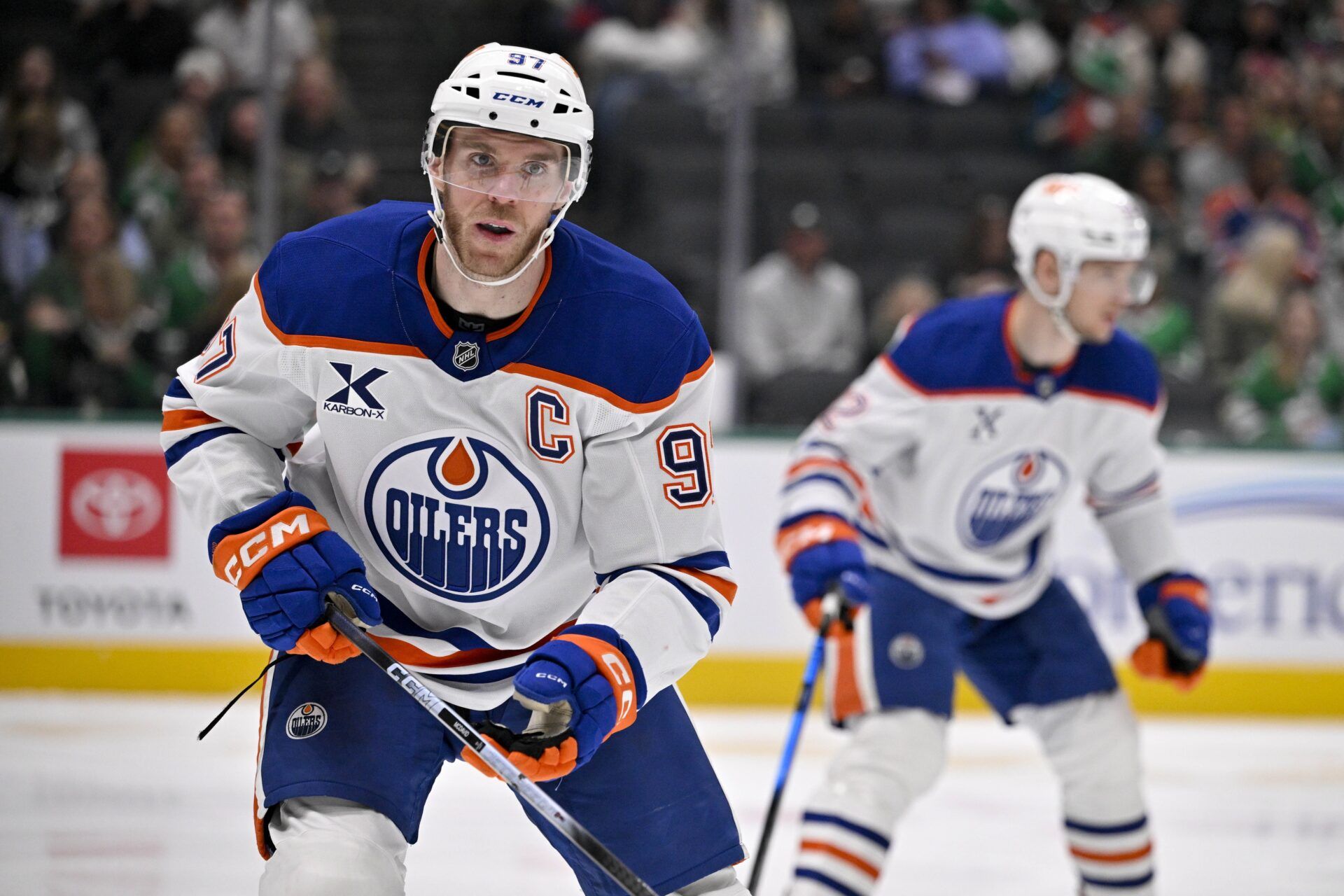
The NHL thought it had a handle on its player safety process. But after Connor McDavid publicly questioned how suspensions are decided, the conversation has only grown louder and far more heated.
What began as a measured critique from the league’s biggest star has quickly spiraled into widespread frustration, with analysts, insiders, and fans all piling on.
Connor McDavid’s Comments Ignite a League-Wide Debate
The controversy traces back to a decision by the NHL’s Department of Player Safety (DOPS) to suspend Radko Gudas for five games following a knee-on-knee hit that sidelined Auston Matthews for the season.
The key sticking point wasn’t just the length of the suspension; it was how the league arrived at it.
By opting for a phone hearing instead of an in-person one, the DOPS effectively capped the punishment at five games under the current Collective Bargaining Agreement. An in-person hearing would have allowed for a longer suspension, raising immediate questions about how the league assesses severity in such cases.
MORE: NHL Agent Allan Walsh Rips League’s Tone Deaf Stance on Connor McDavid’s Call For Reform
That call didn’t exactly impress McDavid.
The Edmonton Oilers captain didn’t outright attack the league, but his message was clear: If nearly every suspension sparks backlash, maybe the system itself needs a closer look.
In response, George Parros, who has led the department since 2017, defended both the system and the people behind it.
Parros emphasized that every decision is carefully reviewed, saying the group “sweats” over each call. He pointed to what he described as a “consistent” process, backed by experienced voices, including former NHL players, and stressed that the league remains “confident” in its approach.
Instead of easing tensions, Parros’ comments seem to have intensified criticism.
Across the hockey world, prominent voices have openly questioned both the credibility and consistency of the system.
NHL writer Rachel Kryshak’s remark cuts straight to the core of the issue. By calling the process “consistently bad,” she flips Parros’ own defense against him. “Yes, George. It’s consistently bad. Whether you think they should have confidence in it is irrelevant. They don’t. He needs to be removed,” Kryshak said.
Reporter Lance Lysowski takes it a step further, shifting from criticism of the process to criticism of leadership. “Man who deserves to lose his job is confident that he’s doing the job well. The players deserve better. The fans deserve better. The sport deserve better. Maybe the NHL will finally do something about it,” he said.
Meanwhile, NHL analyst Greg Wyshynski offers a more structural perspective. “It makes all the sense for the NHL, NHLPA, GMs, players, agents, refs, etc. to have a “Shanahan Rules Summit” to discuss whether Player Safety and the suspension process can be improved. But that would be the admission of a problem, so…”
Analyst Anthony Petrielli’s reaction zeroes in on the league’s biggest problem. “A mix of we try our best, we have people that have worked here a long time, and we played the game. There is no consistency and the easiest example ever is two different results for flipping off a camera,” Petrielli said.
NHL writer Peter B echoes that same concern but ties it directly to credibility. His comparison between different suspensions raises a simple but powerful question: “Players are supposed to believe and trust the process when the decisions show no consistency time and time again? Ex. Spezza got 6 games as first time offender & Gudas gets 5 as a repeat? How’s that consistent?”
McDavid’s call for reform has evolved into something much bigger, a spotlight on a system many feel is overdue for change. Whether the league chooses to revisit its approach or continue defending it could shape how player safety is viewed for years to come.
For now, one thing is certain: The outrage isn’t fading anytime soon.
