
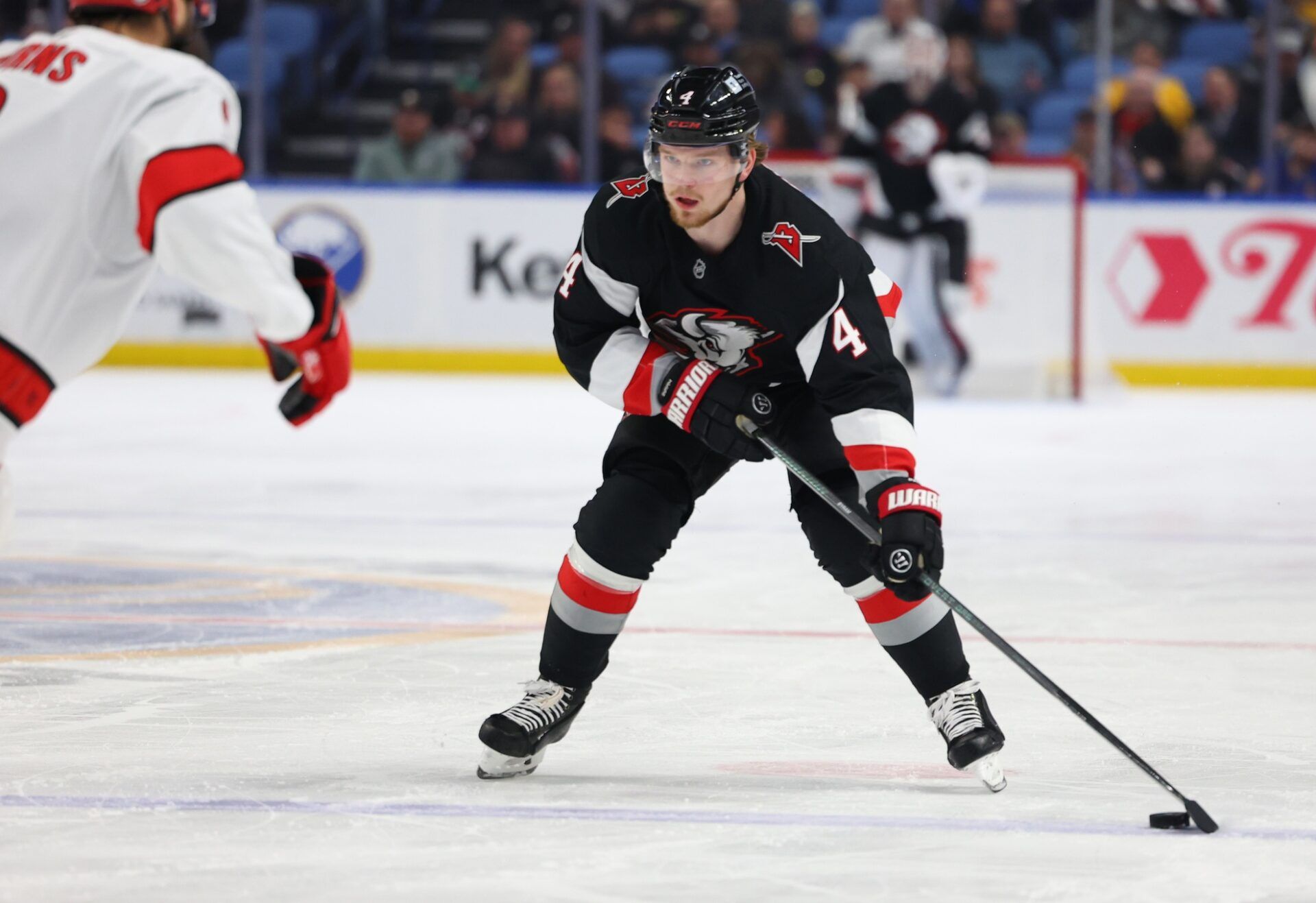
Trade chatter around Bowen Byram had been heating up for weeks, with the St. Louis Blues emerging as a rumored suitor. But just as the market looked ready to explode, everything suddenly went quiet.
No blockbuster deal. No late-night insider tweets. Nothing. Now, one NHL insider is shedding light on why Byram’s trade market collapsed, and the explanation points to a bigger league-wide issue that’s been brewing behind the scenes.
Why Bowen Byram’s Trade Market Fell Apart
When NHL insider Marco D’Amico joined The Shaun Starr Show, he pulled back the curtain on the surprising reason why Byram stayed put. According to D’Amico, this wasn’t just about one player’s value slipping; it was a mismatch between what teams wanted to give up and what teams wanted in return.
“The key right now,” D’Amico explained, “is that we didn’t necessarily see a wide range of sellers. But we had a wide range of buyers. And the issue is, the currency that the buyers were willing to give the sellers were not wanting.”
The buyers, like the Blues and other interested teams, were willing to part with futures (draft picks or unproven prospects), but sellers like the Buffalo Sabres, who held Byram’s rights, wanted actual NHL-ready players. That’s where the deal hit a wall.
The Sabres weren’t alone in this mindset. D’Amico pointed to a trend across the league this offseason: teams making player-for-player trades rather than pick-based deals. A prime example was JJ Peterka’s move from Buffalo to Utah, a straight swap of NHL talent rather than a gamble on future assets.
Byram’s case was trickier because of his contract status. Buffalo had the option to “kick the can down the road,” as D’Amico put it. Rather than selling low now, they could keep Byram under contract for two more years and see if his value rebounds. That’s exactly what they chose to do.
Teams like St. Louis never had a realistic shot unless they were willing to part with roster players who could help Buffalo immediately, and those pieces weren’t coming.
For the Blues, it’s a missed opportunity to land a young, skilled defenseman who could slot into their long-term plans. For Byram, it’s another chapter in a career that’s already had more twists than expected. And for the NHL as a whole, it’s another sign that the trade market is shifting toward “now” over “later,” making it harder than ever to make deals built on futures alone.
