
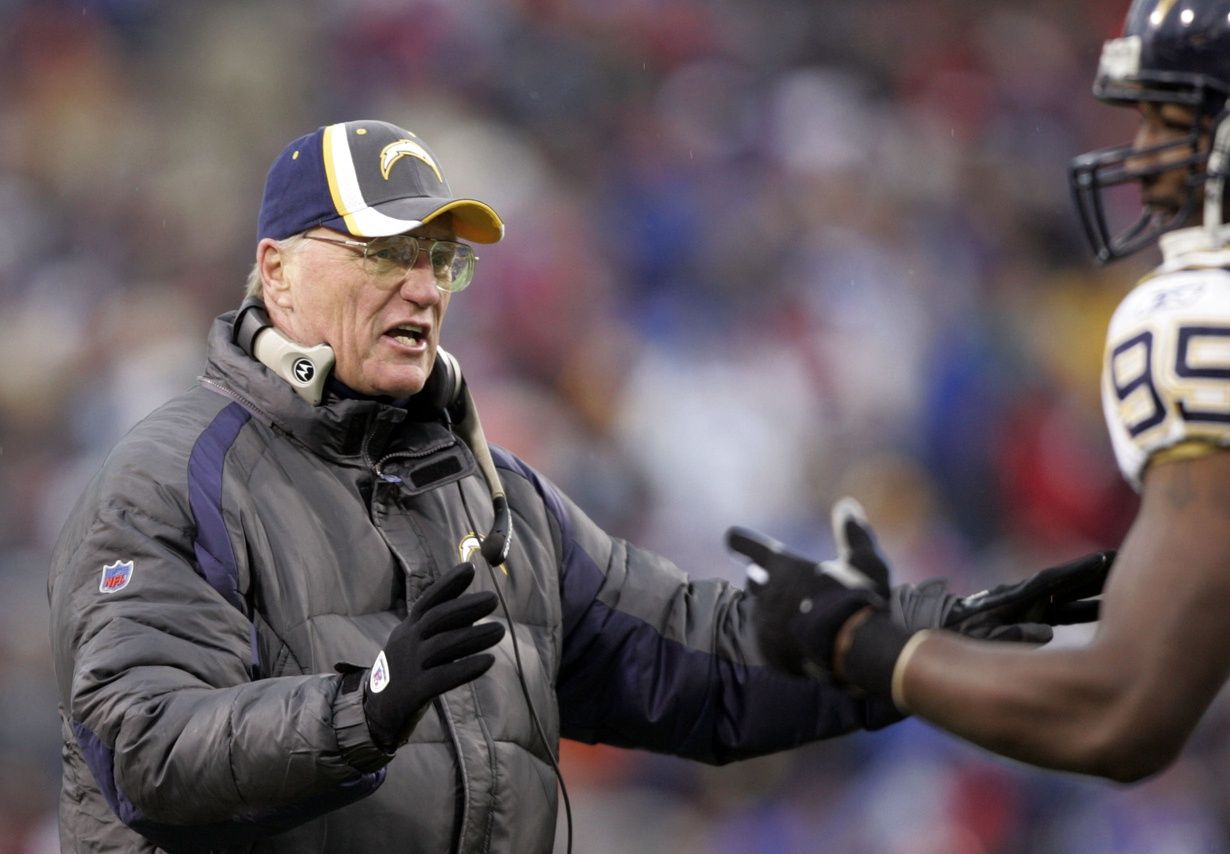
Marty Schottenheimer went 14-2 with the San Diego Chargers in 2006, posted the best record in football, and was fired less than a month later. He remains, nearly two decades on, the winningest coach never to reach a Super Bowl and perhaps the starkest example of how the NFL’s ruthless math extends well beyond the loss column.
Schottenheimer isn’t alone. The league’s history is dotted with coaches who won, and sometimes won big, but still found themselves out of work. Their stories reveal the uncomfortable truth that NFL job security depends on factors far beyond a team’s record: playoff performance, front office politics, ownership patience, and sometimes just bad timing.

The Most Stunning Firings in NFL History
Marty Schottenheimer, San Diego Chargers (2006)
Record in final season: 14-2
Schottenheimer’s dismissal remains the most shocking case in league history. The Chargers won the AFC West behind league MVP LaDainian Tomlinson and appeared destined for a Super Bowl run. Then came a divisional-round collapse against New England — four turnovers, a 24-21 loss, and owner Dean Spanos citing a “dysfunctional situation” between Schottenheimer and general manager A.J. Smith.
“We knew why Marty was the scapegoat, because those two could no longer coexist,” Tomlinson later said. The firing stung enough that Schottenheimer’s son, Brian, now the Cowboys’ head coach, still references it as a cautionary tale.
“I saw what I think is a Hall of Fame coach named Marty Schottenheimer get fired after 14-2,” the younger Schottenheimer said after being hired in Dallas.
The Chargers didn’t win a playoff game for six years after dismissing him.
Tony Dungy, Tampa Bay Buccaneers (2001)
Record in final season: 9-7
Tony Dungy inherited a laughingstock franchise in 1996, installed the Tampa 2 defense, and transformed the Buccaneers into perennial contenders with four playoff appearances in five years. But back-to-back blowout losses to Philadelphia in the wild-card round — including a 31-9 demolition in 2001 where Tampa couldn’t score a touchdown — sealed his fate.
Dungy was fired after the 2001 playoffs due to frequent postseason struggles, but is credited with constructing the team that won Super Bowl XXXVII the following season under Jon Gruden. The cruelest irony in NFL coaching history: Dungy built the championship roster, he just wasn’t around to coach it.
MORE: Ranking the 10 Winningest Head Coaches in NFL History
He went on to win a Super Bowl with Indianapolis in 2006, becoming the first Black head coach to hoist the Lombardi Trophy. His opponent that day: Lovie Smith’s Chicago Bears, making it the first Super Bowl featuring two Black head coaches.
Lovie Smith, Chicago Bears (2012)
Record in final season: 10-6
Speaking of Smith, he also had a stunning departure. Smith’s situation lacked the playoff drama but carried its own sting. After going 10-6 with the league’s best takeaway defense, Smith was dismissed when the Bears failed to make the postseason for the fifth time in six years. The decision blindsided his locker room.
“You win 10 games … we didn’t finish up the way we wanted to. We didn’t get in the playoffs,” Brian Urlacher said after Smith’s firing. “But Lovie is a great coach and I’m sure he’ll get hired pretty quick. No one could do with this team what he’s done the last nine years.”
The Bears went 19-29 in the three seasons following Smith’s firing. Years later, Urlacher called it “the Lovie Curse.”
Brian Flores, Miami Dolphins (2021)
Record in final season: 9-8
Brian Flores added a modern chapter to this history. He led Miami to back-to-back winning seasons — the Dolphins’ first since 2003 — and was fired anyway. Owner Stephen Ross cited organizational dysfunction, but the subsequent lawsuit Flores filed against the NFL painted a murkier picture of a coach who wouldn’t play along with management’s wishes.
The lawsuit alleged Ross offered Flores $100,000 per loss during the 2019 season to encourage tanking, and that Flores was pressured to recruit a quarterback in violation of tampering rules. When Flores refused, the suit claimed, he was cast as difficult to work with until he was dismissed.
George Seifert, San Francisco 49ers (1996)
Record in final season: 12-4
George Seifert represents a unique subset: the coach pushed out despite extraordinary success. He won two Super Bowls with the 49ers and held the highest winning percentage in NFL history at the time of his departure. But after consecutive playoff losses to Green Bay, the organization made it clear that Steve Mariucci was the future.
Rather than serve as a lame duck, Seifert resigned — though “resigned” is doing a lot of work in that sentence. The 49ers had already offered Mariucci the offensive coordinator job with assurances he’d be Seifert’s successor within two seasons. Seifert read the writing on the wall and walked away from a 12-win team.
Why Winning Doesn’t Always Equal Job Security
The common thread binding these firings isn’t incompetence, it’s context.
Schottenheimer and Smith were done in by playoff failures — real in Schottenheimer’s case (5-13 career postseason record), perceived in Smith’s. Dungy couldn’t overcome an ownership group that grew impatient with postseason losses and conservative offensive philosophy. Flores clashed with a front office that had different plans for the franchise’s direction. Seifert was simply in the way of the next hot coaching candidate.
What these cases demonstrate is that NFL owners increasingly view winning seasons as table stakes, not achievements. The standard is Super Bowl contention, and anything short of deep playoff runs puts coaches on borrowed time — particularly when relationships with general managers or ownership sour.
For current coaches operating under win-now pressure, the lesson is sobering. A 10-win season might buy another year. A 14-win season might not even buy that. The only safe ground is a Lombardi Trophy, and even that comes with an expiration date.