
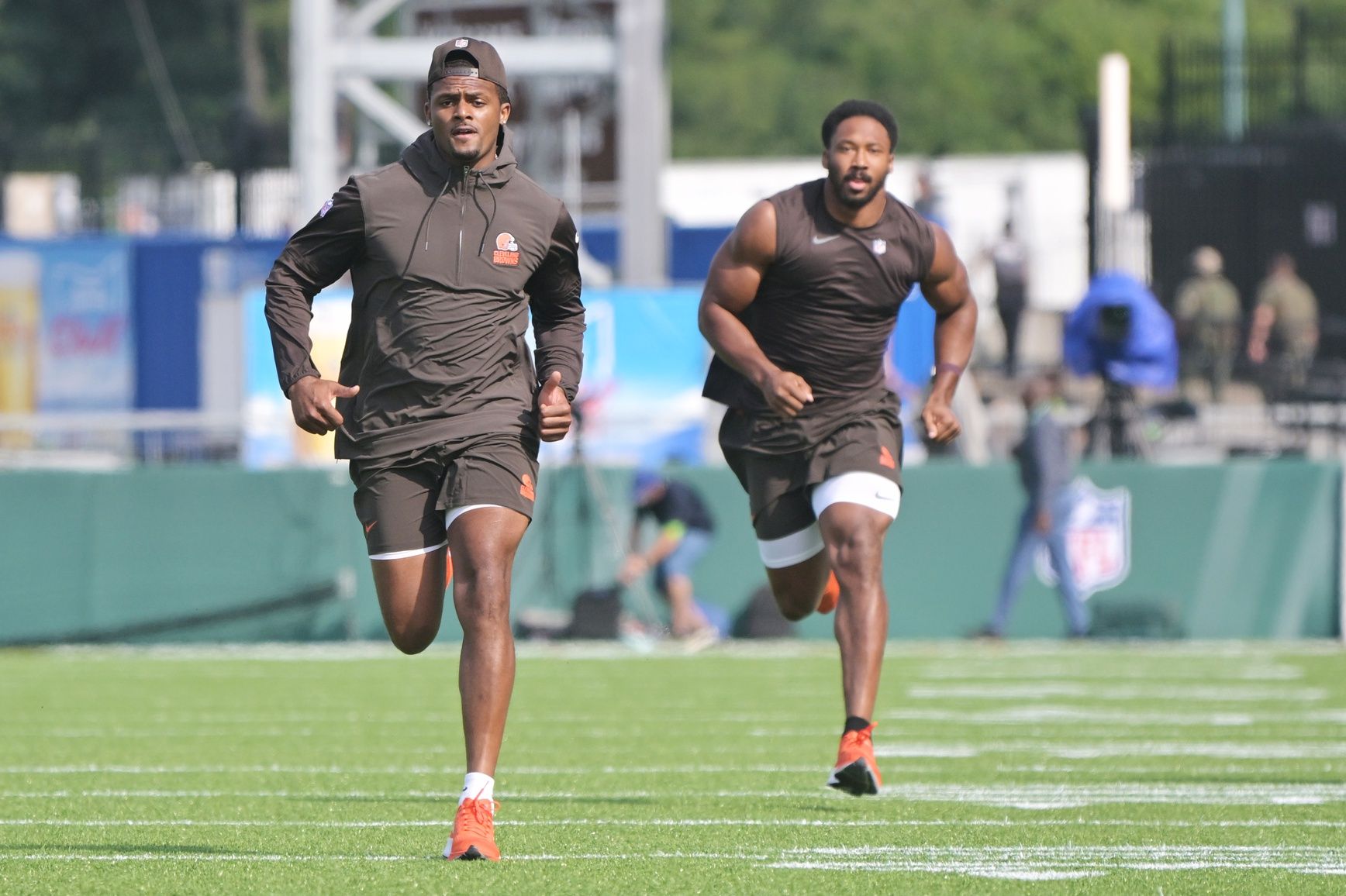
Cleveland general manager Andrew Berry recently altered the contract of his star edge rusher. The Browns adjusted Myles Garrett’s massive four-year, $160 million extension by pushing the deadline to exercise his option bonuses back to September and shifting $8 million of future base salaries into roster bonuses.
Berry firmly denied that this move foreshadowed a blockbuster trade. The maneuver actually points to a much more concerning issue resting squarely under center. The Browns are still drowning in the financial wake of Deshaun Watson.
How Deshaun Watson’s Contract Created a $230 Million Domino Effect for the Browns
Cleveland handed Watson a fully guaranteed $230 million contract in 2022. To absorb that unprecedented deal, Berry repeatedly kicked the financial can down the road.
Those decisions have compounded into a massive cap headache. Watson carries a cap hit nearing $45 million for the 2026 season. That figure forced the front office to scramble for operational flexibility elsewhere on the roster.
NFL Network analyst Nick Shook recently explained how the Watson contract explicitly necessitated adjustments to Garrett’s deal.
“Yeah, from what I understand and what was reported, it gave the Browns more flexibility in future years,” Shook noted. “Now, I’m just going to say this overall, the cap is a myth in some regards. There are ways to circumvent it, to adjust your payroll, to get under the cap.”
That’s a cornerstone edge rusher they can’t afford to lose because of cap gymnastics catching up to them. Garrett finished No. 1 in PFSN’s Edge Impact metric with a 95.6 rating in 2025 while leading the league in sacks.
Shook compared Cleveland’s current maneuvers to the creative accounting previously utilized by the New Orleans Saints.
“I think back to about four or five years ago when I was tasked with writing a story exploring what the New Orleans Saints were going to do, because at the time they were $79.5 million over the cap and had no real way to get under it, at least from the outside perspective,” Shook explained.
“So I did a deep dive into who they might move on from, there were about 10 guys they could’ve cut,” Shook continued. “They ended up moving on from two. One left via trade, one retired.”
“Everybody else, including Drew Brees and Alvin Kamara, they fit under the cap. So it is a bit of a myth.”
BE AN NFL GM: PFSN’s Ultimate GM Simulator
The Saints managed to dodge total catastrophe, but Cleveland’s situation features a uniquely punishing structure. The Browns tied their entire franchise timeline to a quarterback who has played just 19 games over his first four seasons in Cleveland.
“But with the Browns situation, what Andrew Berry has been doing since the Deshaun Watson deal is restructuring him every year,” Shook said. “Usually when you restructure, you tack on void years to push the cap hit into the future. Eventually, though, the time comes when you have to pay for those void years and take on that dead cap, and that will start next year with the Browns.”
Pushing Garrett’s option bonuses closer to the regular season gives Berry more time to navigate a bloated salary structure. The bill for the Watson acquisition is finally coming due. Garrett’s restructuring is simply the latest accounting trick required to keep the Browns financially afloat.
