
The New York Jets hold a mountain of draft capital and a veteran quarterback in Geno Smith holding down the starting job. A former architect of the franchise wants to see the front office leverage both advantages to secure the long-term future under center.
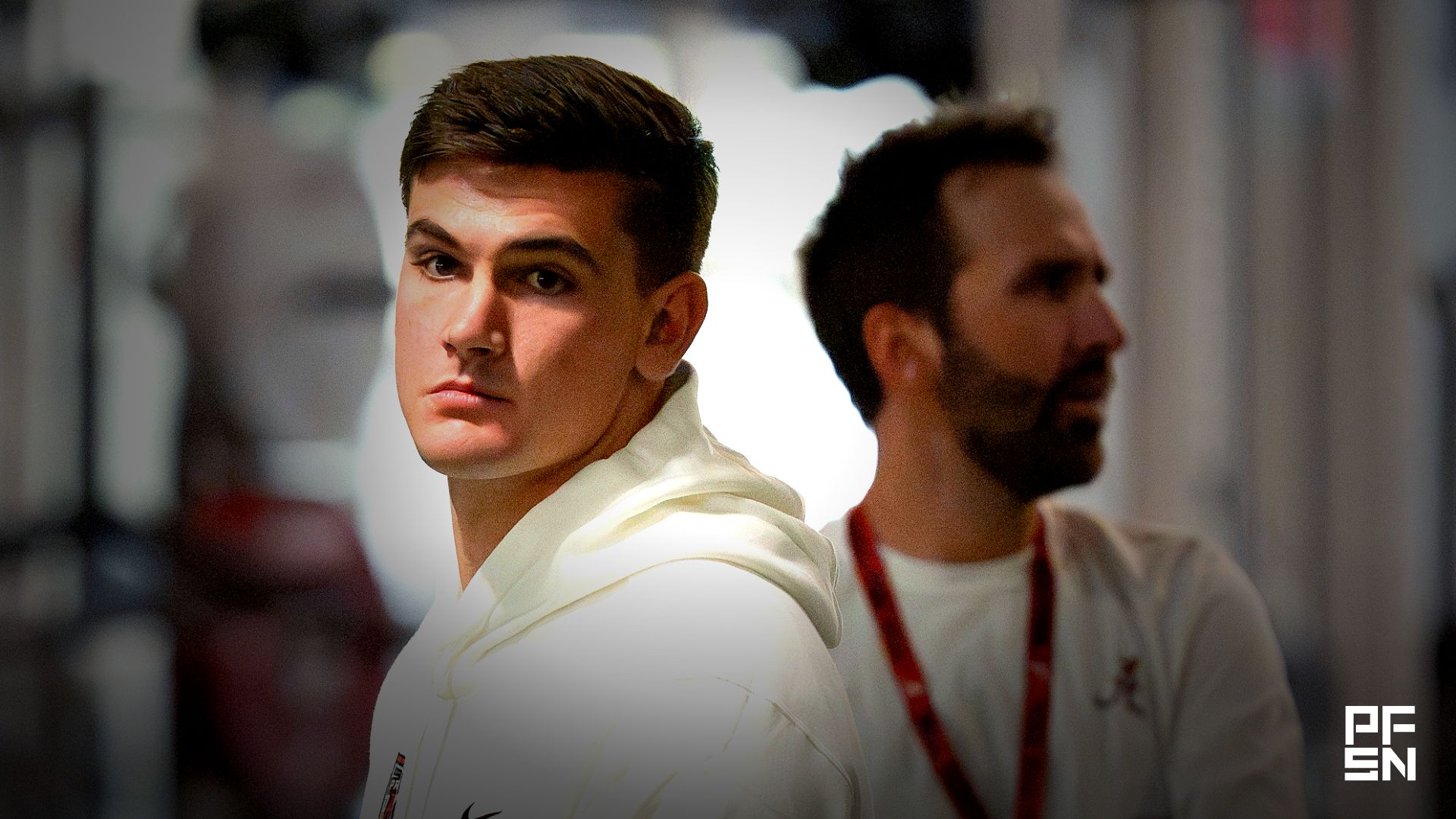
Former Jets general manager Mike Tannenbaum laid out a bold blueprint on ESPN’s “Get Up” on Friday morning. His vision involves the Jets maneuvering back into the late first round to select Alabama quarterback Ty Simpson.
Why the Jets Should Pay the First-Round Quarterback Tax
The Jets are currently armed with premium picks in the 2026 NFL Draft. Tannenbaum suggested the Jets should focus on elite defensive and skill-position talent early in the night.
He floated taking a premier pass rusher at No. 2 overall to anchor the defensive front. He then followed that up by adding a top-tier cornerback or a dynamic wide receiver at No. 16.
The aggressive move comes after the top tier of prospects is off the board. Tannenbaum proposed that the Jets package their two second-round selections to execute a targeted trade. Those picks are currently slotted at No. 33 and No. 44 overall.
Packaging them provides enough ammunition to jump back up to No. 25. The Chicago Bears currently hold that 25th overall selection and might be willing to move back for volume.
This maneuver mirrors a trade the New York Giants executed previously to jump from the early second round back into the late first. Tannenbaum argued that the Jets’ specific target should be Simpson. The former Crimson Tide signal-caller could then spend a full season holding a clipboard while adjusting to the professional game.
“Ty Simpson who can now sit for a year behind Geno Smith,” Tannenbaum said on the broadcast. “Now you have five years, you have that critical fifth-year option.”
That fifth-year option is the golden ticket for NFL general managers navigating the salary cap. Securing a quarterback in the first round grants the drafting team an extra year of cost control before a massive extension is required.
That extra contractual runway is incredibly valuable for a raw prospect who needs time to acclimate to an NFL playbook. The difference between an early second-round pick and the 32nd overall pick is massive in terms of long-term roster building.
Simpson is undoubtedly raw. He only logged 15 collegiate starts at Alabama. According to PFSN’s CFB QB Impact metric, Simpson ranked 25th in 2025 with a score of 85.4, which is a B. Sitting him behind an established veteran like Smith provides a necessary developmental buffer.
“Imagine if you’re the New York Jets and you get a pass rusher, let’s say a corner, Ty Simpson, and now you still have three first-round picks next year,” Tannenbaum said. “I think that’s a dream scenario for Ty Simpson who could sit.”
The Danger of Chasing Next Year’s Quarterback Class
Pulling the trigger on a developmental prospect requires deep organizational alignment. Not everyone in the league is convinced Simpson carries true first-round value. ESPN insider Dan Graziano reported a distinct lack of enthusiasm from teams picking in the top 32.
“It doesn’t sound like there’s a ton of teams in the first round that are looking at taking him there,” Graziano said. “While I think a lot of people out there want to know if Ty Simpson will be a first-rounder, I can’t find the team that would take him there.”
Graziano noted that the league consensus mimics the pre-draft conversation about Shedeur Sanders a year ago. Executives consistently predict someone else will take the plunge. That usually results in a draft-day slide.
The Arizona Cardinals are currently listed as the betting favorites to land him in Vegas. Arizona holds an early second-round pick that aligns perfectly with a potential fall.
“Basically the message I keep getting is, teams say ‘Yeah I think someone will take him in the First Round. Not gonna be us.'” @Espngreeny, @Foxworth24 and @RealTannenbaum talk through the latest on Ty Simpson ⬇️ pic.twitter.com/VjM0mDzMVX
— Get Up (@GetUpESPN) April 3, 2026
Host Mike Greenberg pointed out that the Cleveland Browns are sitting right at pick No. 24. A team taking a quarterback right before the over/under line is a common occurrence in the prop betting market. Tannenbaum pointed to the Pittsburgh Steelers at pick No. 21 as another massive wild card.
“If I’m Mike McCarthy and I’m in year one, why would you not take Ty Simpson?” Tannenbaum asked, referencing the new regime in Pittsburgh.
Former NFL defensive back Dominique Foxworth pointed out a psychological trap that front offices fall into annually. Teams desperate for a quarterback always talk themselves into the next draft cycle. The grass is consistently greener exactly 12 months away.
“I think a lot of teams are really excited about the quarterbacks in next year’s draft,” Foxworth said. “I imagine that a lot of them are like a lot of the GMs that need quarterbacks is next year’s draft is always better than this year’s draft.”
Greenberg correctly identified the flaw in that logic. Pushing the quarterback problem down the road rarely works out. A year ago, analysts were hyping up Cade Klubnik, Drew Allar, and Garrett Nussmeier as a loaded future class that would produce five or six first-rounders.
Now the league is struggling to find a consensus second quarterback worthy of a Day 1 selection. The board never unfolds the way scouts predict a full college season in advance.
Injuries happen, development stalls, and highly touted recruits fail to meet expectations. If a front office identifies a player with franchise potential right now, waiting for a hypothetical savior is a massive risk.
BE AN NFL GM: PFSN’s Ultimate GM Simulator
The Jets have the draft capital to dictate the flow of the entire weekend. They have a bridge quarterback in place to handle the immediate pressure.
If Simpson is their preferred target, moving back into the first round secures the contract flexibility needed to mold him properly. Tannenbaum’s scenario might sound like a dream, but the Jets have the resources to make it a reality.
