
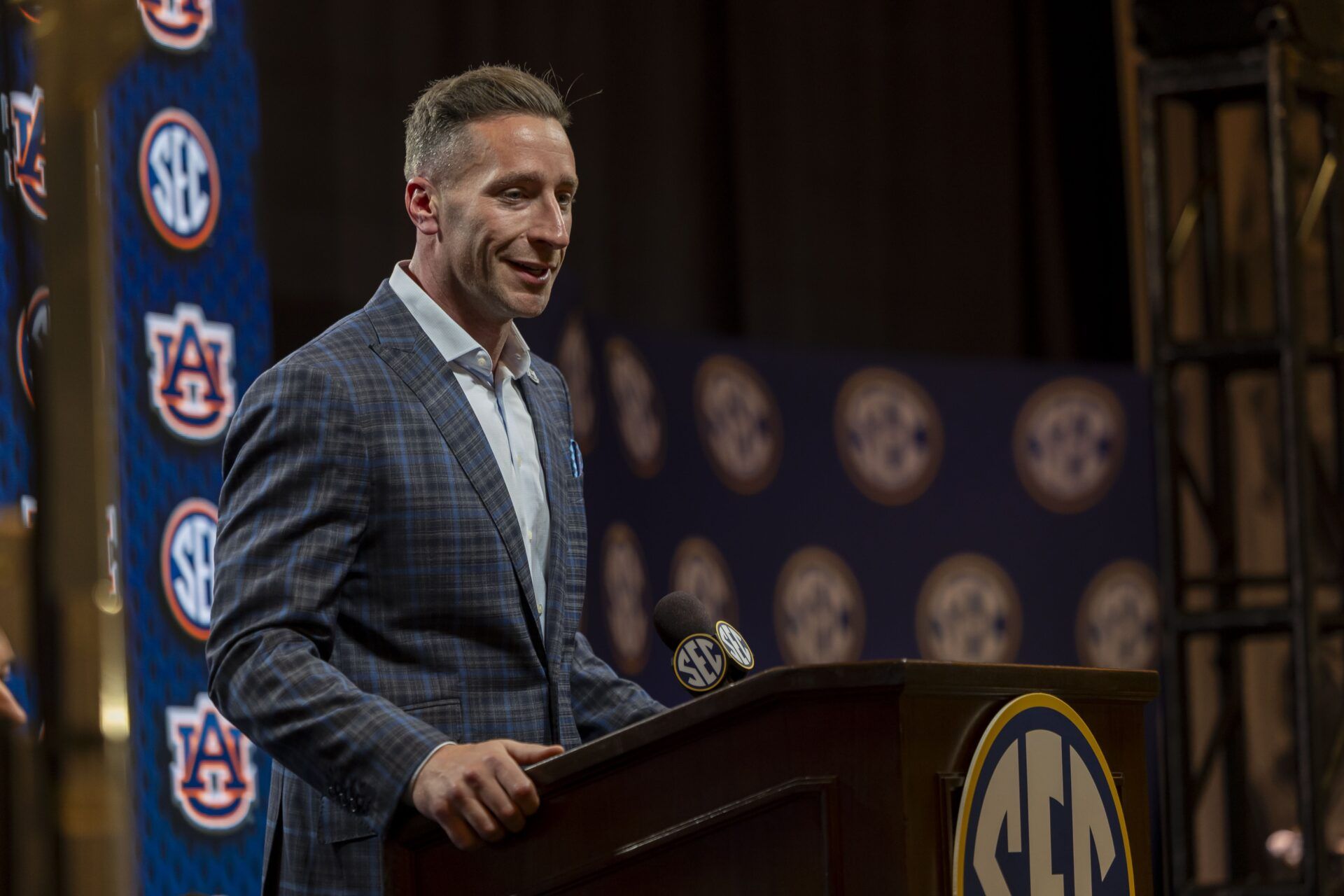
When Steven Pearl was named the new head coach of Auburn basketball last month, he knew the criticism was coming. Taking over for a legend is hard enough, but when that legend is your father, the cries of nepotism are inevitable. Just weeks before the season, Bruce Pearl’s sudden retirement in late September only fueled the fire.
The swift promotion of his son, Steven, sparked an immediate uproar, with many questioning whether he earned the job or was simply a legacy handout. Now, Auburn’s new head coach is pushing back, insisting the decision was based on merit, not family ties.

How Does Steven Pearl Justify Succeeding His Father at Auburn?
Steven Pearl, 38, is no stranger to the Auburn program, having been a part of the coaching staff for years. He worked his way up from an assistant strength and conditioning coach to the director of operations, then an assistant coach, and finally the associate head coach. However, his only prior experience came under his father’s leadership, which led many fans to question if he was truly the most qualified person for the role.
“I am fully understanding of the fact that my situation is so unique and so different from everyone else’s,” Pearl told Jon Rothstein on CBS Sports College Basketball. “I understand that may rub people the wrong way.”
Acknowledging the fan’s inevitable misgivings, Pearl clarified that the job was not a birthright. Instead of focusing on himself, he praised the entire staff.
“I get that the main reason why I had this job is because of who my dad is,” he said. “But we also have an unbelievable staff that has been together for a long time, and I know that they are deserving of this opportunity. It’s way less about me and more about them.”
He then pointed to the group’s shared success as the reason for the administration’s decision.
“I will say this, though. BP has obviously had a lot of success in Tennessee. But this staff has been to two Final Fours and won five SEC championships. That doesn’t happen without a great collection, a great group of people, which is why, ultimately, I believe John and his administration felt like this was the right move as far as who was going to succeed BP.”
MORE: Steven Pearl Details Tahaad Pettiford’s Role in His New Auburn Regime, Warns of ‘Target on His Back’
Auburn’s athletic director, John Cohen, supported that sentiment. In his statement, Cohen said that Steven’s “expertise in coaching defense, his skills as an evaluator, recruiter, teacher and motivator, and his relationships with our student-athletes and staff were paramount” in the decision.
Meanwhile, Bruce Pearl faced criticism for allegedly orchestrating the succession with the timing of his retirement. To counter the idea that the university was rushed, Steven assured everyone that the program had plenty of time to find a successor for their winningest coach.
Later in the interview, he revealed that his father had informed Cohen of his plans to retire two to three years ago. This gave Auburn a long window to decide whether to hire an outside candidate or promote from within the existing staff.
