
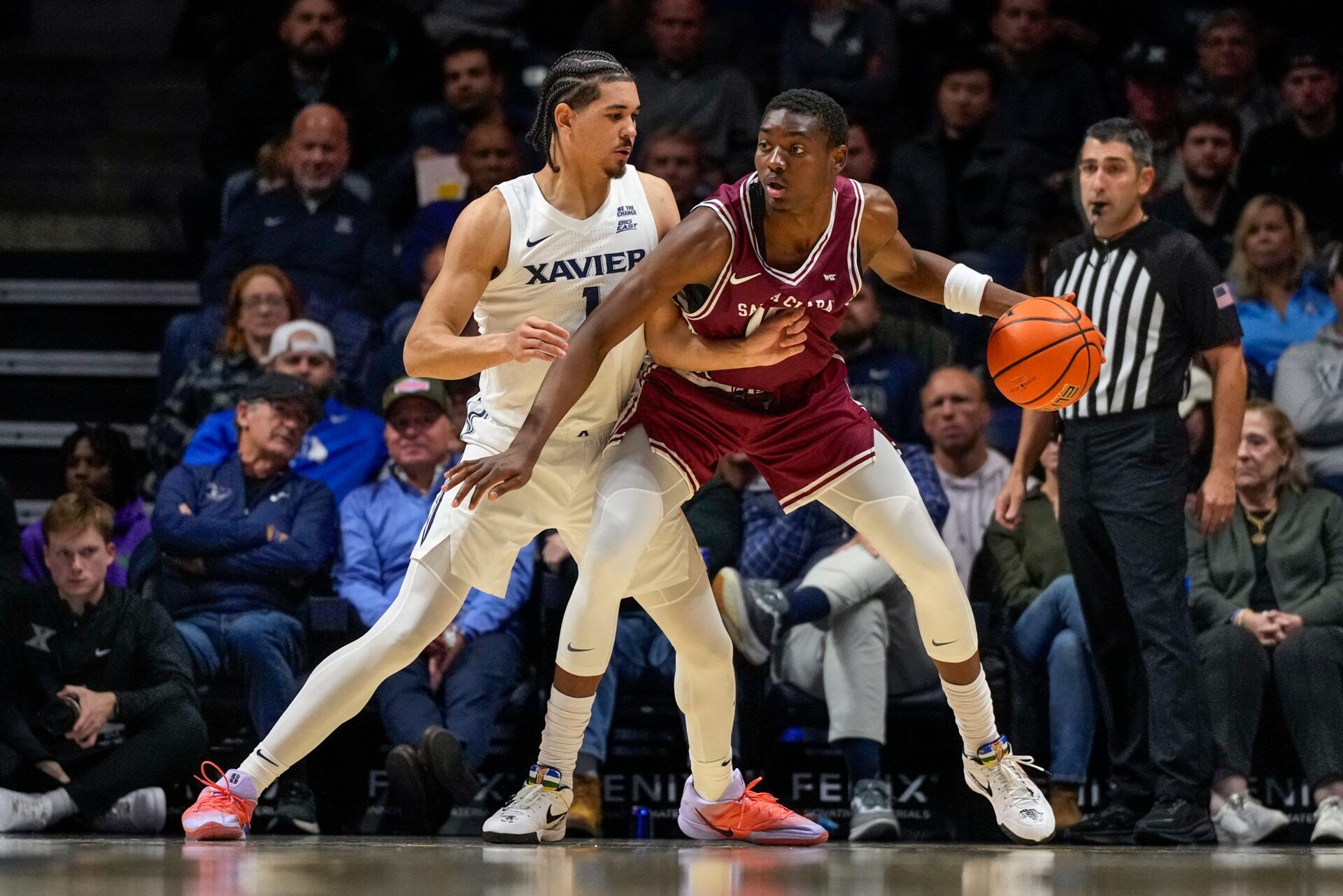
College basketball is entering a new era, one where former NBA G League players, once considered professional and ineligible, are suddenly committing and suiting up for college programs. What started as a quiet eligibility ruling has now become one of the most disruptive storylines in the sport. The line between amateurism and professional athletes is blurring, and the NCAA is adapting in real time.
Recent high-profile commitments, such as Thierry Darlan to Santa Clara, London Johnson to Louisville, and Abdullah Ahmen to BYU, have ignited the national debate. Coaches, fans, and administrators are scrambling to understand how this is possible, why it’s happening now, and what it means for the future of college basketball.
How Did the NCAA Open the Door for G League Players?
The shift began when Santa Clara received NCAA clearance for Darlan, making him the first G League alumnus in history to play college basketball. Darlan spent two years earning modest salaries in the G League, but never declared for the NBA Draft, keeping him within the NCAA’s eligibility framework. Once he was ruled eligible, a precedent was set, and now the floodgates are cracking open.
Days later, former Ignite standout Johnson made the same leap, this time to a more notable basketball program, committing to Louisville with two years of eligibility remaining. BYU added to the movement by landing Ahmed, who spent two seasons with the New York Knicks’ affiliate, the Westchester Knicks. These decisions have sparked national reactions, especially as programs realize that G League talent is available for recruitment.
At the core of this shift is the NCAA’s evolving definition of amateurism. With NIL earnings now extensive and revenue-sharing agreements emerging, the organization struggles to declare athletes ineligible due to the modest salaries they previously earned.
As long as players remain within their five-year eligibility window, they can return to college basketball. Additionally, with the size of G-League contracts, which range from $40,000 to $50,000, the NCAA deems it equivalent to the value of a college scholarship.
The shift has changed the incentives for young players. While the G League once offered a direct route to the NBA, college basketball now provides larger NIL opportunities and national exposure. Many players can earn more in college than they can in other leagues.
Not everyone is thrilled by the NCAA’s decision. Coaches like Tom Izzo and Bill Self are critical of the idea, while Rick Pitino is making fun of the occasion by calling “First dibs” on recruiting Giannis Antetokounmpo.
It’ll be interesting to see how the issue develops over the coming months. However, the NCAA has set a dangerous precedent and may alter the landscape of college basketball as we know it.
