
Last season was just the second time in the history of this event that all four No. 1 seeds advanced through their regions. My numbers find that highly unlikely to repeat this time, so let’s dive into the March Madness Final Four selections to see where you can gain an edge in your office pool.

March Madness Final Four Selections: Finding An Edge In Your Bracket Pool
For the record, fading all of the top seeds is not the play. This is a tournament highlighted by chaos in the first week and chalk as the sample size grows. But there does appear to be a middle ground worth exposing: teams that fall just below the “very good” tier in the public’s mind but have real Final Four equity.
I will put my cards on the table now: I am going to have at least two of these teams in my Elite Eight and likely one in my Final Four. I will be putting my bracket where my mouth is.
- Illinois (3-seed South)
- Nebraska (4-seed, South)
- Alabama (4-seed, Midwest)
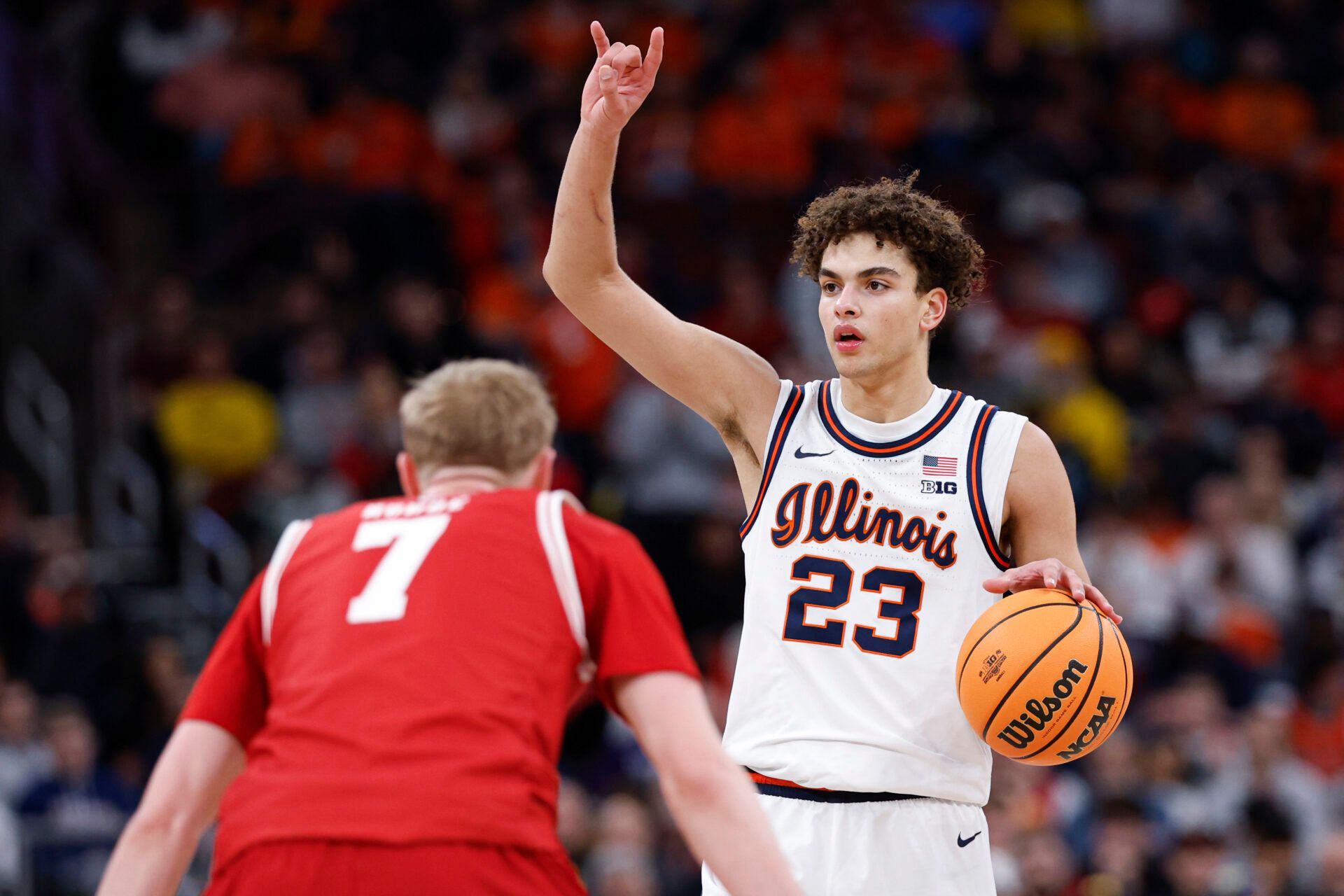
The Illini are a tough team to grasp, but I may have cracked the code.
Illinois lost. They are going to look good on paper (mine included!), but their future comes down to one thing:
Dominate when their free throw rate gained is high and very average otherwise
Assuming they are a 3-seed, they want to be in the same region as UConn or Houston pic.twitter.com/RUgvbpWtHs
— Kyle Soppe (@KyleSoppePFN) March 13, 2026
That graph illustrates how likely a team is to win the free-throw attempt battle. Red means very likely (and thus a negative matchup for Illinois), while green indicates teams less likely to gain ground at the stripe.
Illinois drew Houston as its two-seed, Florida as its one-seed, and Nebraska as the team I am considering for its Elite Eight matchup. This is about as favorable a run as they could have asked for. Their offense will need to continue producing at a historically efficient rate, but they have largely done that for three months.
I am not playing my bracket for second place — I am playing to win, and putting faith in a volatile team like Illinois provides a way to be different within reason.
Nebraska’s inclusion on this list should not be surprising, as it is in the same region and benefits in similar ways. They own the fourth-highest assist-to-turnover rate and third-highest assist percentage in the field. They share the ball as consistently as any team left, and that can go a long way.
The Gators are good, but a Round 2 matchup against Bennett Stirtz is concerning and could open up the top half of the region. Even if that upset does not occur, Nebraska’s strengths (No. 5 in opponent free-throw rate and No. 21 in free-throw percentage) match up well against a Florida team that ranks outside the top 40 in both categories.
CUSTOM RANKINGS: College Basketball Predictor
Rebounding would be a major issue in that matchup, which is why I would prefer Illinois if picking one less-popular team from the South to make a run. But both are very live.
When it comes to Alabama, it is straightforward. They force opponents to play at a breakneck pace, and if you try to play their game, you are in trouble. Texas Tech is a run-and-gun offense without JT Toppin, which puts them in a position to fail should they survive to face Alabama in Round 2.
Michigan would be next, and they are the best team in the sport. They are capable of winning in a variety of ways, and I would not favor Alabama in that matchup. But to have a chance, you must force the Wolverines off their preferred style, and Alabama has the ability to do that.
Again, I am not playing for second. If Alabama cannot dictate pace in that matchup, they could lose by 30. But if they do, you not only get your pick right, but you eliminate a lot of your competition in the process.