
The NCAA transfer portal has become one of the hottest topics in college basketball, and not everyone’s a fan. Many coaches and fans believe the system, while empowering players, has also created instability for teams and confusion for athletes who transfer multiple times.
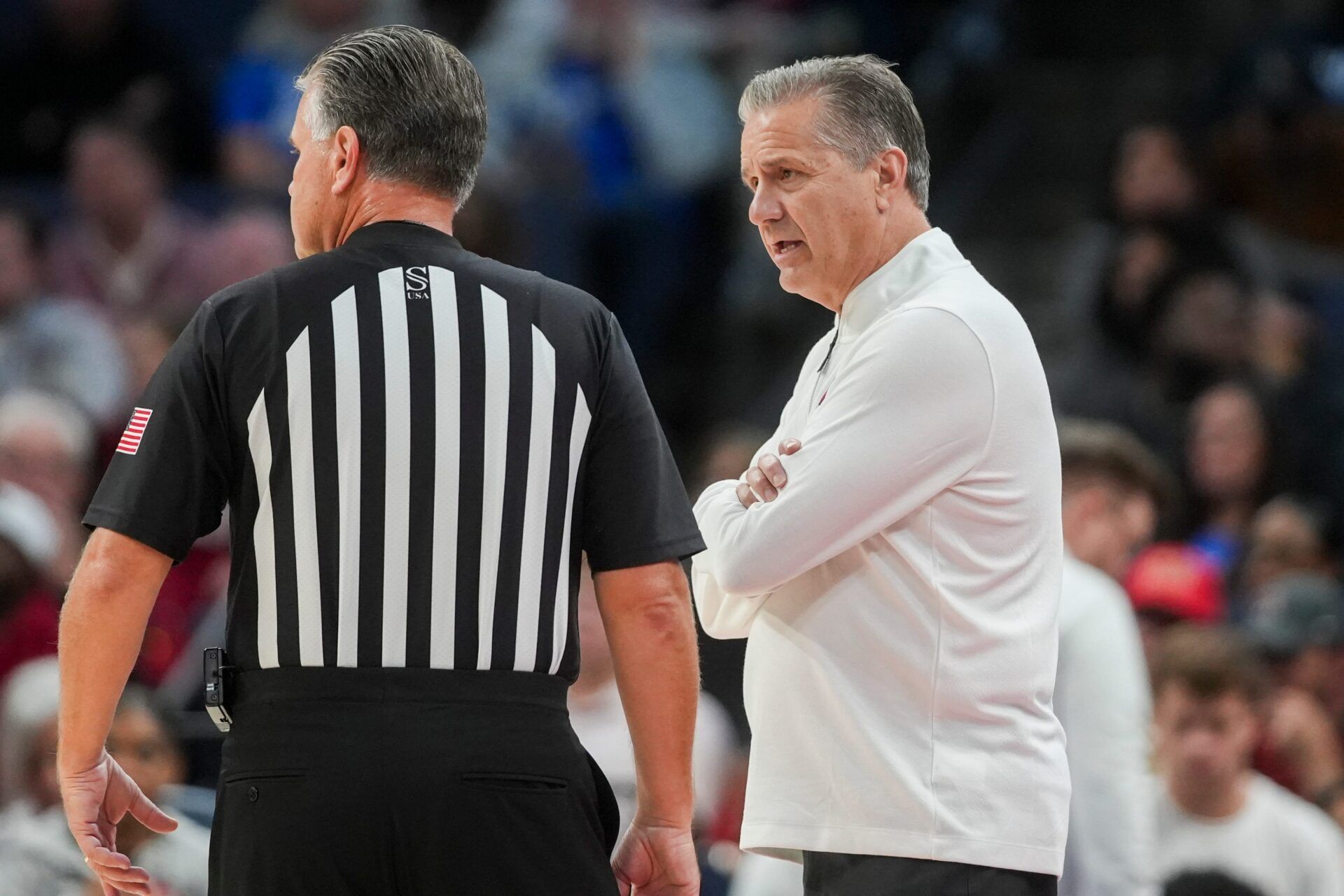
Two of the sport’s biggest names, John Calipari and Tom Izzo, have both called for reform. They agree that college hoops needs stronger rules to prevent tampering and bring more stability to rosters.
NCAA VP Shares Challenging Scenario of John Calipari and Tom Izzo’s Proposed Transfer Portal Theory
CBS Sports’ John Rothstein sat down with Dan Gavitt, the NCAA’s Senior Vice President of Basketball, this week to discuss the complexities of college athletics in the era of the transfer portal and NIL.
“Obviously, a very difficult thing to navigate, but how does the NCAA move forward and put some guardrails around these two main issues?” Gavitt quipped. “I’m not sure it’s easily done without some federal help and some help from Congress ultimately, because the guardrails that would be put in place are regularly challenged legally now on a monthly, if not weekly, basis.
The rapid rise of player movement through the transfer portal has presented a significant challenge for coaches and administrators. Calipari and Izzo have proposed a return to a rule allowing players one penalty-free transfer, while requiring additional transfers to come with a one-season sit-out period.
They believe such a measure would bring much-needed stability to college basketball rosters while still supporting player mobility. The NCAA initially adopted a one-time, penalty-free transfer rule in 2021, but it was later overturned due to legal challenges.
“Well, the NCAA did align with that and did defend that,” Gavitt said. “It was a court case by the state attorney general in Virginia, which was then joined by Ohio and New York and other states’ attorneys that overturned that as a result of one student athlete who wanted to play and be eligible right away after a second or third transfer.
“And so, that’s the kind of legal environment we’re in. It’s just not sustainable to have rules that just get overturned because of legal challenges.”
The tension between NCAA authority and legal scrutiny intensified in December 2023, when a coalition of states filed a federal antitrust lawsuit against the NCAA’s multi-transfer restriction.
But the NCAA’s hands are tied. Following a 2023 federal lawsuit, a district judge blocked the NCAA from enforcing the rule, resulting in a permanent settlement. Now, as long as athletes are academically eligible, they can transfer as often as they like and play immediately.
