
Looking at Kentucky’s ambitious financial strategy, one question dominates every conversation: How much money are the Wildcats willing to spend on basketball? The numbers keep changing, but the commitment remains clear.

How Much Is Kentucky Planning to Spend on Basketball?
Kentucky basketball may be planning something big with its revenue-sharing strategy. Reports say the Wildcats plan to allocate 45% of their $20.5 million revenue-sharing budget to men’s basketball, creating a potential $9.225 million investment that would put them ahead of most SEC schools.
However, people close to the situation say those numbers aren’t quite right. Several sources now say the 45% figure is wrong while still agreeing that Kentucky plans to spend much more on basketball than other SEC schools.
Tyler Thompson’s social media post referencing Matt Norlander’s reporting brought the 45% allocation figure into the spotlight. The claim suggested Kentucky would dedicate $9.225 million of its $20.5 million revenue-sharing cap to men’s basketball for the 2025-26 season, representing a massive investment in the program.
According to @MattNorlander, Kentucky is believed to be dedicating 45% of its $20.5 million revenue-sharing budget to men’s basketball for 2025-26.
So, $9.225 million. Over three times what most SEC schools will do. If true, that’s a bold move.https://t.co/xqGLZA4M8Y pic.twitter.com/M1xfCA3HN1
— Tyler Thompson (@MrsTylerKSR) July 21, 2025
But the exact numbers remain in dispute. Trey Wallace of OutKick spoke with multiple sources who disputed the exact 45% figure. “In speaking with several sources on Monday evening, that Kentucky number is not exactly 45%, though the Wildcats are certainly spending more money from their revenue-share cap on basketball compared to other schools within the SEC,” Wallace reported.
Even with conflicting reports about exact percentages, sources confirm Kentucky plans to invest far more heavily in basketball than most SEC schools. Following typical Power Conference spending patterns, most conference teams spend under $3 million on basketball revenue-sharing, roughly 15% of the total cap.
The traditional approach splits funds by giving football 75% of revenue-sharing money, with men’s basketball receiving 15%, women’s basketball 5%, and other sports sharing the remaining 5%. Kentucky’s strategy looks dramatically different from this conventional approach, regardless of whether the exact number reaches 45%.
What Does This Financial Commitment Mean for Pope’s Program?
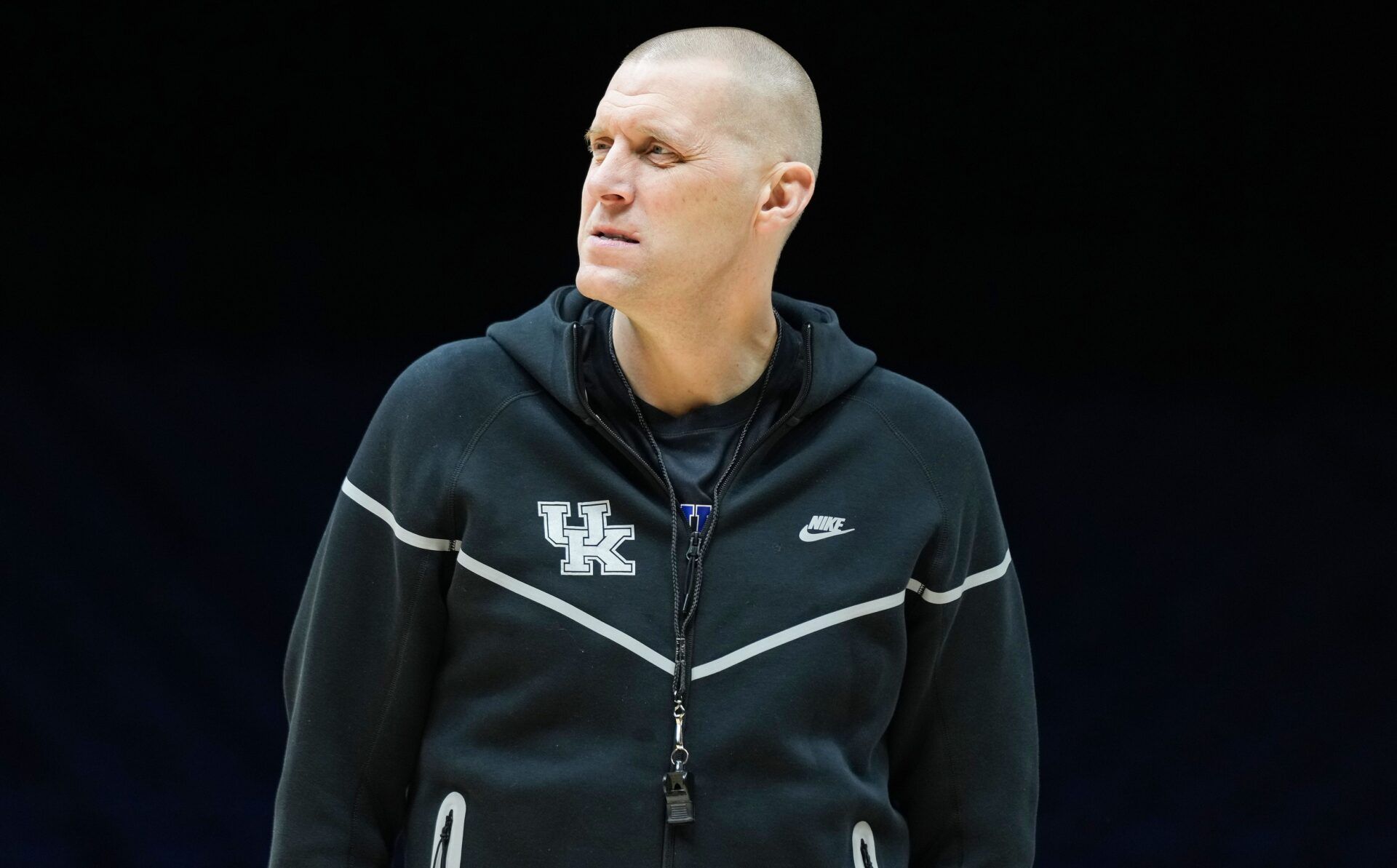
Mark Pope enters his second season at Kentucky with a significant financial advantage that enhances his recruiting power beyond most coaches. The former Kentucky player who captained the 1996 national championship team now has substantial financial backing that positions the Wildcats ahead of other SEC schools.
Kentucky’s allocated resources will go to men’s basketball, giving the program a considerable edge over competitors. This commitment means more than numbers because it helps Pope attract and retain top players in today’s transfer portal era.
Kentucky’s decision to prioritize basketball provides Pope with advantages that most SEC schools cannot match. While teams like Arkansas, Alabama, and Tennessee dedicate most of their resources to football, Pope can offer basketball players significantly more compensation than other conference schools can afford.
Pope’s early results at Kentucky demonstrate promise for the program’s future. In his first season, Kentucky reached the Sweet 16, an impressive achievement considering the team featured completely new players after losing everyone from the previous roster.
The Wildcats finished with 24 wins and defeated eight different ranked teams during the season, matching the best performance by any first-year coach in program history.
While exact spending figures remain disputed, Pope commands significant financial resources. This funding advantage, combined with his early coaching success, positions Kentucky as a considerable threat in college basketball’s new revenue-sharing landscape.
