
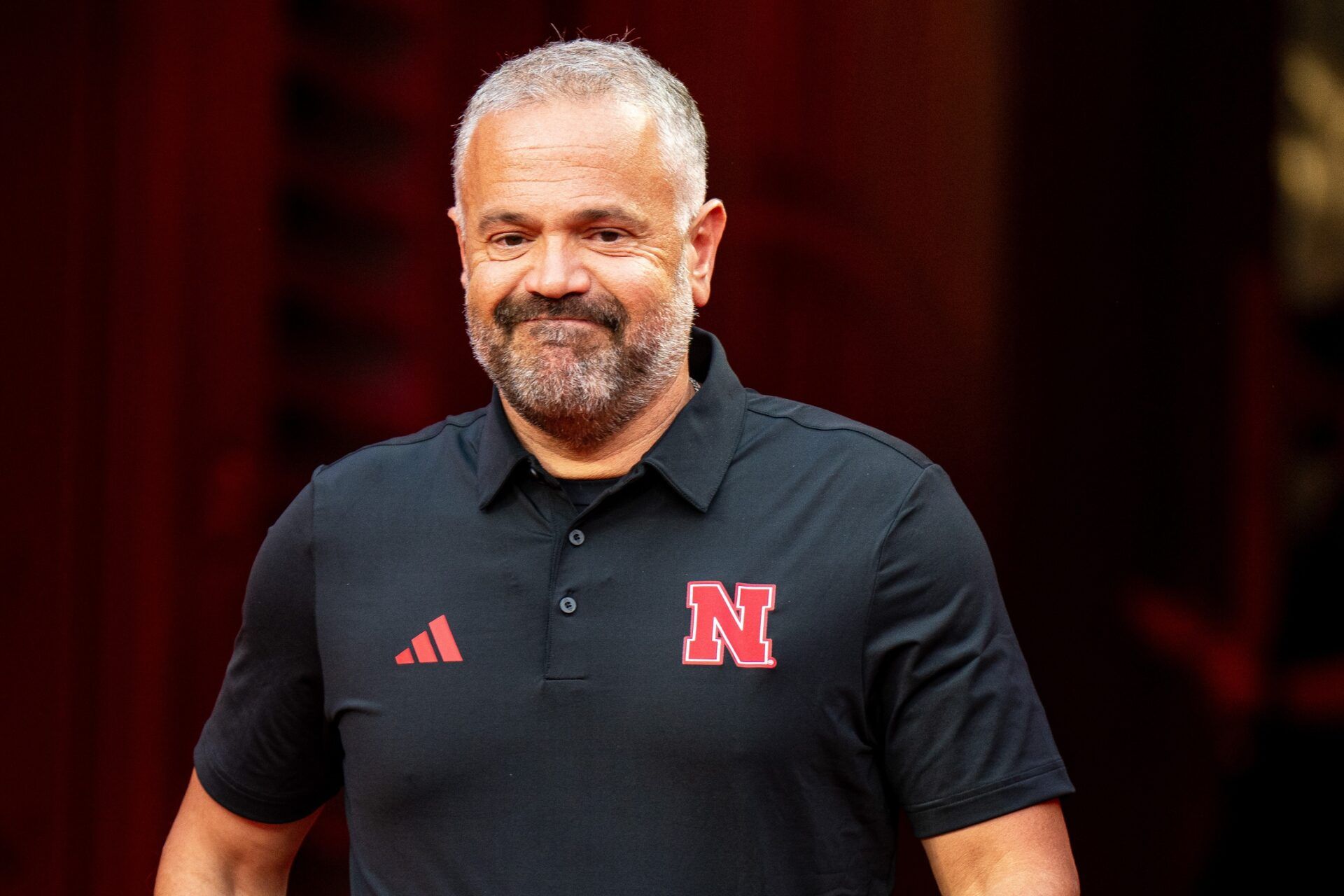
University of Nebraska head coach Matt Rhule has offered a controversial take on the “Tush Push,” the polarizing play perfected by the Philadelphia Eagles. As a former offensive line coach, his perspective carries weight, but what he said about the maneuver has turned heads.

Why Is Nebraska’s Matt Rhule Defending the Eagles’ Tush Push?
At its core, the Tush Push, also known as the Brotherly Shove, is a powerful, coordinated effort where offensive linemen, tight ends, and running backs surge forward to move the defensive line.
Similar to a rugby scrum, the play generates immense force at the line of scrimmage. However, the move has become a hot-button issue in the NFL, creating a sharp divide between teams that want it abolished and those who want it to stay.
It appears the teams that cannot stop it want it banned, while those that successfully execute it prefer the status quo. On his “House Rhules” YouTube channel, Rhule spoke about the play and his interaction with a key member of the Eagles’ offensive line.
“They’re going to outlaw it, but they need the votes,” Rhule said. “Cam Jurgens, he’s a Husker, rehabs at our place. And even he’s just like, ‘This is kind of what we do now.’ The mark of being a great team is when they start trying to outlaw what you do. They are elite at it. And everyone’s saying, like, ‘Wow, there are so many flags, and they’re offsides.’ Well, then throw a flag for them being offsides. Let’s not have a PR campaign against it. Stop it.”
For context, Jurgens’ time as a player in Lincoln and Rhule’s tenure as coach did not overlap. However, the coach mentioned that the center uses the Nebraska athletic facilities in the offseason. According to Rhule, Jurgens feels the Tush Push is another area where his team excels. For his part, the head coach strongly supports keeping the play legal.
TUSH PUSH BIRDS UP 10 pic.twitter.com/4Iod3iRBzh
— Justin Lever ❤️⚾️ (@JustinLever3) September 14, 2025
In a way, Rhule understands both sides of the argument. As a former walk-on linebacker at Penn State, he can see how the Tush Push puts the defense at a disadvantage, especially for players who lack the bulk of a defensive lineman. Linebackers, who often have longer torsos and are not as heavy, struggle to generate momentum over a shorter distance.
In contrast, Rhule’s experience coaching the offensive line in college at Temple and in the NFL with the New York Giants informs his adamant support for keeping the Tush Push in the game. Whether that happens remains to be seen, but it raises another question: if the NFL bans the move, will the college ranks follow suit?
