
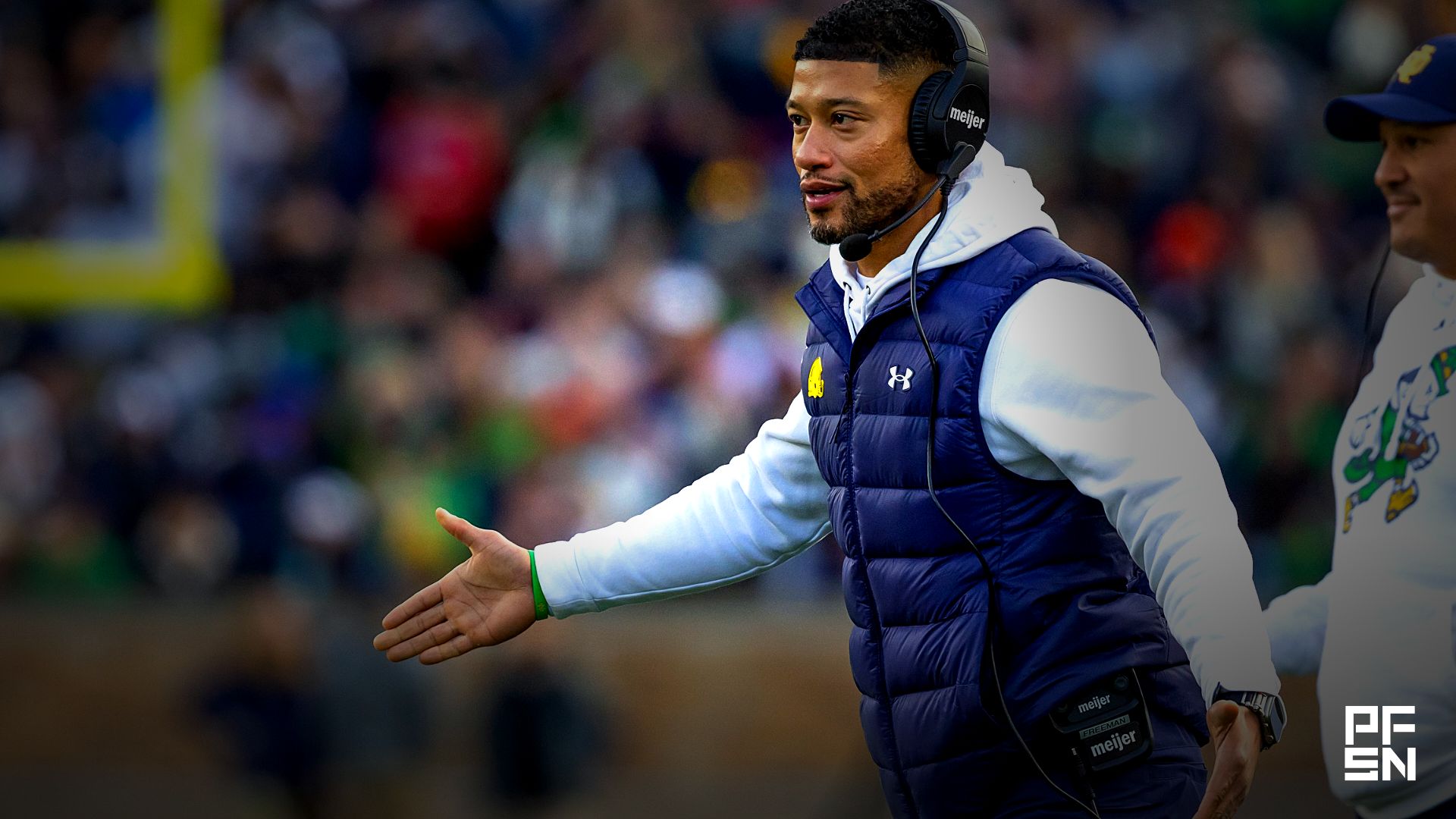
In the high-stakes world of football coaching, the National Football League is often viewed as the ultimate destination. For many collegiate coaches, the allure of “Sunday football” represents the absolute pinnacle of their profession.
Yet, when faced with substantial NFL interest, Notre Dame head coach Marcus Freeman made the deliberate choice to stay put. His reasoning sheds fascinating light on the fundamental differences between the college game and the professional ranks, while offering a refreshing perspective on ambition and contentment.
Why Notre Dame Head Coach Marcus Freeman Hasn’t Jumped to the NFL
When asked by Colin Cowherd on “The Herd with Colin Cowherd” about the deciding factor that kept him on the collegiate sidelines despite lucrative opportunities to jump to the pros, Freeman pointed to a glaring structural reality of the NFL that contradicts the very nature of a relentless competitor: the league’s built-in design for absolute parity.
“The NFL, the more I’m starting to realize, you’re set up to go .500 now, right?” Freeman explained. “And they don’t want you to be good. They don’t want you to continuously win, win, win. They’re going to make it as hard as possible when you do have success.”
Freeman’s observation strikes at the heart of how the NFL operates. Through mechanisms like the salary cap, the reverse-standings draft order, and a scheduling formula that punishes division winners, the league is explicitly engineered to level the playing field.
While this manufactured parity keeps the league highly entertaining for fans, it can be a deeply frustrating environment for coaches seeking to build enduring dynasties. Freeman noted that candid conversations with NFL personnel and administrators only cemented his realization that the professional league actively pushes back against sustained dominance.
In stark contrast, college football offers a landscape where continued excellence is not just permitted but achievable for those willing to put in the relentless effort. At a storied, well-resourced program, Freeman recognizes the unique advantage of his current position.
“I have such a special, special job and one that is so well supported,” he noted. “We have to continuously work, but you’re going to have opportunities to have success every single year.”
Beyond the Xs and Os and the win-loss columns, Freeman’s decision was heavily influenced by the human element of collegiate coaching. He highlighted his “love for the job” and the deep “care I have for the players” as the foundational elements of his choice. The ability to mentor young athletes and build a supportive culture provides a profound sense of purpose that the strictly business-centric NFL often lacks.
Ultimately, Freeman’s rejection of the NFL is a testament to recognizing one’s own ideal environment. In an industry defined by relentless ladder-climbing and coaching carousels, his perspective serves as a powerful reminder to appreciate the present.
BE AN NFL GM: PFSN’s Ultimate GM Simulator
“Be careful of always wanting more, more, more when you have something really good,” Freeman wisely advised.
By recognizing the immense value of what he already possesses (a fiercely supportive program, the ability to shape young men, and the opportunity to build a lasting powerhouse), Freeman has definitively proven that the grass isn’t always greener on Sundays.
