
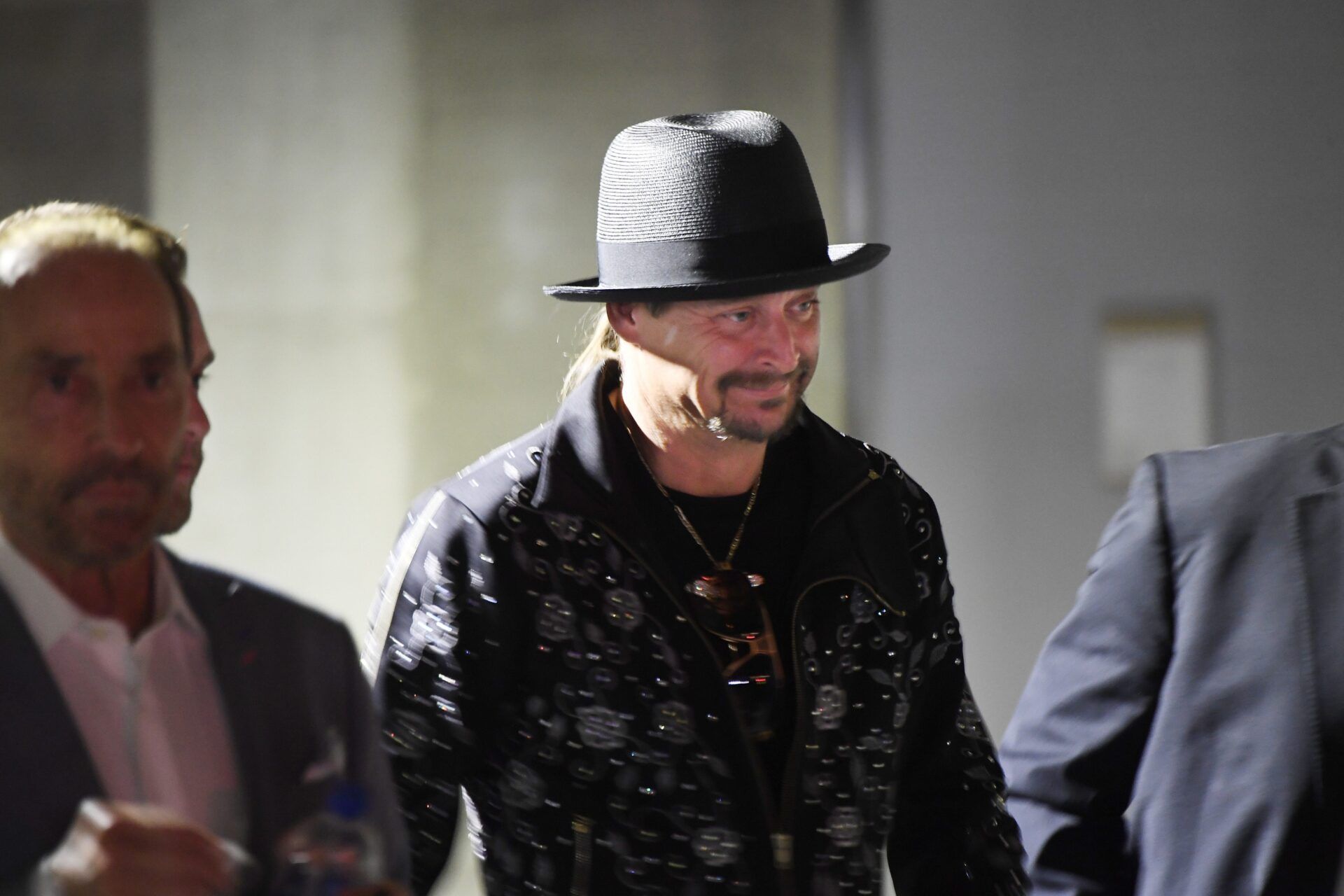
Kid Rock’s counter‑programming performance for Turning Point USA’s “All-American Halftime Show” has remained under scrutiny days after Super Bowl 60, with viewers repeatedly pointing to obvious sync issues during his rendition of “Bawitdaba.”
Promoted as an alternative to Bad Bunny’s NFL‑sanctioned Apple Music Super Bowl halftime show, clips of Kid Rock quickly spread widely online and critics accused the rocker of lip‑syncing through the set.
In response, Kid Rock has publicly defended the performance in multiple appearances and posts, insisting he did not lip‑sync while simultaneously confirming the show relied on a pre‑recorded track and later editing that “did not line up” on screen.
Kid Rock Breaks Silence On Lip-Sync TPUSA Super Bowl Halftime Controversy
Kid Rock first addressed the backlash directly on X, posting a video alongside a statement that sought to distinguish between using a pre‑recorded performance and lip‑syncing.
“My halftime performance was pre-recorded but performed live. No lip-syncing like the haters and fake news are trying to report. When they synced the cameras to my performance on ‘Bawitdaba,’ it did not line up,” he wrote.
The phrasing acknowledged that the audio fans heard came from a pre‑recorded performance, and that editors later tried to match it to his on‑screen movements, which is what many viewers had criticized after noticing that his mouth and the vocals were repeatedly out of sync.
Kid Rock caught lip-syncing during Turning Point USA’s Super Bowl halftime showpic.twitter.com/tk3tf33HGW
— BasketballMuse (@basketballmuse0) February 12, 2026
In his video explanation, Kid Rock described “Bawitdaba” as particularly hard to match visually because of its staging. “That song is chaos,” he said in the clip.
“The first thing is, if I was ever going to lip sync, which I wouldn’t, that would be the last song I would ever do it to. We performed this song every night on tour since 1998, since the day it was released,” Kid Rock said.
“Turning Point USA sent me a first cut [after] we taped it and my comment was, ‘The sync is off.’ They were trying to line it up… It was very difficult for them, because somebody clearly wasn’t super familiar with the song. It could have been done had we had more time.”
He emphasized that the difficulty lay in aligning the footage with the audio rather than in miming to someone else’s vocals or a studio recording. He repeatedly stressed that the underlying track was his own live take, recorded before the edit.
In a longer explanation, Kid Rock went out of his way to defend Turning Point USA and the production crew while blaming the controversy on his critics.
“I have nothing but good things to say not only about Turning Point, but the production team that they work with,” he stated.
“Nobody’s perfect every time. But for the haters and the trolls out there, that’s exactly what happened. And by the way, most of you know this. Some of you in the entertainment world can look at that and be like, ‘The sync is off.’ But they had to lie and say, ‘Oh, he was lip syncing.’ Then, people amplify this all over the internet. And I know most people don’t even care, but certain people just keep repeating it, so people think it’s a fact.”
He also argued that accusations of lip‑syncing are often weaponized across the political and cultural spectrum, invoking Bad Bunny as a separate example.
“And this goes on on both sides,” he added, “They did it to Bad Bunny, in his defense, when… he was on Saturday Night Live; they [claim lip syncing] far too often, especially in the fake news media…”
By pulling in the Puerto Rican star’s previous TV appearances, Kid Rock framed the criticism of his own performance as part of a broader pattern he attributes to “fake news” and ideological opponents rather than a specific reaction to the apparent mismatch between his movements and the track during the TPUSA event.
Taken together, Kid Rock’s comments confirm that the TPUSA halftime show performance of “Bawitdaba” was pre‑recorded, with editors later trying to sync that recording to the televised footage, and the resulting cuts frequently did not match.
While he continues to deny that he “lip‑synced” in the sense of silently miming to a studio track, his own description underscores that what aired on the counter‑programmed halftime show was not a single, continuous live vocal performance captured in real time, but a pre‑taped segment whose editing issues helped fuel the controversy he is now trying to put to rest.
