
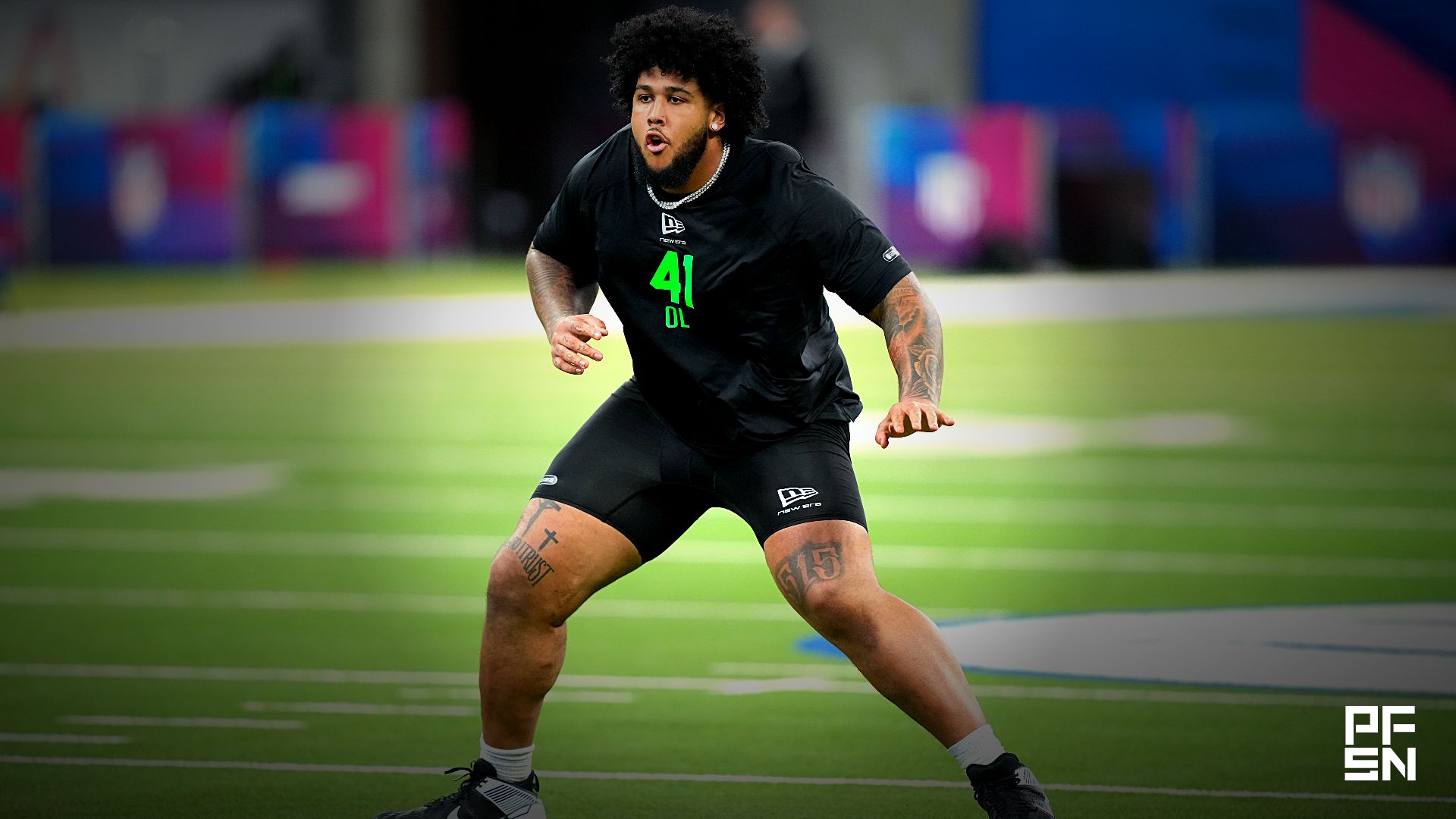
The upcoming NFL Draft features a fascinating crop of offensive tackles, brimming with massive frames and raw athletic potential. At the forefront of this group is Alabama standout Kadyn Proctor.
How Alabama’s Kadyn Proctor Fits into a Strong 2026 Offensive Tackle Draft Class
Blessed with prototypical size and overwhelming power, Proctor has naturally drawn the attention of scouts and front offices alike. This is in spite of the fact that Alabama’s offensive line received a grade of C+ and a rank of 28th, according to PFSN’s Offensive Line Impact metric.
Proctor has a lot going for him; however, not everyone is entirely sold on the idea that the Crimson Tide star is a surefire elite prospect at the next level.
During a recent episode of PFSN’s “Football Debate Club,” the panel, featuring insights from NFL analysts like Ian Cummings and Jacob Infante, dissected the top end of the offensive tackle class.
When the conversation shifted to the over/under on whether 5.5 tackles would be drafted on Night 1, the discussion quickly turned to the inherent risks associated with some of the draft’s biggest names.
The panel readily acknowledged the undeniable physical gifts of this incoming group. As Cummings noted, “You’ve got guys who are big, athletic, physical, and have the physical foundations that NFL teams have been known to crave and invest in with premier capital at premium positions.” Given the sheer talent of the class, the consensus on the show was that the total number of tackles taken in Round 1 could soar as high as seven.
Yet, when the analysts were pressed on whether they would personally invest a first-round pick in Proctor, the breakdown turned sharply critical.
Infante pointed out that while Proctor looks the part of a franchise cornerstone, his tape reveals significant red flags that could be brutally exposed in the professional ranks.
“If it were up to me, it would be under,” Infante argued regarding the high first-round tackle count. “I think out of the consensus top seven tackles, I wouldn’t take Kadyn Proctor … in that first round.”
The primary issue isn’t a lack of strength: It’s a lack of functional movement skills.
“Proctor’s a beast of a man, don’t get me wrong,” Infante’s critique continued. “I have a lot of concerns about his lateral quickness. And I think that on an island in pass protection, that inability to change direction is going to hurt him.”
In the modern NFL, offensive tackles are routinely left “on an island” against hyper-athletic edge rushers who can bend the corner with terrifying speed. If a tackle lacks the lateral agility to mirror these rushers, sheer size quickly becomes obsolete. Furthermore, the analysis highlighted a fundamental flaw in Proctor’s hand usage and strike timing.
“[He is] much more of a catcher than he is somebody who gets your hands on you at the right time,” Infante explained.
BE AN NFL GM: PFSN’s Ultimate GM Simulator
In offensive line parlance, being a “catcher” means passively absorbing a defender’s charge rather than actively delivering an initial, disruptive punch. Against NFL-caliber power and speed, waiting to catch a rusher often results in an instantly collapsed pocket.
Proctor undeniably possesses the mammoth stature and brute strength that offensive line coaches dream of molding. However, as the crew at “Football Debate Club” pointed out, if he cannot refine his lateral quickness and adopt a more aggressive, timely punching technique, his transition to the NFL could be painful.
