
In the modern NFL, the debate surrounding the value of running backs in the early rounds of the draft is as fierce as ever. Analytics departments routinely advise against investing premium draft capital at the position, pointing to positional value and salary cap constraints.
However, when it comes to dynamic prospect Jeremiyah Love, former NFL general manager Mike Tannenbaum believes the traditional rules simply do not apply.

How Jeremiyah Love Could Accelerate Quarterback Development for the Giants and Titans
Appearing on ESPN’s “Get Up,” Tannenbaum was asked by host Mike Greenberg if he would spend a high draft pick on a running back if he were running the front office for the Tennessee Titans or the New York Giants. Without hesitation, Tannenbaum agreed, pointing to a strategic imperative that goes far beyond the rushing attack.
“I would, but there’s a non-obvious reason, it’s quarterback development,” Tannenbaum explained.
For both the Titans and the Giants, who are navigating the crucial early stages of developing second-year signal-callers, investing in Love is ultimately an investment under center. “If we’re in Tennessee, this is about developing Cam Ward. If we’re at the Giants it’s about developing Jaxson Dart,” he noted.
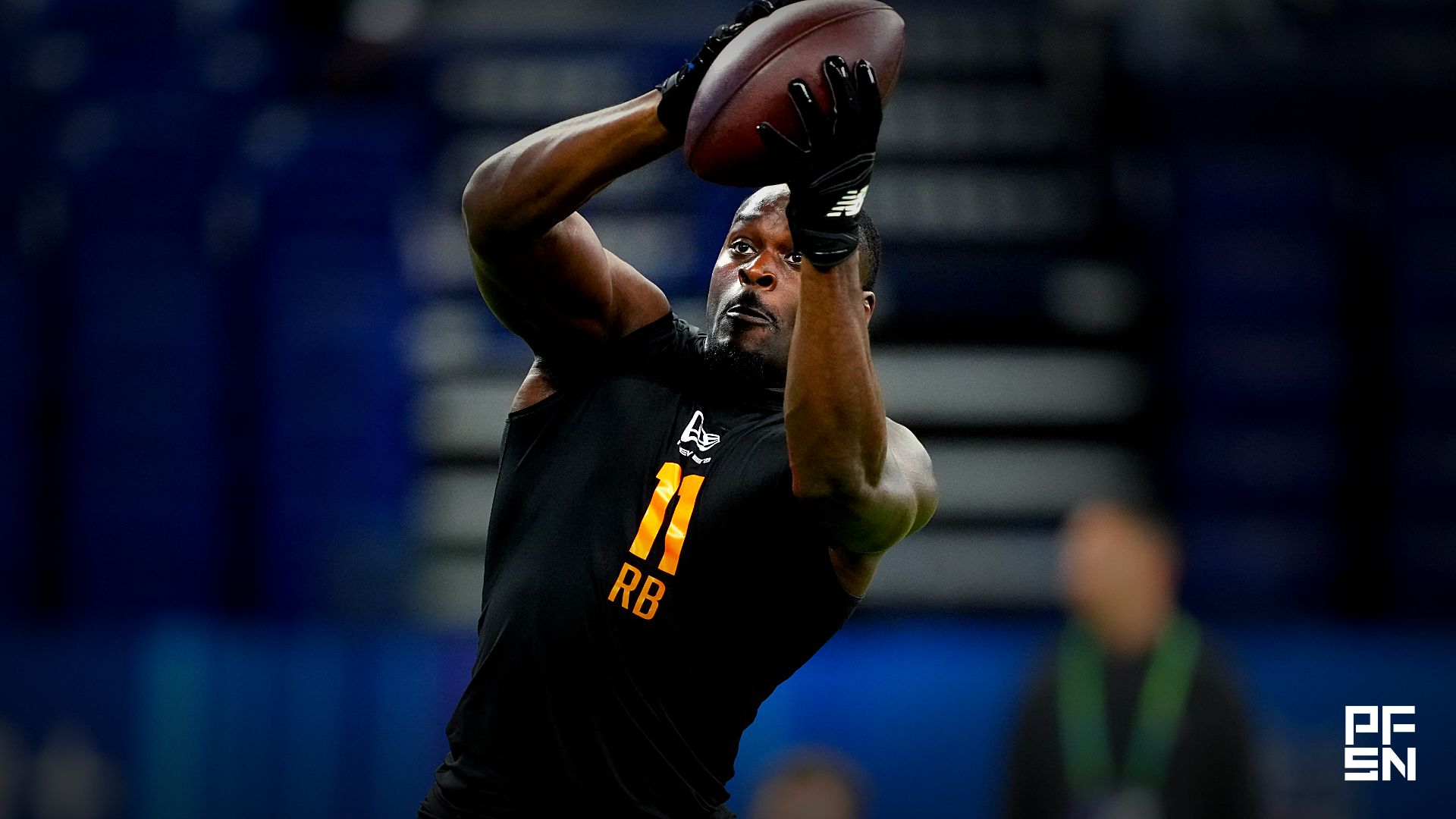
Tannenbaum argued that viewing Love strictly as a traditional tailback does a massive disservice to his multifaceted skill set. “I think Jeremiyah Love got kinda pigeonholed into the running back conversation, but he had 63 catches, and when you watch him run routes, this is an offensive weapon,” Tannenbaum observed.
For a young quarterback adjusting to the speed and complexity of the professional level, a reliable safety valve is invaluable. Tannenbaum highlighted that when developing a young quarterback, a team must focus on lightening the offensive load and reducing high-stress passing attempts early in the quarterback’s career.
Playmakers like Love provide easy completions, essentially a “long handoff” that allows a young passer to settle into the flow of the game. Furthermore, Tannenbaum praised Love’s reliability, noting that he is a “great pass protector” and “doesn’t fumble.”
“This player is too unique to pass up.”
—@RealTannenbaum on whether Jeremiyah Love will be drafted in the top 5… pic.twitter.com/uHJzzDK01U
— Get Up (@GetUpESPN) April 17, 2026
For the 2025 season, Love earned a PFSN CFB RB Impact metric score of 92.4, which ranked him fourth out of all college running backs.
Naturally, drafting a running back high invites criticism from the analytics community, which emphasizes maximizing surplus value on rookie contracts at premium positions. Tannenbaum acknowledged the counterarguments but emphatically dismissed them for a prospect of Love’s caliber.
BE AN NFL GM: PFSN’s Ultimate GM Simulator
“I understand Jeff’s [Darlington] point on the analytics,” Tannenbaum said, referencing the show’s ongoing debate. “But if the four of us were running a team, what I would push back on is, on a $300 million salary cap we are losing the surplus value argument on this player, let’s find it somewhere else because this player is too unique to pass up.”
Ultimately, Tannenbaum’s message to front offices in New York, Tennessee, and across the league is clear: Do not overthink the evaluation. In an era where nurturing a young quarterback dictates a franchise’s entire trajectory, a versatile, surefire weapon like Love is an organizational necessity disguised as a draft-day luxury.
